
As we mark the 25th anniversary of the Sept. 11 attacks, it is difficult to commemorate the gravity of that day without confronting what is happening in America today. Parts of our political culture have become increasingly comfortable rationalizing political violence and the deliberate murder of civilians.
If Osama bin Laden were alive, I suspect he would be thrilled by the direction in which America is heading. His strategy depended, in part, on exploiting the vulnerabilities inherent in an open society: its divisions, its freedoms, its capacity for self-criticism, and, ultimately, its willingness to turn that criticism inward. Bin Laden understood that America did not have to be conquered to be weakened. Americans could instead be exhausted, divided, and persuaded to lose confidence in the liberal democratic order he despised.
Stay informed.Stay ahead.
Join Washington Examiner for unlimited access to the news, analysis, and commentary that matter most.
Already a member? Log in
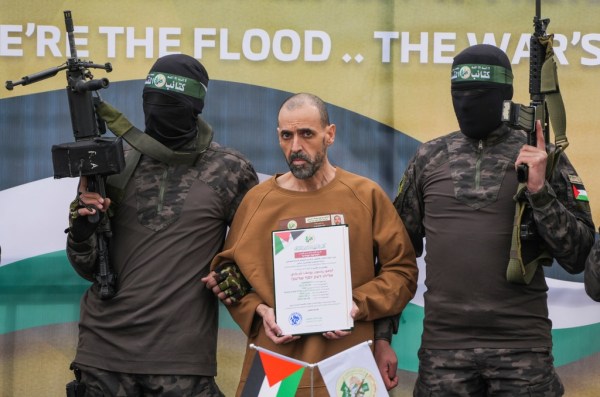
What is frightening, 25 years later, is how much of that strategy seems to be playing out from within. Following Hamas’s Oct. 7, 2023, massacre, Americans watched activists rationalize the deliberate murder of civilians as “resistance.”
I was too young on Sept. 11, 2001, to comprehend the gravity of what had happened, but the images of terrorism were disturbingly familiar. As a Jewish child with family in Israel during the Second Intifada, I had already seen buses, cafes, restaurants, and nightclubs turned into scenes of carnage by terrorists whose ideology permitted them to treat ordinary civilians as legitimate targets.
Today, however, a vocal segment of younger Americans is rationalizing such attacks by attributing them to the terrorists’ grievances instead of the ideology that made civilians legitimate targets. Some politicians and public figures speaking to a generation removed from Sept. 11 are blaming the attacks on America’s own “sins”: military deployments in the Middle East, support for Israel, and American influence abroad.
Take Aber Kawas, who recently won the Democratic nomination for a New York state Senate seat with the backing of the Democratic Socialists of America and New York City Mayor Zohran Mamdani. In recently resurfaced footage from 2017, Kawas described Sept. 11 as part of a broader “system of capitalism and racism and White supremacy,” blaming the attacks on what she viewed as American oppression and violence.
Then there is Hasan Piker, one of the most prominent political streamers in America, whose hourslong broadcasts reach a massive audience of young people outside traditional media. Piker has said that “America deserved 9/11” and that “we totally brought it on ourselves.” Reducing the attacks to those grievances fundamentally misunderstands what America was confronting.
In November 2023, amid the Israel-Hamas war, bin Laden’s “Letter to America” went viral on TikTok, where some young Americans praised his arguments about Israel and American foreign policy as “revelatory.” What makes that praise so alarming is where bin Laden’s argument ultimately led: He justified murdering American civilians by arguing that because they elected their government and financed it through taxation, they shared responsibility for its actions and therefore were not innocent.
The fact that too many voices in America are echoing bin Laden’s justification for political violence today is what should disturb us most 25 years after Sept. 11. Gallup research suggests that younger Americans are more open to political violence: Adults ages 18 to 29 are more likely than older age groups to say that violence can sometimes be justified to achieve a political goal.
We saw it immediately after Oct. 7, when, as the scale of Hamas’s massacre was still becoming clear, thousands gathered in New York for a pro-Palestinian demonstration where some participants celebrated the attack. We saw it again after the murder of UnitedHealthcare CEO Brian Thompson, when some Americans turned Luigi Mangione into a hero and praised the killing as a “revolutionary act.”
We also saw it after the murders of Israeli Embassy staffers Sarah Milgrim and Yaron Lischinsky outside the Capital Jewish Museum. Elias Rodriguez, who is charged with their murders, told police immediately afterward, “I did it for Palestine. I did it for Gaza.” Within hours, pro-Palestinian accounts were celebrating the killings and glorifying Rodriguez, with some calling for “More Elias.”
And we saw it yet again after the assassination of Charlie Kirk, when some on the far Left openly celebrated his murder and treated his political beliefs as justification for his death.
Twenty-five years after 9/11, segments of American political culture are embracing the logic bin Laden used to justify violence, namely that a person’s perceived complicity in an “unjust” political system, ideology, or cause can serve as justification for violent acts against them. For a terrorist who sought to exploit America’s divisions and turn its openness against itself, that would look a lot like success.
Today, the danger is not just losing sight of what happened on the morning of Sept. 11, but losing confidence in the moral principles that distinguished the society that was attacked from those who attacked it.
IRAN’S SHADOW WAR IS ALREADY ON US SOIL — AND THE FBI CAN’T WAIT FOR ANOTHER 9/11
This is a turning point for America because a free society cannot survive if it is unwilling to defend the principles that make it free. Mainstream and centrist voices cannot remain silent when terrorism is rationalized as “resistance,” when the deliberate murder of civilians is excused through political grievances, or when responsibility for an atrocity is transferred from those who committed it to the society they attacked.
That may be the most meaningful way to honor the victims of Sept. 11: not simply to remember how they died, but to defend the free society that was attacked alongside them.
Zina Rakhamilova is an Israel-based journalist and geopolitical commentator and the co-founder of Social Lite Creative, a digital marketing firm specializing in geopolitics.
