
When Jay Winuk thinks about Sept. 11, 2001, he doesn’t just remember the tragedy. He remembers his younger brother, Glenn.
“My brother Glenn Winuk was a partner at the Holland and Knight Law Office in Manhattan,” Winuk said to the Washington Examiner. “Their offices were located just about two blocks from the World Trade Center.”
Recommended Stories

Glenn had spent 20 years as a volunteer firefighter and EMT on Long Island. When the towers were attacked, Glenn helped evacuate his law firm’s offices. Then he headed toward the danger.
“Glenn helped evacuate the firm’s law offices and then headed on foot into the South Tower to save lives, and he perished when the South Tower collapsed.”
For Winuk, remembering his brother meant finding a way to honor the way Glenn lived his life.
“He was somebody who lived his life and died in service to other people,” Winuk said. “So I wanted to get involved in some kind of cause that reflected the way Glenn lived his life.”
That became the foundation for 9/11 Day.
Turning remembrance into action
Winuk and his friend David Paine came up with an idea: take back Sept. 11 by turning the anniversary into a day of service and good deeds. More than two decades later, that idea has grown into a nationwide movement.
For the 25th anniversary, 9/11 Day’s annual meal packing event is looking to double the amount of meals packed and donated right here in Washington, D.C.

“In D.C., there’ll be about 2,400 volunteers packing like 700,000 shelf-stable, non-perishable meals,” Winuk said. “The Capital Area Food Bank will come and pick up the meals, and then distribute them to individuals and families who are at risk of hunger in the capital region.”
Winuk said the D.C. meal-packing effort has become an important part of the anniversary.
“We’re staging these service projects in 51 of the nation’s largest cities, including Washington D.C. where we have been staging meal packs for six years,” Winuk said.
And that effort now extends far beyond Washington. This year, 9/11 Day meal-packing events are happening in 51 cities across the country.
“There’ll be collectively, in all those cities, more than 17 million meals packed for 9/11 by more than 50,000 meal packing volunteers,” Winuk said.
One good deed
But Winuk says people don’t have to attend a massive meal-packing event to participate. The idea behind 9/11 Day is much simpler: do one good deed. That could mean volunteering, helping a neighbor, donating food or simply finding a way to make someone else’s day better.
9/11 Day is asking the public to pledge a good deed as part of its campaign for the 25th anniversary, with a goal of generating 1 million good deeds before Sept. 11.
For Winuk, the response has grown far beyond what he and Paine imagined.
“9/11 Day is now the nation’s largest annual day of charitable engagement,” Winuk said. “There are tens of millions of people who mark the day by doing good deeds.”
Teaching a generation that doesn’t remember
Winuk said 9/11 Day wants young people to understand more than the attacks themselves.
“It really is important to engage the young people of America in this observance and in their understanding of 9/11,” he said.
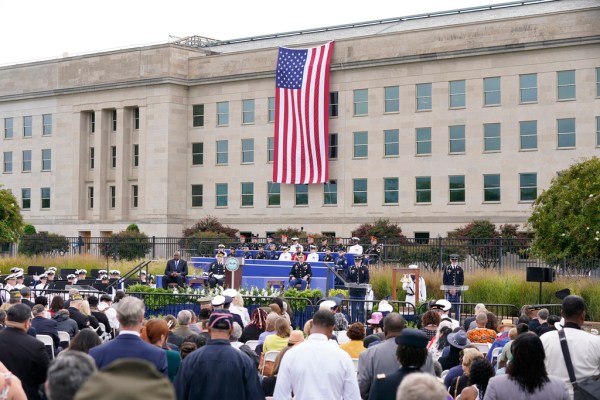
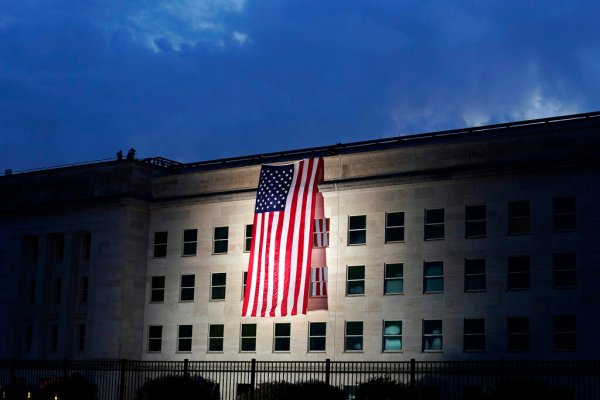
And in Washington, that message carries an especially powerful connection. The Pentagon Memorial, there’s also a growing effort to make sure the history of Sept. 11 is not lost on a generation that never experienced it. The Pentagon Memorial Fund says tens of thousands of students visit the memorial each year — including many who were born after the attacks. The fiscal 2026 Defense Bill includes $12 million in federal funding for a new Visitor Education Center at the Pentagon Memorial site, designed to help tell the story of what happened, the people who were lost, and the response that followed.
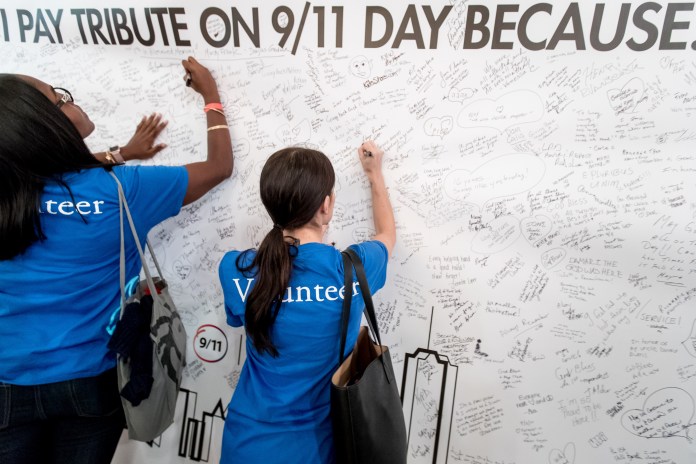
“The 100-plus million Americans who have been born since 9/11,” Winuk said. “They don’t have any direct connection in terms of memories of what happened. And so, it’s important that they learn the full story.”
And 9/11 Day is taking a similar approach, using service as a way to teach young people about the significance of the day.
“We weren’t red states and blue states after 9/11,” Winuk said. “We were just all Americans. In fact, we were a global community.”
9/11 Day provides free lesson plans that are being used in thousands of classrooms, connecting the history of the attacks to civic engagement, community service, and good deeds. The organization also helps fund 9/11-related projects at schools, colleges, and other educational institutions through grants supported by AmeriCorps and the Popeyes Foundation.
25 YEARS LATER, HOW DO YOU TEACH 9/11 TO A GENERATION WITH NO MEMORY OF IT?
“The service component is really important,” he said. “We’re giving people opportunities through this National Day of Service to do something that’s meaningful right now.”
From a convention center in Washington to communities nationwide, the anniversary is becoming a day of action — helping people today, with one good deed, while making sure future generations understand what happened 25 years ago.