

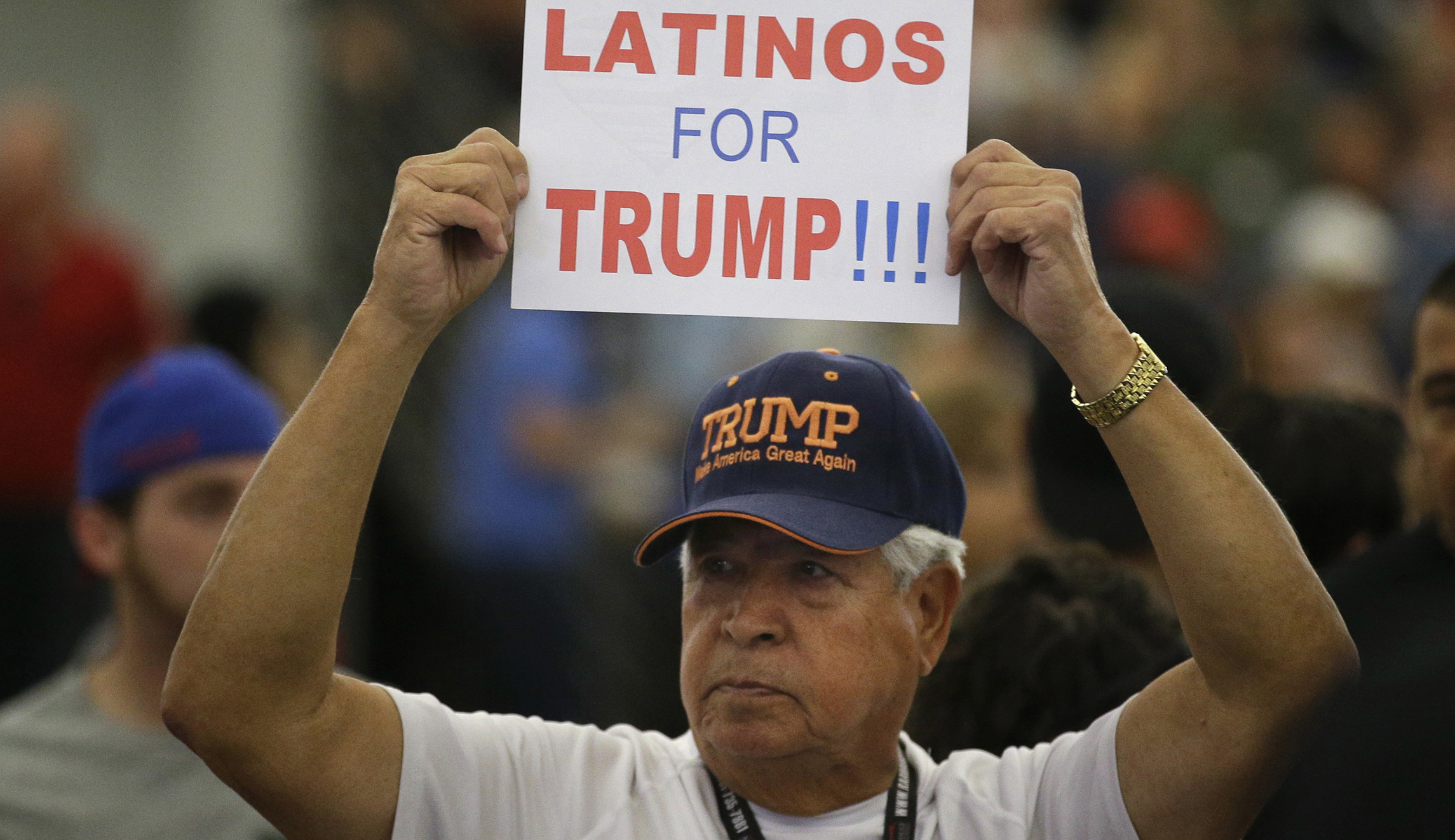
The whiplash that political commentators have experienced over Latino support for President Trump provided some of election night’s most compelling moments. But the competitive level of support that he received from Latinos should not have been all that surprising.
Conventional wisdom since 2016 held that Trump is defined by an antipathy toward Latinos. Eventually, the thinking went, Trump’s ineptitude on race and immigration would catch up with him.
Recommended Stories



Yet, after four years, Trump made more inroads with Latinos than with any other group. Early exit polls show he improved his 2016 performance in key states by 11 points, which may have anchored his victory in Florida and contributed to a convincing win in Texas. Trump and the Republicans may not be winning Latinos outright, but they made dramatic gains that most did not predict and are struggling to explain.
Part of the problem stems from looking at Latinos as a monolith. Admittedly, commentators on both the Left and the Right have acknowledged this error, but it bears repeating. The “Latino Vote” is not a single entity but a composition of various communities. These communities often have significant bonds, such as a shared ancestral language and similar cultural experiences. But they also have notable differences. Cuban descendants are particularly sensitive to the legacies of leftist regimes in Latin America and generally support Republicans. Puerto Ricans care more about statehood for the island, and Mexican Americans are more interested in immigration. Both typically vote Democrat.
There are also important regional differences to keep in mind. For example, the Hispanic populations in Texas and California are both predominantly Mexican American, but Trump won 40% of Hispanics in Texas and only 27% in California. To define Hispanics solely by national origin is to miss the mark. Future outreach efforts must be comprehensive in scope.
Some have argued that Trump’s strong showing with Hispanics is driven primarily by “white” Cuban exiles in Florida. This doesn’t hold up. Yes, Trump won Cubans in Florida by 15 points, but he also over-performed with Puerto Ricans by winning nearly one-third of their vote. Early exit polls from states such as Georgia and Ohio show a similar 20 point drop in Latino support for Joe Biden compared to Hilary Clinton’s margins in 2016. The most noteworthy result might be the one from Starr County, Texas. Starr is 96% Latino, predominantly Mexican, and Clinton won it by 60 points in 2016. Biden won it by only 5 points.
Again, Republicans should not forget they are still losing with Latinos in these places. But Latino support for Trump should not be understood as primarily a Cuban American or “white” phenomenon. His voters came from various ethnic backgrounds and states, and that needs to be recognized.
The main reason for this might be straightforward: campaigning matters. In 2014, the Washington Examiner’s Tim Carney lamented that Republicans paid lip service to the idea of courting the Latino vote, but never followed through. Trump changed that, and you can see the result most starkly in Miami. He repeatedly held rallies in South Florida and made policy announcements targeted at Latinos. He made a long-term investment in building back support with Cuban Americans in particular, though his campaign’s presence and persistent outreach effort seem to have had a spillover effect with other Latinos.
The same idea applies to Biden’s efforts in Arizona. His campaign focused heavily on winning the Latino population in Arizona, where they had the help of grassroots groups. Early signs showed that Arizona Hispanics had a significant gender gap in support for Biden, with women supporting his candidacy at a higher rate than men. As a result, outreach groups focused on increasing turnout among Latinas particularly, which may have helped Biden carry the state.
These results should ultimately shake our confidence about how Latinos vote. Republicans will boast about Donald Trump’s improvement, yet he still lost the “Latino Vote.” Democrats will point that out, yet may ignore that a supposedly inevitable minority backlash against Trump didn’t pan out among Latinos.
The more important lesson is that political representatives, advisers, and commentators still have a long way to go to understand who Latinos are. Perhaps then we’ll have a better idea about how they vote.
Gil Guerra and Luis Parrales are co-hosts of the podcast “Panorama: on politics, Latinos, and conservatism.”
