What the Trump-Anthropic fight reveals about US policy during AI race against China

Published May 3, 2026 8:00am ET


If one happens to be looking for a neat example of public absurdity exposing deeper issues, one need look no further than the saga between the AI firm Anthropic and the Trump administration.

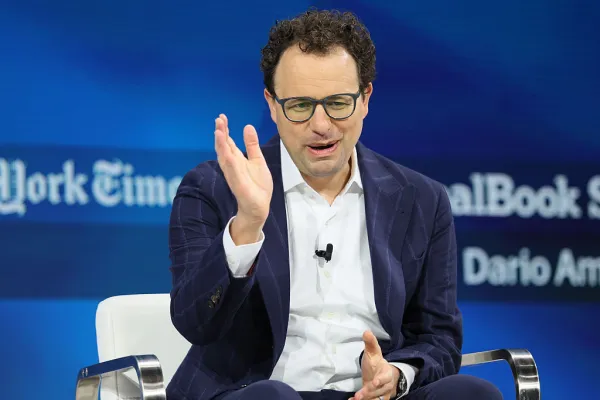
Anthropic, as most of us know by now, supplied artificial intelligence products to the U.S. government, including the War Department, which in due course summoned up a strategy document indicating its desire to deploy AI for “any lawful use.” This excited the social-justice enzymes of Anthropic’s CEO, a left-leaning fellow by the name of Dario Amodei, sufficiently to bring on a bout of squeamishness, resulting in a statement saying he doesn’t want his company’s product used for “mass domestic surveillance” or autonomous weapons systems.

Besides the fact that this is rather on the order of Boeing saying, “We’ll sell you the F-18, but here’s a list of things you can’t bomb with it,” the dystopian scenarios Amodei takes issue with are ridiculous. No one is talking about using the U.S. military to conduct “mass domestic surveillance,” save a few conspiracy-minded folks on both fringes of the political spectrum who can find harbingers of 1984 in just about anything. Nor is the technology on the verge of conceiving a “Terminator”-like system just yet.  

HOUSE GOP LAUNCHES INVESTIGATION INTO AIRBNB OVER USE OF CHINESE AI MODELS

Nevertheless, Anthropic is a private company and is within its rights to decide whether and to whom to sell its products, as it sees fit. Likewise, the Pentagon is within its rights to tell Anthropic, “Very well, thanks very much, but we’ll find another vendor,” and quietly move on.

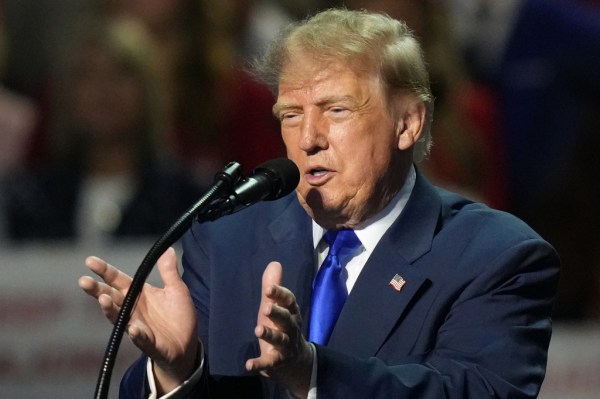
That’s not what happened, of course, and after Anthropic launched its public blitz against Pentagon policies that didn’t exist, President Donald Trump took to social media to deride the company and order “EVERY Federal Agency” to “IMMEDIATELY CEASE all use of Anthropic’s technology.” Shortly thereafter, War Secretary Pete Hegseth declared Anthropic a supply chain risk. All of this, lest we forget, happened amid a growing conflict with Iran in which AI is playing a crucial role.

As absurd as the episode is, it does illuminate a few of the broader issues orbiting our national AI policy. 

The angst displayed by Amodei is symptomatic of a rapidly gestating Luddite attitude toward AI and its related infrastructure. This “doomerism,” as some are regrettably starting to call it, is redolent of the fatalism expressed toward nuclear power. A common refrain consists of a neo-Malthusian lament over the amount of energy and water required to run the data centers that energize AI and other advanced computing technology. A deeper concern may simply be that the NextGen Luddites are afraid (ashamed?) of U.S. and Western dominance in this arena.

It is likely that Amodei shares these beliefs. It is even more likely that his ostentatiously noble calls for greater government regulation and control of his product stem less from self-sacrificial “effective altruism” than from a rent-seeking desire to erect barriers to entry to his nascent industry — the 21st century equivalent of the New York City cabbie.

On the external side of the ledger is the issue of AI-related industrial policy. Amodei is keen to revive the Biden-era export controls on advanced chips, citing a concern about handing over sensitive technology to Communist China. This concern is valid, but the conclusion is misdirected. China desires AI supremacy and will pursue it aggressively. It is far better to flood their market with U.S.-made chips — ones that fall short of our most advanced but well exceed whatever they are making — rendering them reliant on American technology. 

And yet, defenders of the Biden administration’s failed export-control strategy continue to frame the issue as though America’s only choices are surrender or restriction. Former national security adviser Jake Sullivan recently said, “I don’t accept that to get in the door for a serious conversation on AI risk with China or to come to an agreement on AI risk with China, we have to start by saying to them, ‘We’ve removed all the controls, so please be nice to us.’”

That straw-man argument misses what actually happened. Instead of stopping China’s AI ambitions, the Biden administration’s unilateral restrictions accelerated Beijing’s determination to build a fully indigenous advanced chip ecosystem while simultaneously hurting American companies at home. Washington effectively handed the Chinese Communist Party an even greater incentive to decouple from U.S. technology altogether.

CHINA IS CONDUCTING INDUSTRIAL-SCALE ESPIONAGE TO STEAL US AI TECHNOLOGY, WHITE HOUSE SAYS

Biden’s failed policy and the CCP’s concerted efforts to dissuade its people from purchasing the newly approved shipments of NVIDIA’s H200 chips have served to jumpstart China’s own advanced chip program, over which we will have effectively no control. There is precedent for this: Recall a few years back, we severely restricted China’s access to 5G technology. What did it do? Why, it created Huawei, which now runs about a quarter of the globe.

There are several morals to this story: first, that ideological posturing has no place in an area as strategically critical as the government’s use of AI. Second, the development of this technology is too important to the nation to permit it to be left to wilt under the weight of government overregulation on the false basis of hyperbolic imaginings. And third, that neither export restrictions nor any other statist exertion will help the U.S. maintain AI supremacy over adversarial regimes like China. Thank goodness the market system, as it usually does, provides us with an elegant alternative.

Kelly Sloan (@KVSloan25) is a Denver-based public affairs consultant and columnist.