

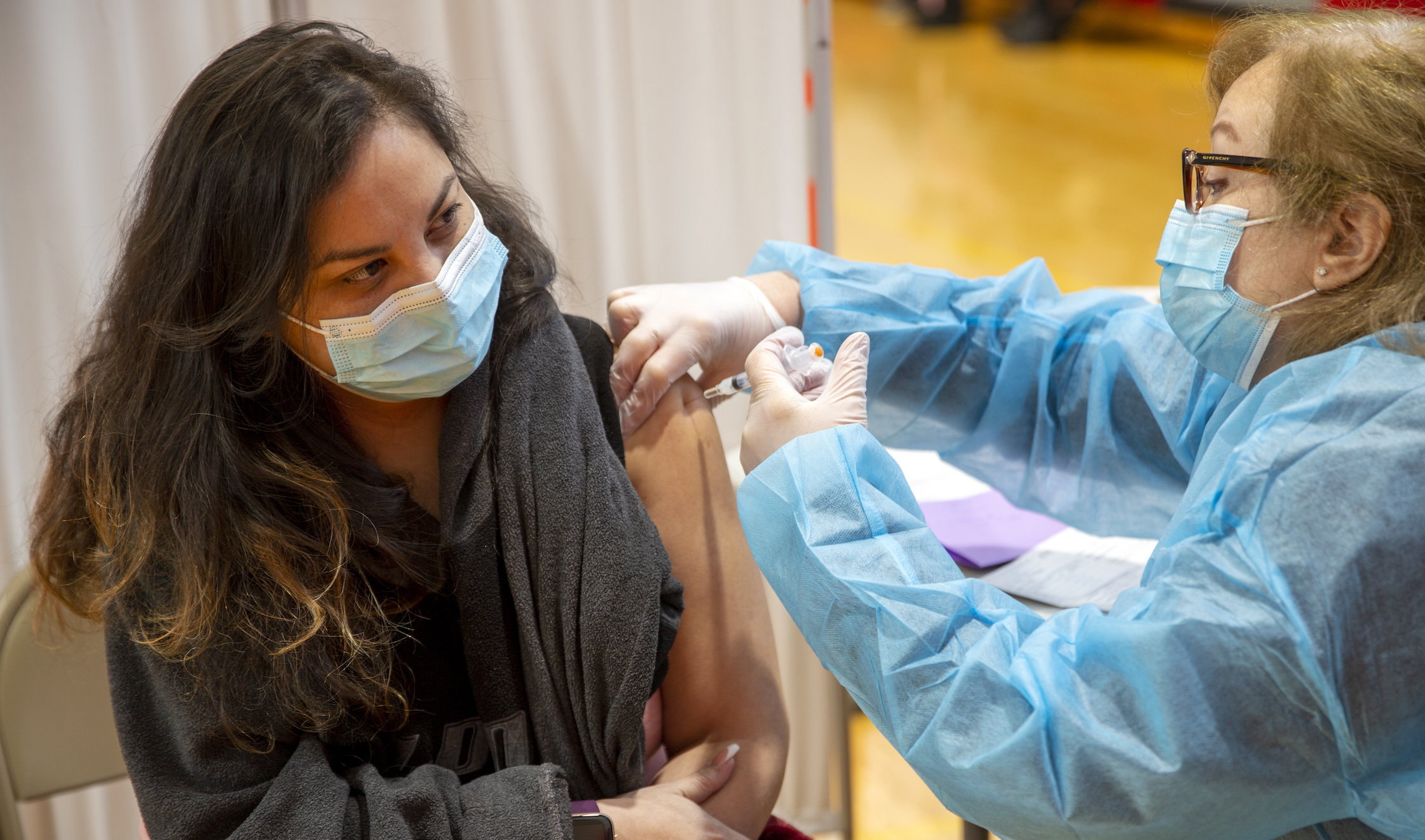
Operation Warp Speed was a historic triumph of the private sector serving a public need. Incredibly, in less than a year’s time, American companies partnered with the federal government to produce highly effective products that have sharply reduced the number of COVID-19-related hospitalizations and deaths.
Just as American manufacturers supplied the arsenal of democracy to win World War II, America’s pharmaceutical companies are providing vaccines to defeat the coronavirus.
Recommended Stories



Approximately 51% of the total population — 169 million people — had been fully vaccinated as of Aug. 18. But as the Biden administration and public health authorities strive to conquer the pandemic, momentum has slowed down, and public health authorities are rightly trying to determine the best approaches to encourage unvaccinated Americans to get vaccinated. There are also questions of what to do to prevent and prepare for the next pandemic.
There were some particularly helpful lessons that I learned as a founding member of Operation Warp Speed.
First, recognize that the reach of the federal government plus the power of the private sector rapidly produces the best results. Republicans often say the private sector can solve everyone’s problems; Democrats look to government. At Operation Warp Speed, we looked to the best of both.
In the planning stages of Operation Warp Speed, some members of our team conceived of it as a “Manhattan Project” for vaccines. That implied end-to-end control of the process by the federal government. But we quickly realized that America’s leading drugmakers would be able to create effective vaccines faster than any federal agency. Operation Warp Speed became a collaborative effort that combined the innovative genius of America’s top pharmaceutical companies with the supply chain expertise of the U.S. armed forces. That private-public partnership yielded a vaccine in remarkable time.
The current administration would be wise to replicate that model in preparing for future pandemics, even as we continue to fight this one. Private companies can use their manufacturing capabilities and cutting-edge inventory management systems to help the federal government ensure that the nation’s strategic stockpile of medical supplies such as masks, gloves, respirators, and medicines does not become unusable or obsolete.
The federal government should likewise create incentives for private-sector production of items such as generic pharmaceuticals so that the public is never dependent on another country for basic medications. This is the best way to reduce the risk of repeating what happened at the outset of the pandemic, when Americans discovered that the federal government had failed to maintain stockpiles of critical medical supplies.
Second, find leaders who think big. Three of the four individuals our team interviewed to lead this unprecedented project said that creating a safe, highly effective vaccine in less than a year’s time was flat-out impossible. Only one of them, Dr. Moncef Slaoui, said that although it would be difficult, it was possible. He was right.
Similarly, we thought outside of the box to let the Department of Defense, which has the most capable logistics experts in the world, quarterback the build-out and direction of the supply chains by which private companies such as McKesson, FedEx, and UPS would speed the vaccine to approximately 97,000 distribution centers. Creative, close cooperation between the public and private sectors was the signature spirit of Operation Warp Speed, and it should also drive the current administration’s approach to the work remaining.
Third, transparently unleash data. When we launched Operation Warp Speed, we knew we had to insist on extensive trials that proved beyond a doubt that a vaccine produced on an expedited timeline was extremely safe. The phase three trial for the Moderna vaccine, for instance, had 30,000 participants, a 94.1% efficacy rate, and no concerning safety issues reported. The success of these thorough trials armed the public with confidence to get the vaccine.
The Department of Health and Human Services should aggressively release specific data on which groups are most susceptible to COVID-19 infections, such as seniors, diabetics, and those struggling with obesity. Doctors, pharmacists, and other trusted community voices should share that data with their patients in both red and blue areas who are skeptical of getting a vaccine. Breakthrough cases are a clear concern right now; clear and timely data will empower the public with knowledge of their susceptibility and the efficacy of each vaccine.
Finally, speed counts. Many people have refused vaccines because they are waiting for final approvals from health regulators. Just as Operation Warp Speed moved fast to help stop the spread of a virus that was, at its peak, killing an average of 3,600 Americans per day, the Food and Drug Administration must perform these last clearances as expeditiously as possible. The same goes for regulatory hurdles at other agencies.
There is still much further to go to stop the spread of COVID-19 and, hopefully in time, eradicate it. We did our part in Operation Warp Speed by sprinting toward the goal in a bipartisan, data-driven way. That approach helped produce one of the greatest medical innovations in history. Sustaining it will help get our lifesaving handiwork into the arms of more Americans and protect us against future pathogens.
Adam Boehler is the founder and CEO of healthcare investment firm Rubicon Founders and a board member at the Atlantic Council.
