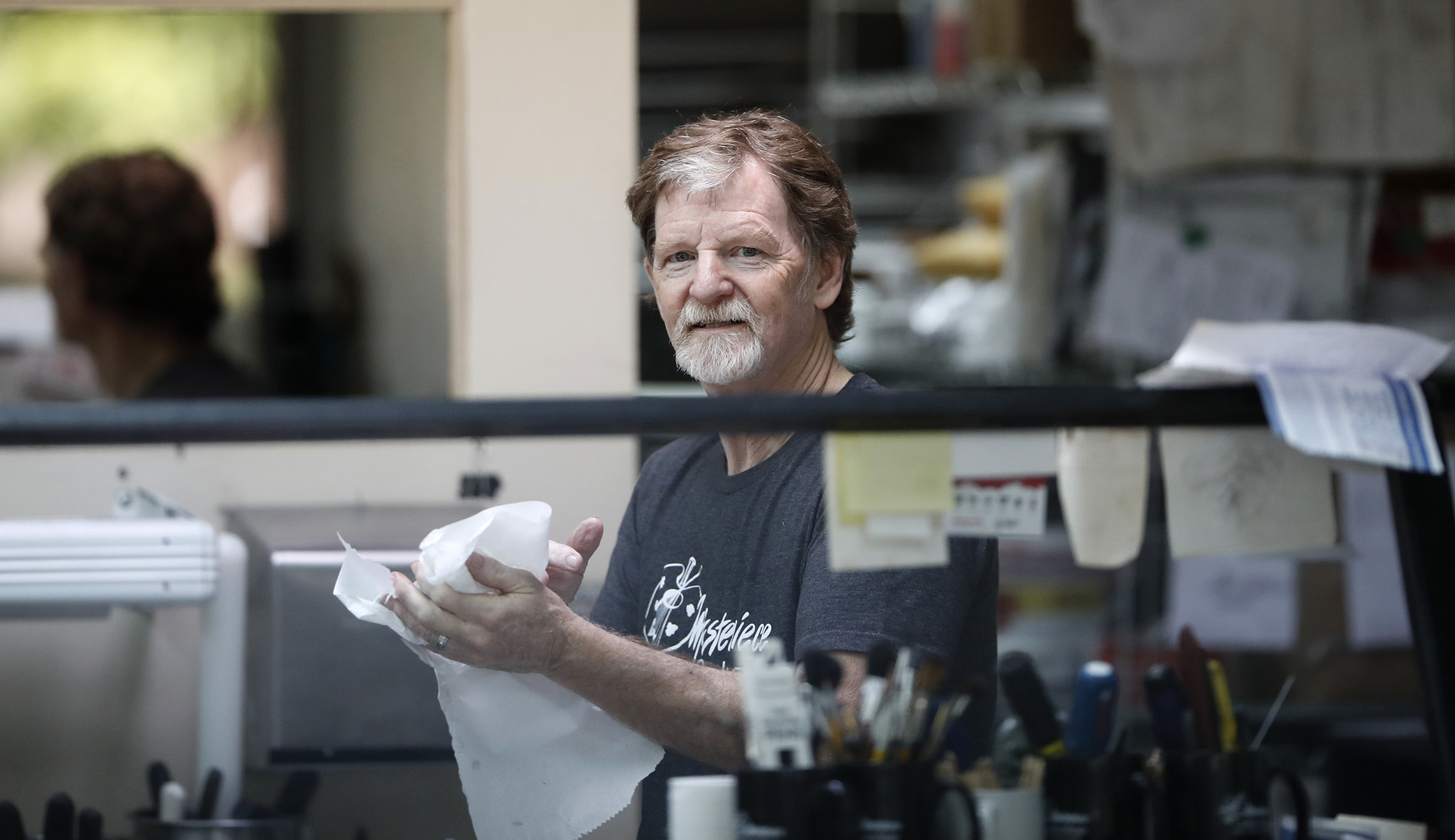
“Today is no different from yesterday.” Former Colorado Gov. Hickenlooper boomed those words to rally his supporters the day after the U.S. Supreme Court rebuked Colorado for its “clear and impermissible hostility” toward cake artist Jack Phillips and his Christian beliefs.
Looking back, that rallying cry really seems to have foreshadowed the state’s ultimate failure in prosecuting Phillips and Masterpiece Cakeshop a second time.
Recommended Stories
[Read: Colorado, Masterpiece Cakeshop end dispute pitting religious liberty against LGBT rights]
The high court ruled this past June that the government cannot show hostility to people like Phillips who are just trying to live out their religious beliefs peacefully. But the Colorado Civil Rights Commission, the same administrative agency the Supreme Court criticized for punishing Phillips the first time around, renewed its crusade against him and his religious beliefs. It filed a formal discrimination complaint against Phillips, targeting him once again for declining to create a custom cake that expressed a message in conflict with his faith.
On June 26, 2017, the same day the U.S. Supreme Court decided to review the Masterpiece Cakeshop case, a Denver-area lawyer called Phillips’ shop and asked for a custom blue and pink cake “to celebrate” the lawyer’s “transition from male to female.” Phillips had never created a cake expressing this message before. To do so would violate his religious beliefs. So, like he would do if any other customer asked for a custom cake expressing this message, his shop politely declined this request.
Phillips later learned that this lawyer “take[s] great pride” in suing businesses who allegedly “discriminate against lesbian, gay, bisexual and transgender people and serving them their just deserts.” It’s no surprise then that a few weeks later, he received a letter from the Colorado Civil Rights Division notifying him that the lawyer filed a discrimination charge against him. Nor is it surprising that a few months later, that same lawyer called Phillips’ shop again and requested a cake celebrating Satan’s birth with an image of Satan smoking marijuana.
Colorado sat on that lawyer’s charge for about a year, waiting for the U.S. Supreme Court to decide Phillips’ first case. And when the court vindicated his right not to face government hostility toward his religious beliefs and practices, Phillips thought this new charge would go away. There’s no way Colorado would still treat him as a second-class citizen after such a clear rebuke from the high court, he thought.
He was wrong. The commission doubled down on its hostility toward him and his religious beliefs, finding that he had “violated” state law by politely declining the lawyer’s request, even though Colorado freely allows other cake artists to decline custom cake requests they find objectionable for nonreligious reasons. In this way, Colorado officials insisted on treating Phillips worse than other cake artists, all because those officials despised his religious beliefs.
What’s more, newly discovered statements by those state officials further confirmed their hostility toward religion. The fact that one commissioner called Phillips a “hater” on Twitter was already publicly known. But a few weeks ago, a Colorado state legislator disclosed that he spoke to a current commissioner who expressed the belief that “there is anti-religious bias on the Commission.” Just last week, statements surfaced from a June 2018 public meeting in which two commissioners voiced support for comments made by former Commissioner Diann Rice. Those comments, which the U.S. Supreme Court condemned in its ruling for Phillips last year, called religious freedom “a despicable piece of rhetoric.”
In a sense, then, former Gov. Hickenlooper was right when he said nothing had changed following the Supreme Court’s decision in Phillips’ first case. Nothing had changed about Colorado’s bias against religious people, in spite of the Supreme Court’s rebuke. For the commissioners, it was just business as usual. And that was the problem.
Perhaps that is why the state agreed on Tuesday to dismiss the case. The commissioners likely couldn’t bear the thought of having newly discovered evidence of their ongoing anti-religious hostility dragged through the media once again, perhaps ending with another losing court decision.
Colorado’s decision to back down is a win for everyone. States have no business harassing people like Phillips. He serves everyone. But like many creative professionals, he cannot in good conscience express every message through his custom cake art. The First Amendment exists to protect people like him.
Jake Warner is legal counsel with Alliance Defending Freedom, which represented Jack Phillips and Masterpiece Cakeshop in a federal lawsuit against the Colorado officials for their prosecution of Phillips and his business.
