The problem with electric cars

The age of the electric car is here. Everyone says so. Make no mistake: The electric car is happening. Right now.

Mind you, the electric car has been happening, in fits and starts, since before Henry Ford. Electric motors lost out to the internal combustion engine as the automobile was taking over America.

They have raised intermittent challenges now and again. The last serious attempt at an electric car came from General Motors in 1990, when the company began work on a project that culminated in the EV1, a two-seater which could go 75 miles on a single charge.

GM spent $1 billion on the car; 800 of them were eventually leased to customers. A couple years later they were all recalled and scrapped. This time, we are told, it will be different. It always is.

The latest EV boom originated with a Silicon Valley start-up called Tesla Motors. Under the direction of Internet entrepreneur Elon Musk, Tesla built a sexy, no-compromise electric sports car — it goes from 0 to 60 in 3.7 seconds with a range of 244 miles.

Tesla’s big innovation was replacing the heavy, lead-lined batteries previously used in EVs with the lighter, lithium-ion batteries commonly used in laptop computers. In 2008, the Tesla Roadster went into production and won rave reviews. At $109,000 a pop, it wasn’t a mass-market machine, but the automotive world was entranced nonetheless.

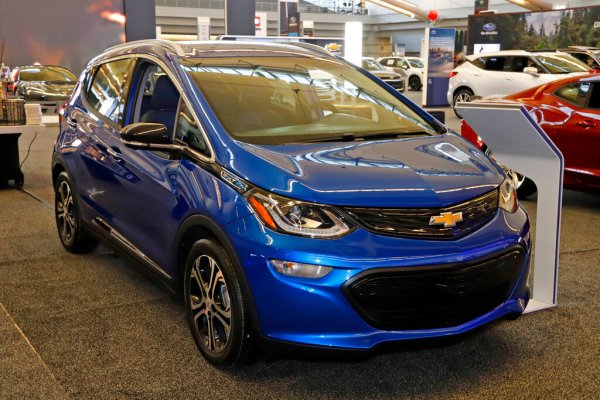
GM chief Bob Lutz used Tesla’s example as an argument to fast-track the recently released Chevy Volt, a four-seat sedan powered by an electric motor. GM markets the Volt as an EV that can go 40 miles on a single charge, but also has a “range extending” gas engine that kicks in to power the motor if you run out of juice. With the gas engine engaged, GM claims the Volt gets 50 mpg on the highway. Its sticker price is $41,000.

Nissan has just rolled out its own EV, a four-door hatchback called the Leaf. It lacks the Volt’s gasoline backup but boasts a 100-mile range and a low price of $32,780 — practically free by EV standards.

These cars are just the tip of the EV iceberg. Later this year another startup, Coda Automotive — working in partnership with the Chinese! — will begin selling a $44,900 sedan that seats five and gets 100 miles per charge. Over the next two years, Mitsubishi, Ford, Toyota, Honda, Fiat, Renault, and Smart all plan on bringing an EV to market.

And Tesla is preparing to reinvent the EV again in 2012 when it moves the Model S into production. The Model S is a four-door sedan with three rows of seats. It will have a range of 160 miles and an expected base price of $57,400.

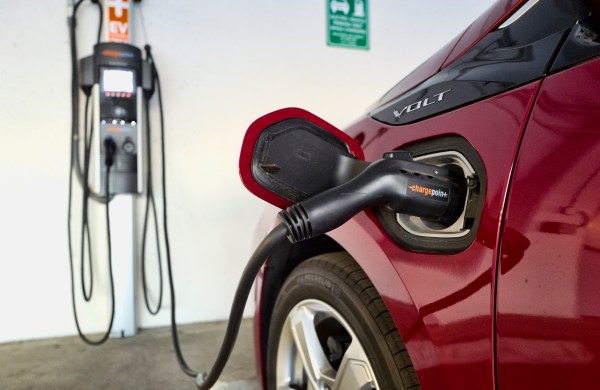
Soon, a network of stations for quick-charging electric cars will appear, letting you take your EV on long trips, just like a gas-guzzler. And we’ll need them, because President Obama has set a national goal of 1 million EVs on the road by 2015.

If only it were all true.

Let’s start with the Volt. Popular Mechanics has tested the Volt’s mileage claims and found that it gets 33 miles on its electric charge (not 40) and that its miles-per-gallon performance is 31.67 in the city and 36 on the highway (not 50).

Edward Niedermeyer, editor of the Web site The Truth About Cars, writes that the Volt is “a vehicle that costs $41,000 but offers the performance and interior space of a $15,000 economy car.” The Volt’s 2011 production run was originally slated to be 60,000 units; it’s been cut to 10,000.

By comparison, the Leaf is a world-beater, unless you look at the fine print. It might have a 100-mile range, but it takes 20 hours to charge on a standard 110V outlet. The good news is that you can charge the Leaf in just eight hours if you have a 220V outlet — and even faster if you can find one of the “quick charge” stations that EV evangelists promise will mushroom across the country some day. There are currently 500 charging stations in the United States — 400 of them are in Southern California.

A number of studies have examined people’s willingness to buy electric vehicles in the near and medium term. Most analysts predict that about 400,000 EVs will be sold annually by 2020.

The principal problem for EVs is cost. The Boston Consulting Group figures that the exorbitant prices of EVs won’t be attractive to the average consumer until oil goes above $280 a barrel.

And if EVs were to take off, they would create a problematic loop for themselves: The more electric cars, the less demand for oil, and the lower the price of gas — making EVs even less competitive. Any way you look at it, the electric car is a lousy business to be in, which probably explains why the federal government is elbow-deep in that business.

In an attempt to fulfill Obama’s EV goal, the government has been doing everything it can to get electric cars on the road. It started by goosing the supply side of the equation: Ford was given a $5.9 billion loan through the Advanced Technology Vehicles Manufacturing Loan Program, while Nissan was given $1.6 billion. Another $2.4 billion in outright grants was doled out to component makers from the stimulus package.

The government is backing up its bet by tinkering with the demand side, too. If you buy an EV, the feds give you $7,500 and rebates for purchasing home charging kits. Some states have their own incentives to sweeten the pot. California, for instance, adds another $5,000 in cash back. The Golden State even throws in a carpool sticker so that EV drivers can use the HOV lanes whenever they want.

In individual cases, the government is in even deeper. The Volt, for instance, received $240 million in Department of Energy grants; part of a $14 billion loan given to GM to retool production facilities; $150 million in stimulus to the Korean company that makes the Volt’s battery; and $1.5 billion in incentives earmarked for consumers. (All of which leaves out the $50 billion bailout of General Motors.)

Just to be clear: The feds were not a bunch of sap investors. When the government took over GM in 2009, a task force reported that the Volt “will likely be too expensive to be commercially successful in the short term.” The green eyeshades at the White House kept it anyway.

Jonathan V. Last is a senior writer at the Weekly Standard, from which this article was condensed.

Related Content