

President Joe Biden’s refusal to endorse the restriction of Russian tourist travel in the West reflects a tactical and moral disagreement about how to turn Russia’s citizenry against the war in Ukraine.
Recommended Stories


“Those who travel — they are the wealthy ones, who actually continue their luxury life … and they don’t give a damn that tens of thousands of people are killed, murdered, raped, in Ukraine,” a senior European official said. “So we have to raise the price tag for Russians.”
A series of European allies on the front lines of NATO’s boundary with Russia have signaled their desire to ban Russian citizens from entering Europe on tourist visas, an idea that has drawn opposition from the heavyweights of Western European politics, as well as Washington. The proposal drives some force from the perceived need to take actions that thwart Russian President Vladimir Putin’s apparent desire to downplay the significance of the war, yet analysts and even some proponents of the restrictions question the effectiveness of such a policy.
“Everybody bears some kind of responsibility — you are part of this country, and you have to pay the price,” Atlantic Council visiting fellow Petr Tuma, a career Czech diplomat, told the Washington Examiner. “I’m not naive. I don’t think this will help us to get Russians to understand that they have to pay a price [and so] they might have to reconsider their support for Putin. I don’t think so. I even think that we may lose some of those who were hesitant, who’ve been somehow supportive of Europe, because they might feel abandoned now. But I think it has to be done, as a matter of principle.”
US ANNOUNCES LARGEST UKRAINE AID PACKAGE ON SIXTH-MONTH ANNIVERSARY OF INVASION
That argument could carry the day soon in several European countries adjacent to the war, despite the resistance to such restrictions in the wider European Union.
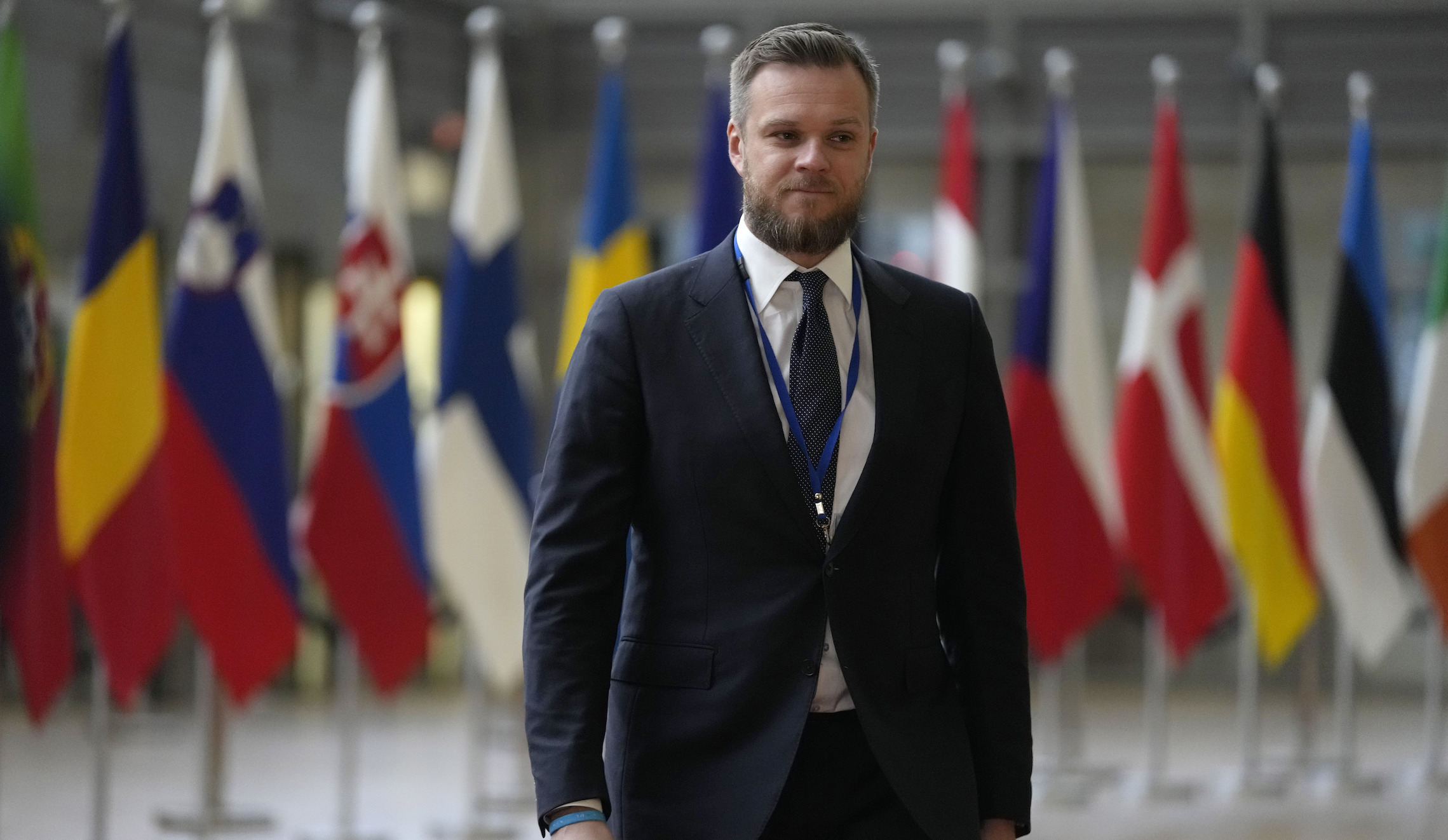
“First of all, we are seeking a European solution because it’s the most sustainable and legally correct one,” Lithuanian Foreign Minister Gabrielius Landsbergis told reporters on Tuesday. “If such a solution is not found, we do not rule out looking for a regional solution that would involve the Baltic states, Poland, and, potentially, Finland.”
Such an initiative would flout the preferences of EU chiefs and the Biden administration. European Union High Representative Josep Borrell panned the idea of restricting Russian travel — “to forbid the entrance to all Russians is not a good idea” — on the grounds that Western powers have a humanitarian responsibility.
“To the oligarchs, we must not open the door, of course,” the former Spanish politician said. “We have to block the entrance to these Russians. But there are many Russians who want to flee the country because they don’t want to live in this situation.”
U.S. officials have “impose[d] visa restrictions on 5,000 individuals in response to” the war, according to the State Department, but Secretary of State Antony Blinken’s team echoed Borrell’s argument while also emphasizing that an imputation of collective guilt for Russia’s invasion should not animate the visa policy.
“We’ve also been clear that we do have to draw a line between those who are culpable for this aggression — culpable in some ways — and the people of Russia,” State Department spokesman Ned Price told reporters Monday. “So we want to ensure that we’re including — we’re continuing to promote accountability, but that we’re doing so in a way that is targeted at those who, in the first instance, started this war and who, much more than others, could bring this war to a swift close if they chose.”
Estonian Prime Minister Kaja Kallas, on the other hand, has argued that “visiting Europe is a privilege, not a human right.” Likewise, Finnish authorities have announced that they will slash tourist visa approvals by as much as 90%.
“Tourist visas will not stop completely, but their number will be significantly reduced,” Finnish Foreign Minister Pekka Haavisto said last week. “This means that other types of visas — visits to relatives, family contacts, work, study — will be given preference and more time.”
Kremlin officials have denounced such proposals as a function of policymakers “literally competing with each other to take unfriendly measures against Russia,” in keeping with their habitual argument that Western officials are motivated by anti-Russian bigotry. In that sense, the maneuver to convince Russian citizens that the war has created an inconvenience for them might tend to reinforce the Kremlin’s domestic political position.
“If this is really a policy response to the war, or to Russia, it’s not a very smart one,” Catholic University professor Michael Kimmage, a Cold War historian responsible for Russia and Ukraine during his tenure with the State Department’s policy planning staff, told the Washington Examiner. “It’s not going to hit the people who are directly in the decision-making circles, many of whom are still selling gas and oil to Europeans hand over fist and making money. … And also, I think in some ways that will probably help the media messaging machine within Russia.”
Yet this dispute centers on the rare sanction, as it were, in which the policy choices of the smaller states on the periphery of NATO may outweigh the preferences of their larger Western allies. That’s because the European Union has closed its airspace to Russia, meaning that Russian citizens looking to travel outside their country often need to travel by land into neighboring European states to board a flight elsewhere.
“If a person crossing the Estonian, Latvian, Lithuanian, Finnish, or Polish border says that he or she thinks that Crimea is not occupied, we can assume that allowing this person in is not in line with our national security interests,” Landsbergis said. “Lithuania can do this unilaterally.”
Opposition to the restrictions in the westerly wings of NATO and the European Union reflects, their opponents on this argue, their greater distance from the war. “Because they are far, far away, they don’t feel it — they don’t feel the mass [of tourists],” the senior European official told the Washington Examiner, adding that most tourists seem to support the war. “We have talked [about] this from spring, that we have to raise the price of war for Russia. Russia means also Russians.”
Viewed from afar, it remains questionable whether the restrictions would have the desired effect.
CLICK HERE TO READ MORE FROM THE WASHINGTON EXAMINER
“It feels to me like it’s driven a lot by domestic politics,” Kimmage said, referring to the anger felt against Russia in the countries nearest to the war zone. “It’s certainly a way of making life inconvenient for these people. Whether it makes the war inconvenient is maybe another question.”
