As far as the Democratic primaries are concerned, Hillary Clinton is assembling a huge campaign organization to run against … nobody. A presidential contender needs an opponent, a workout, a challenge to be in shape for a general election campaign — especially since Clinton, if she is the Democratic nominee, will face a Republican opponent who has been through a rigorous and toughening nomination battle. Despite that, Democrats appear ready to allow Clinton to stroll to the nomination virtually unopposed.
Faced with no competition within her party, Clinton is reportedly trying to appear tough and ready to rumble. “Her advisers are working hard to fashion ways to make her seem hungrier, scrappier and less like the inheritor of Obama’s mantle,” report the Washington Post’s Dan Balz and Anne Gearan. “A small but expanding cadre of close advisers is looking at ways to keep her in fighting form through a slow and uneventful early campaign season.”
Recommended Stories
Democrats have to realize that’s not good for their party. Are they ready to see their nominee’s very first debate be a high-stakes showdown with the Republican candidate just weeks before the general election? That’s a decidedly scary idea.
So whether she wants them or not, Hillary Clinton needs opponents. But who? Yes, a few long shots have made noises about running. But heavy hitter Sen. Elizabeth Warren now says — convincingly — that she will not run. And while Vice President Joe Biden is going to Iowa this week, it’s unclear what he really plans to do. Besides, Biden, who will be 74 on Inauguration Day 2017 — five years older than the oldest incoming president ever — seems obviously at the end of a long career and not at the beginning of a new chapter.
But there are several Democrats out there who could not only provide Clinton some competition but also do themselves a lot of career good in the process. Many presidential candidates — even the ones who never had a chance — come out of a campaign ahead of where they were before. Name recognition, influence within the party, the ability to make money —they end up in better shape than they began. The benefit could be a more prominent media presence — ask Mike Huckabee about that — or more post-campaign business opportunities. And if Hillary does indeed win the nomination, one of the challengers just might end up being her vice presidential pick. A campaign, provided it doesn’t get too nasty or too personal, is a good way to audition for that.
Recently I asked a few political professionals, Democrat and Republican, to come up with the names of Democrats, in office and out, who could do themselves some good by running. And whatever benefit the candidates might reap from it, the Democratic Party will likely reap much more by having a competitive process that yields a stronger nominee. The list:
John Hickenlooper. The Colorado governor is coming off an electoral victory and is now term limited. “He has personality, and liberals like him because he took on the NRA in a gun state,” notes one GOP strategist.
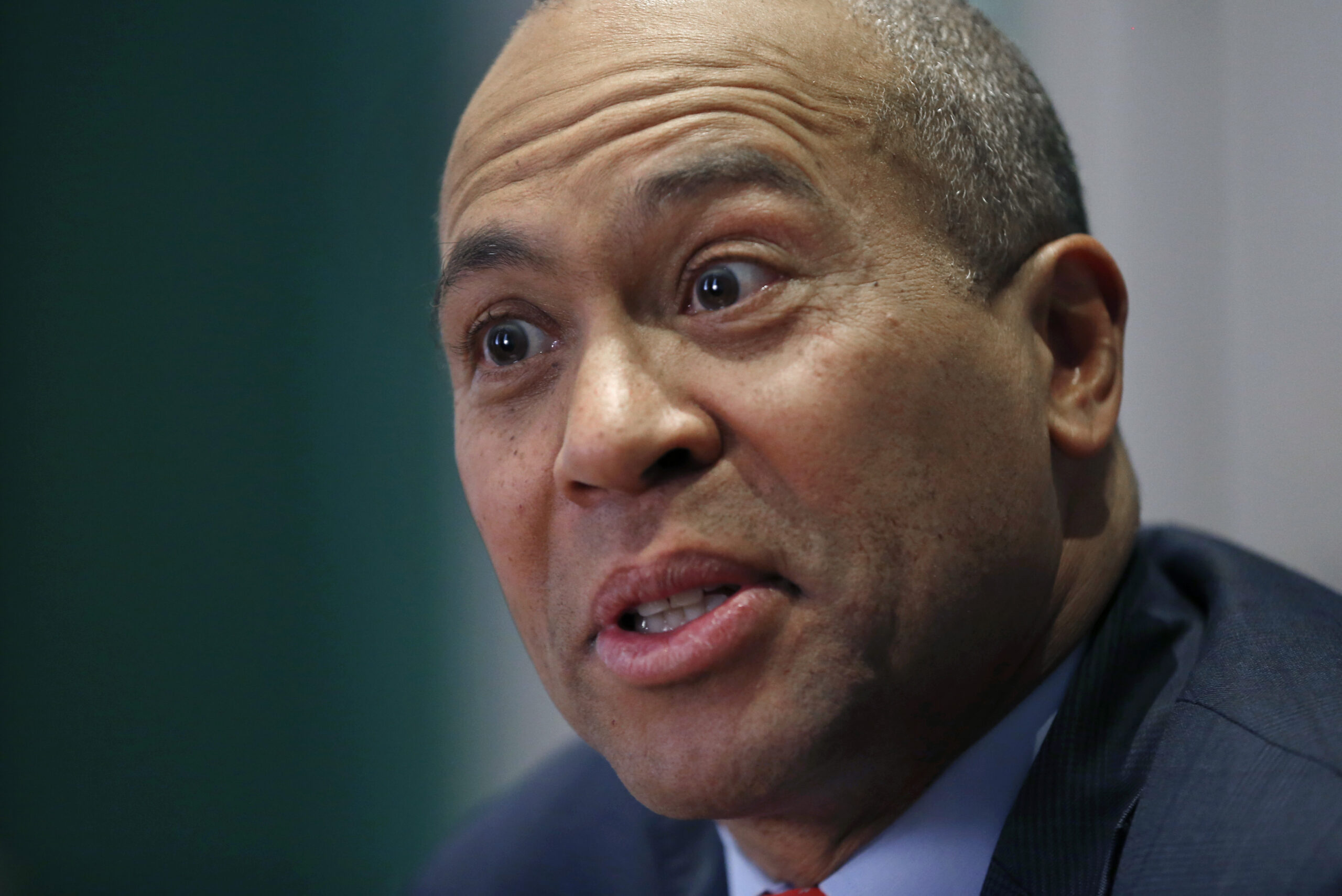
Deval Patrick. The former Massachusetts governor’s presence would add not only another governor to the race but an African-American candidate as well; Democratic fields included at least one black candidate in 2004, 2008 and 2012. Yes, Patrick has said he won’t run, but at the same time expressed concern about Clinton’s “inevitability.” Could he change his mind?
Joe Donnelly. The Indiana senator “is a blue dog Democrat who won statewide in a year that Romney won Indiana by about 10 points,” notes one Republican. “Not bad to run on.”
Antonio Villaraigosa. The former Los Angeles mayor wants to run for Senate now that Barbara Boxer is retiring. But he’s still on some Democrats’ wish lists. And also: Will the party that owed much of its presidential electoral success in 2012 to overwhelming support among Hispanic voters have no Hispanic candidate on the ticket in 2016?
Al Franken. The safely re-elected Minnesota senator would represent the progressive wing that Warren apparently won’t, and he’s funnier than Bernie Sanders. And if Franken doesn’t want to go, fellow Minnesota Sen. Amy Klobuchar probably does.
Bill Richardson. The former New Mexico governor “is Hispanic, the Clintons already hate him because he went with Obama in 2008, and he likes the limelight,” says the Republican strategist. “What does he have to lose?”
Jerry Brown. Yes, the California governor ran for president in 1976, 1980 and 1992 and would be 78 years old on Inauguration Day. But he’s still going strong politically and has appeared to take pleasure in the past in making life unpleasant for the Clintons.
Al Sharpton. The Right Reverend Al ran for president in 2004, and the intervening years have done little to erase his race-hustler and tax-evader problems. But he seems to get away with it — he’s now a White House insider — and if Deval Patrick does not run, there would be no black candidate in the Democratic field.
Martin O’Malley. Okay, the former Maryland governor is not catching on so far. But if he runs, just watch: He’ll end race in more prominent position than he began. And: “What else is he going to do these days?” asks one politico.
Bernie Sanders. Running is not a hard decision for the Vermont senator. “Just getting on a debate stage helps him elevate his socialist agenda,” says a Republican consultant.
Jim Webb. The former Virginia senator isn’t all that busy, and even though there has been a lot of talk about this or that progressive running at Clinton from the left, a challenge from the right, at least on some issues, could spice up the race and make some moderate Democrats happy.
There are still more names. Of course Andrew Cuomo is around, but he appears to be so unpopular with Democrats that it’s not a possibility. Brian Schweitzer is around, too, but has displayed a gaffe-a-minute problem that would sink him fast. One politico even suggested billionaire Democratic donor Tom Steyer should just cut out the middleman and run himself. And finally, a Democratic strategist joked: “Scott Brown. Kidding — sort of.”
Think those are just too many no-names for a presidential field? Well, the first Democratic debate of the 2004 race featured nine participants: Joe Lieberman, John Kerry, John Edwards, Howard Dean, Dick Gephardt, Dennis Kucinich, Carol Moseley-Braun, Bob Graham and Al Sharpton. The first Democratic debate of the 2008 race featured eight contenders: Joe Biden, Bill Richardson, Hillary Clinton, Barack Obama, John Edwards, Dennis Kucinich, Chris Dodd and Mike Gravel.
One of those 2008 participants, toughened by a hard-fought primary process, became president. And if the rosters show anything, it is that there is a lot of room for Democrats to jump in the race this year. All they’ve got to do is try.
