

Tom Homan is the man of the hour, according to Washington insiders.
Those insiders, including senior officials at the White House and Secretary Kristi Noem’s Department of Homeland Security, credit the White House border czar with putting out a fiery mess that immigration enforcement operations in Minneapolis had descended into under Noem’s leadership, according to eight people who spoke with the Washington Examiner.
A former Trump White House official praised President Donald Trump’s decision to push out Border Patrol’s Greg Bovino, who reported directly to Noem, and bring in Homan to de-escalate a powder keg’s worth of tension in the sanctuary city.
“I think it’s the best thing that the president could have done,” the official said on the condition of anonymity in order to speak freely. “He’s been so happy with how all this is going that Tom Homan, essentially, is going to be the de facto DHS secretary.”
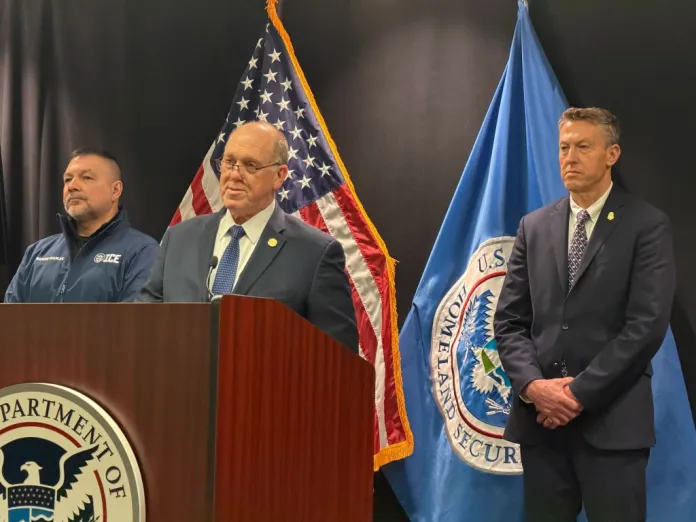
“He absolutely saved the day,” said a retired senior administration official in frequent contact with those carrying out immigration operations.
A third source close to the White House said, “Anyone who’s been paying attention knows Tom has been the adult in the room, and he’s proving it once again for all to see.”
“He goes about his business uninterested in the photo ops and gets s*** done,” the third person said.
Tensions reach a climax
In June 2025, Border Patrol agents who were normally assigned to various parts of the border were sent to Los Angeles to provide security for ICE personnel making arrests. From there, Noem directed Border Patrol to assist ICE in arresting illegal immigrants inside the country as opposed to at the nation’s borders. The operation unfolded separately from ICE, meaning the two agencies did not work together under one chain of command.
As Border Patrol agents moved from city to city to help ICE in the second half of 2025, they faced pushback from some communities, but nowhere was that pushback more significant than in Minneapolis.
More than 3,000 federal police from ICE, Border Patrol, Customs and Border Protection customs officers, and Justice Department agents were sent in to Minnesota between December 2025 and January.
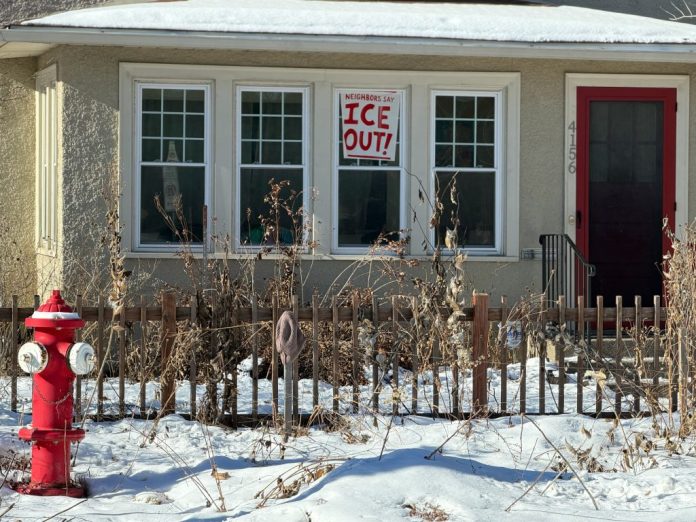
“ICE OUT” signs were plastered atop piles of snow at the ends of driveways, taped inside second-story windows, and spotted up and down many blocks across residential Minneapolis.
In an effort to arrest a criminal at large, motorcades of a dozen government vehicles pulled into neighborhoods, half a dozen or so federal police got out to pursue that person, while all others on scene provided back-up and security as groups of whistle-blowing activists followed the procession, often interfering by using vehicles or people to block the government vehicles.
The blowback against federal immigration enforcement was largely over the perception that Border Patrol agents in particular were apprehending and arresting people on the street day and night rather than going after specific criminal illegal immigrants, as well as that agents were using too much force, even in reacting to protesters.
“It was an unsustainable immigration enforcement plan that had no true strategy in mind, no achievable outcome,” a former CBP senior official explained.
Three weeks ago, the situation in Minneapolis reached a climax following the fatal shootings of Renee Good on Jan. 7 and Alex Pretti on Jan. 24.
The fixer arrives in town
Trump’s first order of business on Jan. 26 was to dispatch Homan to Minneapolis to take over federal operations and communications with state and local officials. Noem was told to fire Bovino.
Complicating matters, Republicans on Capitol Hill demanded an investigation into Pretti’s death, while Democrats threatened a partial government shutdown.
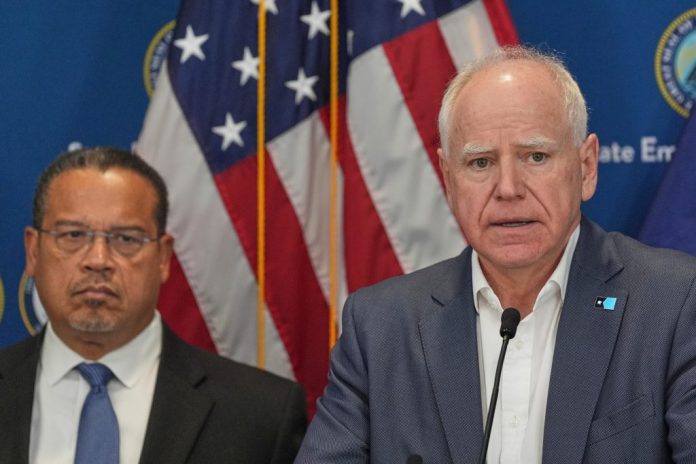
Trump spoke with Gov. Tim Walz (D-MN) and Minneapolis Mayor Jacob Frey, both of whom the administration had suggested shared blame for the unrest, based on their calls for Minnesotans to resist deportation efforts. But on Truth Social, Trump referred to his conversation with Walz as a “very good call,” suggesting the two leaders discussed a possible de-escalation of “Operation Metro Surge.”
The idea was that Homan would negotiate a deal. An aide for Walz said the president “also agreed to look into reducing the number of federal agents in Minnesota and working with the state in a more coordinated fashion on immigration enforcement regarding violent criminals.”
Homan was described by a fourth person as having taken a diplomatic approach as opposed to Noem and Bovino, who did not sit down and talk with Minnesota officials during the two months they oversaw operations in the state, Minnesota Attorney General Keith Ellison disclosed in a Senate hearing Thursday.
Homan “went and sat at the table,” the second person said. “This isn’t a retreat, it is a tactical reassessment.”
Jason Owens, the previous national Border Patrol chief, said one of the keys to lowering the temperature on the ground was a willingness to meet in person with elected leaders who have endorsed “sanctuary” policies that prohibit local and state police from facilitating ICE’s requests that illegal immigrants in custody be turned over.
“At the end of the day, we’re all on the same side, and that is, we all want what’s best for this country, and to be able to keep that in mind means that you can maintain open lines of communication and dialogue, and that is everything for our system to work,” Owens said. “I congratulate Tom on going in there and establishing those lines of communication and taking an approach that looks over the horizon, that focuses on not just enforcing the law and making the community safe, but also maintaining those critical relationships that have to exist between the federal, state, and local governments.”
What Homan changed
A seventh official, a senior staffer at the White House, said the tide quickly shifted as Homan hit the ground.
“He’s just been so clear-eyed about wanting to stop the chaos — prioritizing the violent illegal criminals as opposed to the Greg Bovino round-’em-all-up school of thought — but stressing to the base that ‘we are 100% committed to carrying out President Trump’s mass deportation promise,’” the White House official said.
On the ground in Minneapolis, Homan said the talks had paid off and that they had reached an agreement for a drawdown of federal police in the city in return for county and state jails’ willingness to turn over select illegal immigrants in custody. Days later, Homan announced that 700 federal police would be leaving Minneapolis as more jails in the state began to work with ICE.
Federal police would focus on arresting illegal immigrants with criminal records, similar to what the Biden and Obama administrations did.
“The arrests will not stop, but the abysmal tactical inefficiencies will,” the second official said.
Part of what Homan fixed was having ICE and CBP operate separately. By placing all federal police sent in to Minnesota under ICE’s authority, it streamlined planning and ensured that the people being targeted were the “worst of the worst,” as Trump had promised to target.
Homan has also asked local police to help shield ICE officers from activists who turn violent, imploring them to respond to 911 calls about attacks on immigration officers “not to enforce immigration law, but to keep the peace.”
On Thursday, Homan announced that Trump approved the conclusion of a surge of federal immigration authorities into Minnesota following more than 4,000 arrests statewide.
“Thanks to Tom’s work in Minnesota, the Administration was able to secure unprecedented cooperation with local leaders which put us in a position to end the surge without compromising on immigration enforcement,” an eighth person and White House official said in a statement. “Tom has done an excellent job striking the balance of coordination with local democrats while always upholding the President’s promise to enforce immigration law and conduct mass deportations.”
Immigration in the midterm elections
With under nine months until the midterm elections in November, voters will be the ones to decide if what happened in Minnesota matters.
“Now, the question is, was Tom tapped in [time] to fix the mess too late? The November elections will be the judge,” the third person said. “With [Homan], it’s going to make it very difficult for the Democrats to continue their strategy of objecting and fighting back. Because Homan, and the strategies that he employs, show that the White House is the true good actor in the situation.”
NOEM AND LEWANDOWSKI WAGED CAMPAIGN TO OUST TRUMP’S BORDER LEADER
Regardless of implications on the election, the retired senior agent at CBP’s Washington headquarters was not optimistic that the way Border Patrol agents were deployed in Minnesota would be quickly forgotten by the public.
“The previous enforcement posture negatively impacted the Border Patrol brand and overall credibility that will take us another 100 yrs to repair,” the former agent said.
