In Focus delivers deeper coverage of the political, cultural, and ideological issues shaping America. Published daily by senior writers and experts, these in-depth pieces go beyond the headlines to give readers the full picture. You can find our full list of In Focus pieces here.
Why do parents spend tens of thousands of dollars a year on private school? Is it selfish to do so? Does it help the child get ahead in life? Is it merely a social club?
Private school discourse has been ramping up in the press and on social media, bringing plenty of confusion, guilt, recriminations, and misunderstandings.
HEY, PARENTS, LEAVE THOSE KIDS ALONE
The discussion is confusing because education debates tend to skip over many unstated premises. And often, the different sides don’t agree on those premises.
Underlying this debate over private schools are deeper questions on which we may not agree. These are questions about gender, morality, family, and frankly, what the purpose of education is.
Is private school good?
Parents who send their kids to private schools are far happier with their children’s education than are parents who rely on public schools.
A new study by 50Can, a network of local education activists, found that nearly two-thirds of private-school parents (religious schools and secular) say they are “very satisfied” with the schools, compared to 42% of parents who send their children to traditional public schools (that is, not charter schools or virtual schools).
Also, private school students fare better on basically all measures.
At age 15, students who have been in private schools score better on standardized tests, are more psychologically adjusted, and exhibit less risky behavior (drugs, sleeping around, etc …) than public school kids do. Men and women educated in private schools are more likely to marry, less likely to divorce, and less likely to have a child out of wedlock.
These correlations hardly prove that private schools are better for kids, though. For starters, the selection effect here is huge: Private schools cost money, and so kids are private schools are from wealthier families, which gives them all sorts of non-school-related advantages. That is, maybe private school kids are better adjusted and more academically oriented before they enter school.
Also, peers have a great effect: Being around other skilled, intelligent, emotionally stable children being raised by married parents makes school more rewarding. Also, going to school with wealthy, successful people builds valuable networks. (See the Ivy Leagues, for an analogy.)
Indeed, teachers unions and liberal journalists contend that private school education has no positive effect outside these confounding factors. “After controlling for family income, parental education, neighborhood socioeconomic makeup, and other background variables, the private school advantage … vanished,” Vox.com writer Sigal Samuel noted, citing one recent study.
This was part of an article asking, “Is it wrong to send your kid to private school?” The piece responded to a parent who wrote in: “I worry that by taking my child out of public school, I’m contributing to the problem” of falling public school funding.
While this was a liberal letter-writer, this concern is adjacent to an occasional conservative objection to private schools: They potentially weaken a local community by detaching parents and children from a local institution that, in many places, is the strongest institution of civil society.
Yet, private schools remain popular. The obvious explanation is that religious parents want religious education. More to the point, they want an education that reinforces their values.
But that understates the problem private schools are solving today. The problem with public schools for many parents is not merely that they fail to teach the morality and the worldview many parents want for their children. No, public schools are not too secular. They are, in their own way, too religious.
In many U.S. cities and large suburban counties, the public schools impose their own extremist worldview, their own radical dogma. This includes left-wing teaching on race, faddish teachings on sexuality, and harmful new teachings on gender.
Public school systems don’t merely teach about these ideas, or try to increase acceptance of these ideas: They preach them as unerring truth that only a bigot would reject. If parents disagree, the schools see their job as liberating children from those backward parents.
California, Maryland, Virginia, and Minnesota provide some harrowing examples.
‘Mind your own damn business’
Minnesota Gov. Tim Walz (D), while running for vice president in 2024, proclaimed a new “Golden Rule: Mind your own damn business.”
What did Walz mean by the line? Specifically, he said, “mind your own damn business. I don’t need you telling me what books to read.”
Walz was referring to his so-called ban on book bans. This law prohibited parents, or even principals or local school boards, from having any say over which books went into school libraries. The “book bans” Walz objected to: parents asking schools to pull from shelves books like This Book is Gay, a perverted work of pornography.
Often, the “banned books” were so vulgar and obscene that parents who read passages aloud at school board or local government meetings were censored, or their comments were labeled with warnings for graphic language.
Walz’s view, then, is this: It is not your business whether a school librarian puts feces-eating porn before your middle-school child — it’s Walz’s business.
The broader story is that large liberal-run school systems see parents not as partners, but as rivals or enemies.
Montgomery County, Maryland, provides a stellar example.
The massive school district had 160,000 students before the COVID-19 pandemic. The school stayed closed (“held remote schooling”) for more than a year. The teachers protested against reopening even in spring 2021, with their keynote speaker at one rally declaring, “You will not sacrifice our lives, disrupt our communities, and endanger our students, for what? Test scores? Or a few folks to get their free babysitters back? … Keep the schools shut!”
The speaker even quoted Vietnam-era anti-war protester Mario Salvi: “There is a time when the operation of the machine becomes so odious, it makes you so sick at heart, you cannot take part. You can’t even passively take part. You’ve got to put your bodies on the gears, upon the wheels, upon the levers, upon the apparatus, and you’ve got to make it stop.”
The “machine” against the teachers were raging, of course, was school. The forces so “odious” to the teachers union were parents and students who wanted to attend in person.
More recently, Montgomery County Public Schools fought all the way to the Supreme Court to deny parents the right to opt out of their left-wing sexuality and gender programming.
MCPS formerly allowed parents to opt-out of this sort of education, but then “MCPS decided to stop the opt-outs because it received too many requests” as SCOTUS Blog reported.
The ACLU, the school district’s ally in the fight, explained that these opt-outs undermined the purpose of the school system: “If the court rules that religious parents can micromanage the education of their children in public school even where the effect is to undermine the school’s ability to do the job it needs to do for all of its students, that will seriously undermine the ability of public schools to do the work they need to do.”
The clear implication: “The work” that public schools “need to do,” is to ply children with sexual content to which their parents object. The most charitable interpretation of this argument is that progressives see religion and traditional values as backward systems of oppression that need to be dismantled.
When county parents, many immigrants and Muslims, lobbied to restore the opt-out, the county refused. Parents protested. “Respect the right of families to share their culture and religion with their sons and daughters!” read one sign written in Spanish, carried by a South American immigrant mother.
The school board attacked parents, lamenting “Muslim families on the same side of an issue as white supremacists and outright bigots.” Another school board member, Lynne Harris, condescended to a student who objected to the sex- and gender material for “parroting dogma” — another crystal-clear statement that the school board sees the school system as a means of deprogramming children away from their family values.
Then the parents sued, and the school system fought them all the way to the Supreme Court, where the parents won.
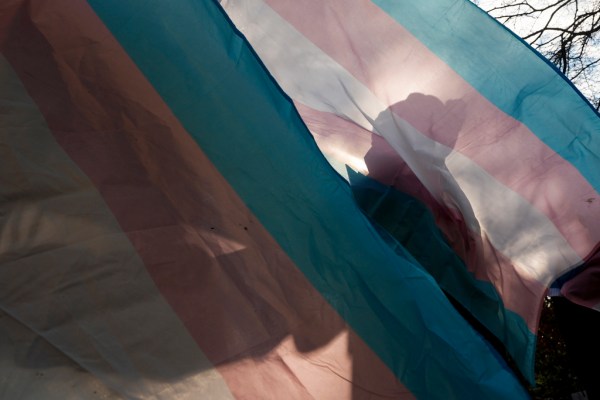
Around the country, you can find stories every week of school districts working to “liberate” children from their parents’ beliefs. Liberal politicians and school officials are up front about their desire to transition boys into girls and girls into boys while keeping it secret from parents.
The Great Salt Bay Community School in Maine nudged Amber Lavigne’s daughter towards identifying as a boy, in part by retarding her natural development in puberty. They did this without Amber’s permission or knowledge. A counselor at the school provided a “chest binder” (to prevent breast growth) and started addressing her as a boy.
PRESSURE MOUNTS ON SUPREME COURT TO TAKE UP CASE THAT TESTS SECRET GENDER TRANSITIONS AT SCHOOLS
School districts, such as Fairfax County in Northern Virginia, have created policies of keeping such school-led transitions secret from the parents. California actually passed a law forcing schools to keep these transgender transitions secret from parents and lost in court trying to defend this law.
The pattern is this: School officials and progressive politicians see public schools as the means for indoctrinating children away from the beliefs of their families, communities, and religions.
The public schools, then, are not secular at all. They are religious institutions, preaching a radical new religion. Is it any wonder parents want to keep their kids out?