
In Focus delivers deeper coverage of the political, cultural, and ideological issues shaping America. Published daily by senior writers and experts, these in-depth pieces go beyond the headlines to give readers the full picture. You can find our full list of In Focus pieces here.
“No deal is better than a bad deal,” Donald Trump said in the summer of 2015.
Recommended Stories
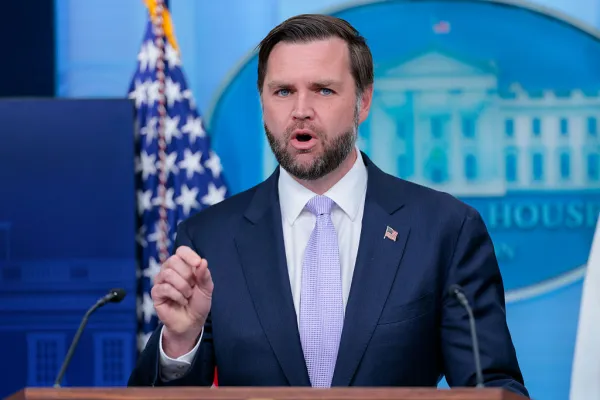
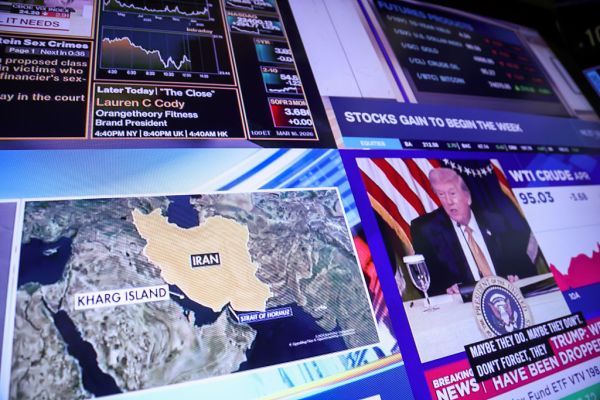
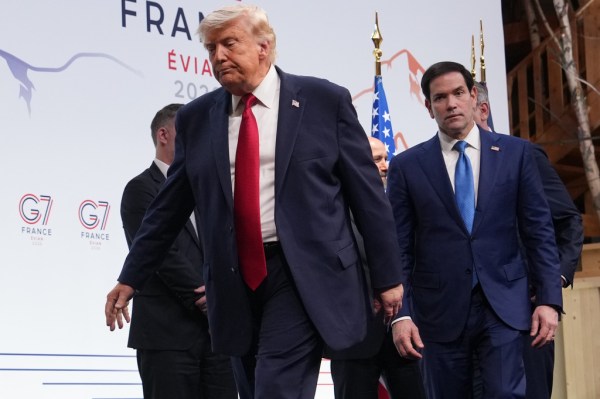
There are multiple, conflicting reports about a possibly imminent “deal” the Trump administration may ink with Iran’s regime. If true — more on that to come — some of the reported details are baffling and alarming.
“U.S. and Iranian negotiators [are] close to extending [an existing] ceasefire by 60 days under deal to include gradual reopening of Hormuz, talks on enriched uranium stockpile, eased restrictions on Iran ports, sanctions relief, and phased unfreezing of Tehran’s overseas assets,” wrote Mark Dubowitz, CEO of the Foundation for Defense of Democracies. “If this is true — and it’s a big if that President Trump would accept it — then the administration has surrendered at the negotiating table what America and Israel won on the military and economic battlefields.”
“Wait and see” is wise counsel, but that course of action doesn’t preclude analyzing some of the serious concerns that have arisen.
As the broad strokes of this possible agreement seeped into public view, the regime began publicly mocking Trump and denying any notion that it had made meaningful concessions to the United States. Inauspicious, if typical. Some voices in the U.S., including the failed brain trust behind the disastrous Obama nuclear compact with Iran, have offered tepid and backhanded compliments of the deal. Another inauspicious sign.
Before proceeding further, it’s important to stipulate that much was achieved in the opening weeks of Operation Epic Fury, which critics have never acknowledged. Many of them were, in fact, rooting for failure all along. Their defeatism notwithstanding, the conflict further degraded the regime’s nuclear program, dealt a serious blow to its missile program (including its ability to produce new missiles), sunk its navy, dominated its airspace, demonstrated to the regime that America and Israel can liquidate its top leadership (based on a devastating degree of intelligence penetration), and firmed up an emerging Israel-Arab alliance that the regime has desperately sought to prevent, including by greenlighting and facilitating the attacks of Oct. 7, 2023. Any assessment of a future diplomatic resolution must deal seriously with these substantial accomplishments.
That said, why on earth would America let this gasping regime off the hook? If accurate, the recent reports describe a bizarre, indecisive punt, rooted in an agreement-at-any-cost mentality, which was an accurate critique of the aforementioned, fatally flawed Obama-era pact. Handing any cash or rewards to Iran in exchange for a pre-war status quo — even this claim is being denied by the regime, as noted above — without extracting real, upfront concessions on the key points that triggered this operation in the first place, would be difficult to defend.

Trump officials might argue that key concessions will come later, in the months to come. Why should anyone have any confidence in such an eventuality? The regime has been stringing its U.S. counterparts along in negotiations ever since the initial “ceasefire” was implemented. Playing with the clock is their well-established game. They appear to be emboldened by what they clearly perceive as a demonstration of American weakness, which feels like an inexplicable posture in light of Operation Epic Fury’s powerful display of force and seriousness.
Regime figures also lie as they breathe — it’s worth reiterating here that many of the regime’s top figures are no longer breathing. Iran’s current president just said, “We are ready to assure the world that we are not seeking nuclear weapons. We are not seeking instability in the region.” To describe these supposed assurances as less than credible would be a drastic understatement. The regime has been fanatically obsessed with obtaining nuclear weapons for years and has used a great deal of its resources to finance and support terrorist organizations that sow bloodshed and instability throughout the region. The regime practically exists to do precisely those two things.
So it is lying, as always, and it seems to have sucked Team Trump into its preferred vortex of time-consuming discussions. When it is “talking,” it is winning — simply by not losing. And it was losing badly before these rounds of talks started, following the double blows of Operation Midnight Hammer last summer and Operation Epic Fury this year.
On the other hand, conservative analyst and operative Scott Jennings, who is well-sourced within the Trump administration, reported Sunday that media accounts of what may be emerging do not align with reality.
“USA IS NOT GIVING IRANIANS MONEY FOR NOTHING,” he wrote, citing a senior government official. “All speculation and propaganda to the contrary is false. Some hardline elements of Iran’s government (IRGC) have pushed fake stories & propaganda to try to kill this negotiation.”
The agreement is still not completed and could take additional days, he added, emphasizing that the regime would not receive “any money or sanctions relief up front.” Critically, “Iran must turn over [its] nuclear stockpile to get [any relief].” The Trump administration’s position remains that any failure to meet the deal’s core commitments “means Iran gets nothing.”
Jennings relayed that the plan would involve two steps, the first of which entails opening the Strait of Hormuz, in conjunction with Iran agreeing to surrender its highly enriched uranium. Step 2 is executing the extraction of what Trump calls “nuclear dust,” only after which would any sanctions relief go into effect.
The U.S. remains fully prepared to scuttle any agreement if the final details are not satisfactory to Trump’s overarching nuclear demands, Jennings conveyed.
“If Iran doesn’t deliver on commitments, they get nothing,” he wrote.
But the regime is already getting something quite valuable: survival. And time. If Iran doesn’t deliver on concrete commitments in very short order, merely withholding sanctions relief isn’t nearly enough. What that should earn Iran is an immediate resumption of U.S.-Israeli coalition military attacks. The president has been threatening renewed bombings, sporadically, for weeks, repeatedly backing down to allow for more negotiations. If the final result of this saga is an airtight agreement that truly achieves — not “in principle,” but in actuality — America’s war goals, that would be a significant success.
POPE LEO URGES SIGNIFICANT REGULATION TO DISARM AI
As a reminder, those objectives include: dismantling Iran’s nuclear program, removing existing highly enriched uranium from the country, massively degrading the regime’s conventional weapons “umbrella” and future capacity, and ending its regional terrorism. Anything less, however, would amount to an inexplicable retreat.
This job needs to be finished, either through prompt and verifiable Iranian concessions or by further use of force. Allowing the regime to wriggle off the hook at this point, via an underwhelming, Obama-esque negotiated settlement, must not be an option.