
In Focus delivers deeper coverage of the political, cultural, and ideological issues shaping America. Published daily by senior writers and experts, these in-depth pieces go beyond the headlines to give readers the full picture. You can find our full list of In Focus pieces here.
If you read liberal reporters and commentators, the biggest unmet need in the United States is formal childcare.
Recommended Stories

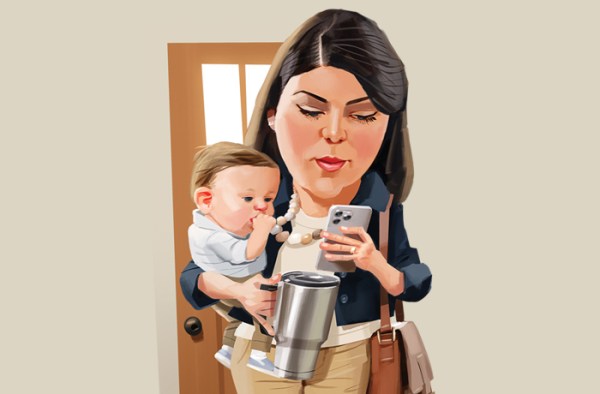

If you listen to Democratic politicians, you might believe that affordable daycare is one of the top issues out there, and that “universal childcare” is in high demand.
But if you study the polls and read the academic research on this, you will find that formal childcare is not in extremely high demand (outside of the circles of media and political elites, that is).
Most parents do not want the model Democrats and the major media take for granted — two full-time jobs combined with institutional childcare.
What’s more, study after study undermines the feminist claim that mothers are kept out of the workforce by a lack of childcare.
Yes, most parents rely on paid childcare at some point. Yes, single mothers and their children benefit from predictable, affordable childcare.
But despite what Kamala Harris and the New York Times might lead you to believe, we are not a nation pocked with “childcare deserts” with most parents desperately crying for more daycare centers.
Betty Friedan Democrats
Feminist author Betty Friedan published The Feminine Mystique in 1963, painting a dark picture of depressed, unfulfilled suburban housewives. Domestic life, feminists of the era argued, was a gilded cage.
The Baby Boomers atop the Democratic Party are stuck in the 1960s and still peddle Friedan’s line. Specifically, they seem to believe that every stay-at-home mom and every mother working part-time is trapped — that every woman in America wants to be working 40 hours per week.
“I think about how many women of my generation just got knocked off the track and never got back on,” Sen. Elizabeth Warren said in a 2020 Democratic presidential debate. “How many of my daughter’s generation get knocked off the track and don’t get back on, how many mamas and daddies today are getting knocked off the track and never get back on.”
A parent who leaves the workforce to spend full-time with his or her child is “offtrack,” in Warren’s view.
When the Atlantic a few years back suggested that some mothers leaving the workforce this decade might be doing so voluntarily, Washington Post columnist Elaine Olen groaned. “Give. Me. A. Break.” It was just a “a lousy old myth about moms” to suggest that “many of these women are better off for cutting their (paid) work hours and downscaling their professional aspirations in favor of tending to family responsibilities.”
The unstated assumption is that all women, including all mothers, want to be working full-time jobs, and that the unavailability of decent affordable childcare has trapped mothers at home with their children.
This assumption is undermined by the bulk of the academic research on the question.
Specifically, married mothers in America are not kept out of the workforce by the lack of daycare. Increasing the supply of daycare does not induce them into the labor force. The studies demonstrating this are many.
“Maternal Labor Supply and the Introduction of Kindergartens into American Public Schools” was a study by economist Elizabeth Cascio published in the Journal of Human Resources in 2009. Because different states rolled out universal Kindergarten at different times, she was able to study whether moms went back to work if Kindergarten was available to them. Her conclusion: “I estimate that four of ten single mothers with no younger children entered the work force with public school enrollment of a five-year-old child. No significant labor supply responses are detected among other mothers with eligible children.”
In other words, married moms are not induced back to work when no-cost 8-to-3 childcare is available.
More recent studies by the same economist had similar findings: High-quality, affordable taxpayer-backed pre-school seemed to really help poor families, but the only real effect on wealthy families just saving them money. In that paper, she cites another study finding “no statistically significant positive impacts of a child’s eligibility for state-funded preschool on his or her mother’s chances of working.”
A massive study published in the American Economic Journal in 2024, headed by Princeton economist Henrik Kleven found “the enormous expansions of parental leave and child care subsidies have had virtually no impact on gender convergence.”
“What about women who do not work?” Kleven and co-authors asked. “Are they facing constraints that prevent them from increasing labor supply?”
The answer was no: “Only a small fraction of surveyed women say that they feel constrained by the supply of institutional care. What is more, the fraction is no larger in districts with low levels of child care provision than it is in districts with high levels.”
The economists explained this in the most economist way possible: “If child care constraints are not preventing mothers from improving their career trajectories, then what is? Evidence … points to the potentially important role of preferences and norms regarding maternal care: An overwhelming majority of women (70-80%) report that they do not work, because they have a preference for taking care of their children.”
Again: Mothers are out of the workforce because mothers want to be out of the workforce so that they can be home with their children.
These findings are reflected in public polling.
Most parents do not want to work full time, according to a recent poll by the New America Foundation.
Meanwhile, 49% of parents say they want themselves or their spouse to be the primary childcare provider. At every age, more parents say they would rather look after their child than put their child in formal childcare. Only 30% of moms say they want to work full time, the New America study finds.
Only three percent of voters say that childcare costs are imposing a burden on their household.
What’s going on, then?
Childcare is a small issue for voters, it doesn’t have a huge effect on the economy, and most parents don’t want two 40-hour-per-week jobs and formal daycare. So one wonders: Why are Democrats and the media so insistent on this model?
The first source of this disconnect is the professional feminist liberal bubble in which the elite media lives. The Americans most likely to prefer two full-time jobs and institutional childcare and to find it impossibly expensive might be New York Times reporters and editors.
They are in a household with two college degrees and maybe two masters between them. Work for them is not merely a source of money but also a source of meaning. They are left of center politically and disproportionately female. They grew up around the like-minded and now live and work among the like-minded in New York or Washington. They frankly don’t know any stay-at-home moms.
The bigger culprit is probably special-interest politics. Democrats want to subsidize childcare in part because that means subsidizing their political allies.
Pay close attention when Democrats talk about childcare. They always talk about supporting “the care economy.” They want more people working in childcare, higher pay for those workers, and government subsidies bolstering that pay.
Universal childcare will bolster the public-sector unions, which are big supporters of Democrats. It will not help parents.