Pelosi’s Democrats against democracy

Published July 12, 2026 6:00am ET


In Focus delivers deeper coverage of the political, cultural, and ideological issues shaping America. Published daily by senior writers and experts, these in-depth pieces go beyond the headlines to give readers the full picture. You can find our full list of In Focus pieces here.

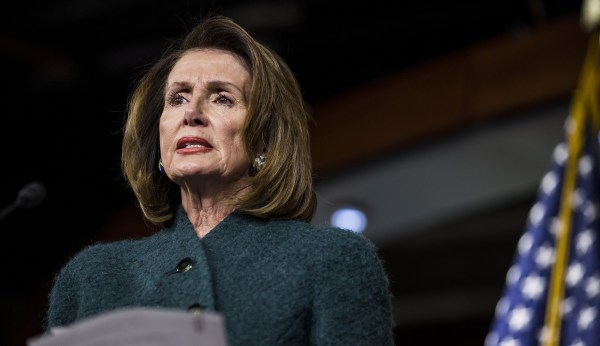
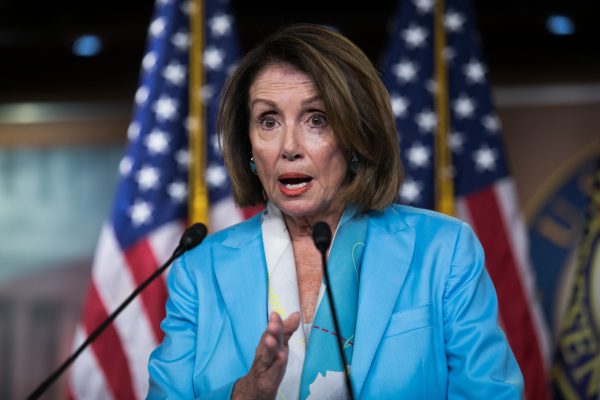
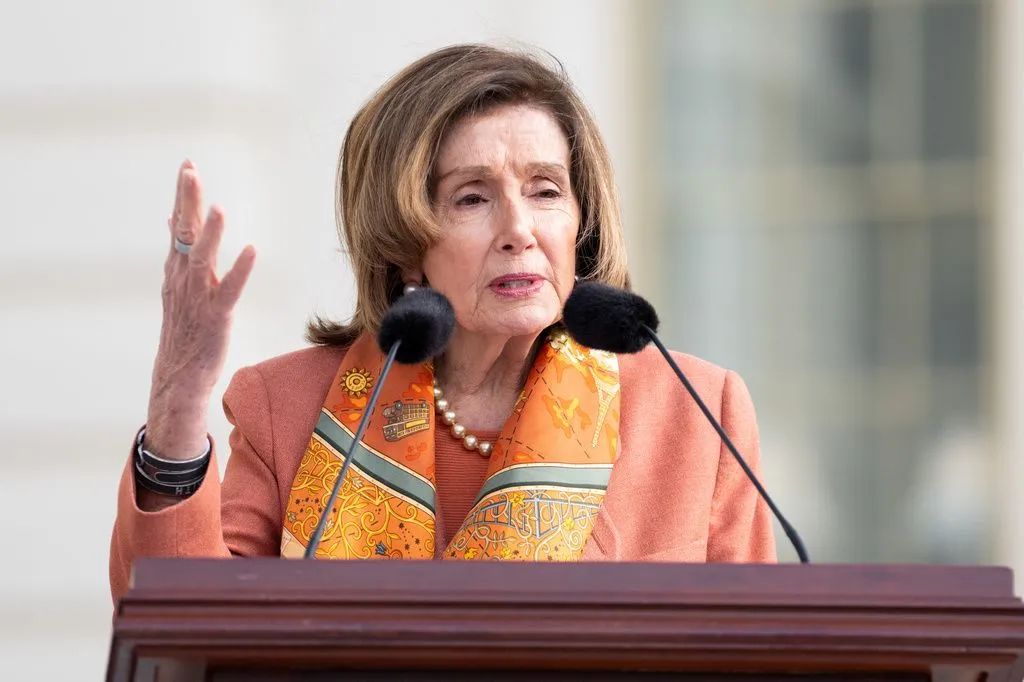
Speaker Emerita Nancy Pelosi (D-CA) is retiring after nearly 40 years in Congress, and instead of becoming a lobbyist like most of her predecessors, she will be going to academia. Specifically, she’ll be co-teaching a course on Congress at the University of California, Berkeley, as part of a new program on U.S. government.

That sounds perfectly fitting, until you hear how Berkeley is pitching it:

“UC Berkeley will launch new Nancy Pelosi Institute focused on strengthening democracy,” the school announced in a press release. “The nonpartisan academic institute in the political science department will become a hub for research, teaching and civic engagement.”

“We intend to do more than simply study democracy,” said Berkeley Chancellor Rich Lyons. “We are building this institute to strengthen it.”

You can be forgiven if you don’t think of “nonpartisan” when you think of Pelosi. And if you study Pelosi’s record in Washington, it’s hard to see her as a champion of defending and strengthening democracy.

Pelosi has consistently worked to undermine or abridge democracy for her own gain or her party’s gain. Along the way, she has contorted the definition of “democracy” to mean her own ideological projects and partisan interests, thus branding everyone who disagrees with her as an enemy of democracy — perversely undermining democratic debate in the process.

Pelosi against democracy

Pelosi, as a rule, has favored the smoke-filled back room over the democratic process — even when it came to choosing her party’s nominee for president.

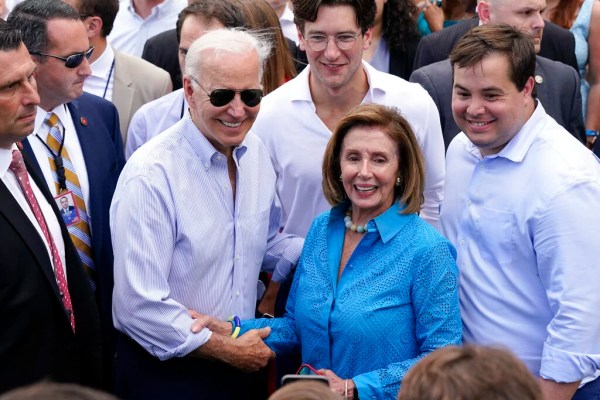
Nobody was more important than Pelosi in forcing out President Joe Biden as the party’s nominee after he had won the 2024 primaries. After Biden’s disastrous debate performance, the initial push to knock Biden off the ballot started to lose steam, and that’s when Pelosi stepped in: “Pelosi [was] the one fanning the flames,” NBC News reported, citing Democratic insiders.

“Pelosi worked quietly and methodically” to replace Biden on the ballot, NBC reported, “speaking to scores of rank-and-file lawmakers, members of her old leadership team and her large network of Democratic donors who had once made her the party’s most prolific fundraiser.”

Nothing says “strengthening democracy” like rallying donors to overturn the primary elections.

Undoing primaries is now becoming a pattern in the Democratic Party, which last week pushed out the democratically nominated Graham Platner in Maine’s Senate race.

On gerrymandering, Pelosi has been the most powerful anti-democratic force in California for more than a decade. Sacramento lawmakers after the 2000 census drew an extreme incumbent-protection map, angering voters and activists who thought competitive elections and sensible districts were important to democracy.

Good-government activists organized and passed a ballot initiative in 2008 to create an independent redistricting commission for the state legislature. They decided to leave congressional redistricting for another day because they knew Pelosi, by then speaker of the House, would oppose them, backed by her many millions in donor dollars.

In 2010, when the gerrymandering opponents tried to prevent congressional gerrymandering, Pelosi predictably led the opposition. The left-wing outlet ProPublica reported: “No fewer than 35 Democratic politicians — including Minority Leader Nancy Pelosi — and their allies spent a total of $7 million to campaign against the proposition.”

After she lost, Pelosi, aided by a labor union-funded foundation, worked successfully to subvert the ballot measure and corrupt the independent commission in order to protect Democratic incumbents, according to ProPublica.

Whenever the voters of California, through direct democracy, took actions Pelosi disliked, she resorted to undemocratic means to overturn them.

California voters in 2008 passed Proposition 8 by a 52% to 48% margin, codifying that marriage is between one man and one woman. Pelosi helped lead the crusade to overturn this law in the courts. She went so far as to oppose the right of the proposition’s authors to even defend the people-passed law in court.

That is, Pelosi not only tried to strike down democratically passed laws. She opposed letting the majority even defend their vote.

And of course there is abortion. Pelosi was a lifelong supporter of Roe v. Wade, which struck down all state abortion laws. Regardless of what one thinks about abortion, Roe was undeniably undemocratic.

When state legislators in Mississippi voted to ban abortions after 15 weeks of gestation, Pelosi railed against their efforts in court. She went so far as to say that striking down Roe “would seriously erode the legitimacy of the Court.”

Trying to delegitimize the court in order to prevent democracy on abortion hardly seems like bipartisan defense of democracy.

What Pelosi means by ‘democracy’

So how does Pelosi, after masterminding gerrymanders, striking down ballot measures, fighting to save abortion from democracy, and overturning her own party’s primary claim the mantle of Democracy Defender?

She defines “democracy” as the partisan and ideological outcomes she favors.

Long before President Donald Trump sparked a violent riot while trying to overturn his 2020 loss, Pelosi was declaring that any Republican win was anti-democratic.

“Democracy is on the ballot,” was her motto in the 2012 election when Mitt Romney was challenging Barack Obama.

If you think Mitt Romney winning meant the end of democracy, then you don’t mean “democracy” when you say “democracy.”

But this happens every two years in Pelosi’s Democratic Party. For instance, former California Democratic Rep. Eric Swalwell, a Pelosi lieutenant, made the same argument in 2022, when Trump was not on the ballot: If Republicans win, democracy is over.

So why would UC Berkeley name a democracy-defending center after a woman whose idea of democracy is delegitimizing opposing views?

Well, this also appears to be what some at UC Berkeley mean by “democracy.”

Just ahead of the 2024 election, the Berkeley Center for American Democracy, a precursor of sorts to the Nancy Pelosi Institute, promoted an article co-authored by one of its scholars, Paul Pierson. The article declared “democracy is at risk” because Republicans might preserve the tax cuts in the 2017 Tax Cuts & Jobs Act.

“The struggle over taxes that will take place in 2025 won’t just be about creating a fairer tax code,” the authors wrote. “It will also be about democracy — whether our elected officials will pursue an agenda that is responsive to what Americans desire.”

That is, anything other than a corporate tax hike would be an attack on democracy.

DEMOCRATS’ UNDEMOCRATIC HARRIS MISTAKE

Of course, universities are large and contain multitudes, and so the Nancy Pelosi Institute may have a bigger-tent definition of democracy — one that includes opposing views. And maybe now that Pelosi is out of power, she will become less partisan and more interested in democracy, rather than just her partisan and ideological goals.

But if she sticks to her old ways, you can guess that her efforts at UC Berkeley to “strengthen democracy” will just be more efforts to strengthen Democrats.