In Focus delivers deeper coverage of the political, cultural, and ideological issues shaping America. Published daily by senior writers and experts, these in-depth pieces go beyond the headlines to give readers the full picture. You can find our full list of In Focus pieces here.
When Gov. Kathy Hochul (D-NY) signed a one-year moratorium on new large-scale data centers via executive order, it became the nation’s first statewide ban.
Recommended Stories
It will likely be popular. Polls find widespread opposition to data centers, and the objections seem to be growing. Around 70% oppose the construction of a new AI data center in their area, with 48% strongly opposed. Only 27% favor it.
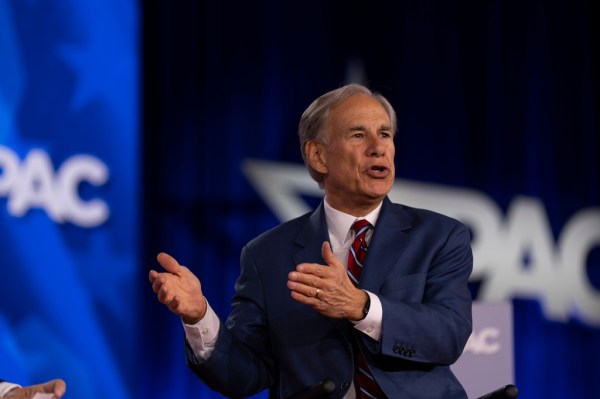
Even in Texas, the energy-rich state with the most data centers, Gov. Greg Abbott (R-TX) has called for a ban on new developments in rural areas.
The panic surrounding data centers is highly reminiscent of the panic surrounding hydraulic fracturing. Like the fracking ban in New York, also based on junk science and scaremongering — not to mention, initially a “moratorium” — the policy will backfire.
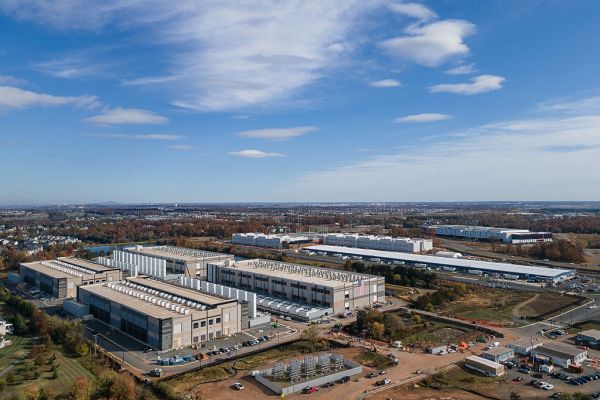
The economic case for data centers is indisputable. A single hyperscale facility brings in billions in capital investment, creates a slew of high-paying jobs from construction to engineering, and ensures local governments are flush with tax revenue.
Big Tech bogeymen such as Microsoft, Google, Amazon, and Meta upgrade local infrastructure and create secondary economies, often in struggling areas. Long term, these companies offer self-sustaining economic activity that the magical “green” industry never did or could.
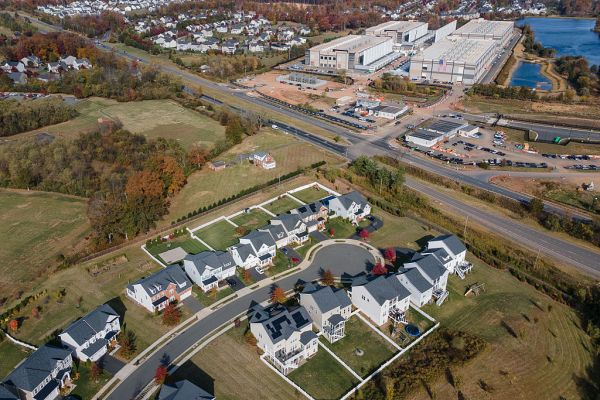
In Loudoun County, Virginia, home of the largest concentration of data centers in the country, studies found that the tax tech revenue accounted for 95% of the county’s operating budget. One pro-business study claims that homeowners would need to make up $5,800 a year in property taxes if the data centers disappeared. That revenue has funded a $100 million plan for new schools in the county of 455,000 residents.
Because energy price spikes have coincided with the data center debate, one of the major concerns you hear from people is that their utility bills will go up. The data doesn’t bear this out.

As a recent City Journal investigation found, the “sharpest increases are found in states that have pursued the country’s most aggressive climate policies, not those with the most data centers.” States with fast-growing electricity rates, such as California, have few data centers, while states such as Virginia, which lead the country in data center energy consumption, have seen electricity prices increase at the national average.
There’s considerable evidence that data centers have eased electricity rate hikes over the past decade, as companies took on a growing share of the utility costs, reducing the demand on residents.
AI infrastructure requires massive amounts of continuous power. Data centers are driving a rapid expansion in power generation. The solution to high energy demand isn’t to build fewer data centers. It’s to generate more energy.
Trepidation over artificial intelligence also surely plays a role in concern over data centers. That’s a perfectly legitimate and important debate for society to have. The most emotional and effective attacks on data centers revolve around environmental concerns.
The other day, popular WNBA player Sophie Cunningham asked: “So how do we save our farm land and stop all these dumb data centers?”
Save farmland? Data centers are predicted to use around 1,400 square miles of land by 2028. Farmland already uses around 880 million acres. There’s more than enough land for farms and data centers.
If anything, data centers might save farming communities. A large, self-perpetuating data center project in Farmville in rural Prince Edward County, Virginia, for instance, will optimize the land mass used by a small farm to the tune of a $5 billion investment into that community.
Data centers consume somewhere around 2% to 4% of total water freshwater withdrawals, a tiny fraction compared to agriculture or manufacturing, mining, or basically any other major industry. Nationally, data centers consume significantly less water than golf courses.
Not long ago, Rep. Alexandria Ocasio-Cortez (D-NY) produced two jars with brown water at a congressional hearing, alleging that it was what “drinking water” looked like in Morgan County, Georgia, where a Meta data center project was underway. Scary stuff.
Except, earlier reports found only four households in the country had been stuck with sediment-clogged, brown, or dry taps. Now, if the data center construction was responsible — and we don’t know if that’s true — those four households deserve to be made whole.
Brown drinking water was not widespread, as Ocasio-Cortez had claimed. More importantly, construction projects that burst wells on occasion aren’t unique to data centers but rather to construction of all types. In a major solar project in upstate New York, crews accidentally struck an aquifer while drilling not long ago. Does Ocasio-Cortez believe we should put a moratorium on solar panel projects?
If you care about the environment, you should also note that data centers facilitate considerable efficiencies elsewhere, such as remote work that reduces commuting emissions, better supply chain organization that cuts waste, and cloud computing that’s far more efficient than having everyone running their own servers.
In some sense, as well, the data center debate is about whether we want to remain the technological leader or cede to adversaries such as China, which just drafted a five-year plan — boy, those communists love five-year plans — to invest roughly $295 billion into an AI buildup.
BRANDON GILL’S SOCRATIC METHOD
Let’s face it, NIMBYism is also a big part of the opposition. That’s to be expected. If the local community doesn’t want a new giant, ugly data center nearby, for genuine or even imagined reasons, they should be able to stop the project. If a local community wants a data center, however, governors and Congress shouldn’t stop them from bringing in jobs and tax revenue to improve their community.
The effective voices against data centers, after all, are the same Luddites who’ve spread environmental apocalypticism to stop modernization projects such as pipelines, power plants, and fracking. Most of their arguments don’t hold water. That doesn’t mean they’re not winning.