

In Focus delivers deeper coverage of the political, cultural, and ideological issues shaping America. Published daily by senior writers and experts, these in-depth pieces go beyond the headlines to give readers the full picture. You can find our full list of In Focus pieces here.
As our country celebrates its 250th year, we face a question larger than commemoration: What story about our nation will we hand to the next generation?
Stay informed.Stay ahead.
Join Washington Examiner for unlimited access to the news, analysis, and commentary that matter most.
Already a member? Log in
Too often, we push Americans to choose between two incomplete narratives: One denies the reality of past injustices, and the other denies the possibility of triumph.
Both misunderstand the nation’s history.
Look, for instance, at the life of Biddy Mason. When she died in 1891, Mason was one of the richest women in Los Angeles, having built a fortune in real estate as the frontier outpost swelled into a city. But this matriarch of California’s wealthiest black families came from the humblest origins, deprived of freedom, family, and even a name.
The woman residents of early LA would come to revere as “Grandma Mason” was born into slavery in the Deep South in 1818. “Biddy” was simply a job description, a word meaning she cleaned house, cared for children, and helped heal sick people. Around age 30, with three young daughters, Mason walked from Mississippi to California behind her enslavers’ wagons. In 1856, she challenged the man who claimed ownership of her in court and won freedom for herself and her children. She became a nurse, entrepreneur, philanthropist, and one of the builders of Los Angeles.
Her life demonstrates that, even in the harshest circumstances, injustice was never the whole story.
Today, some prominent voices argue that America has not merely fallen short of its ideals but was irredeemably fraudulent from the start. That view is dangerously influential, especially among young people. Yet it cannot adequately explain the lives of the men and women who overcame some of the greatest injustices in our history.
“I do not love America, and never have,” public intellectual and my fellow Mississippian Eddie Glaude writes in his latest book. I find this posture bizarre, even self-destructive, not because America is beyond criticism, but because any effort to improve it requires investment, responsibility, and a belief that our national experiment is noble at its core. It must, in other words, be an act of love.
By contrast, attorney Bryan Stevenson recently spoke of his desire to be “a great American, like my enslaved foreparents.” That aspiration strikes me as deeply consistent with the tradition of Mason and countless others who directly confronted America’s failures while refusing to surrender belief in its possibilities. It is impossible to be great at something you hate.
Traveling the country with my mentor and dear friend, the late Bob Woodson, I was often reminded that popular narratives of despair often overlook some of the most important chapters in American life. Bob and I sought out stories that demonstrated human agency under difficult circumstances. We never ignored injustice, but neither did we grant it the final word.
Mason was one of Bob’s favorite examples. He understood that her life challenges simplistic accounts of America. She appealed to the law of a free state and forced it to recognize a freedom it had proclaimed but failed to protect. Her story does not tell us that the system was fair. It proves the system was not final.
Many others embodied the same spirit.
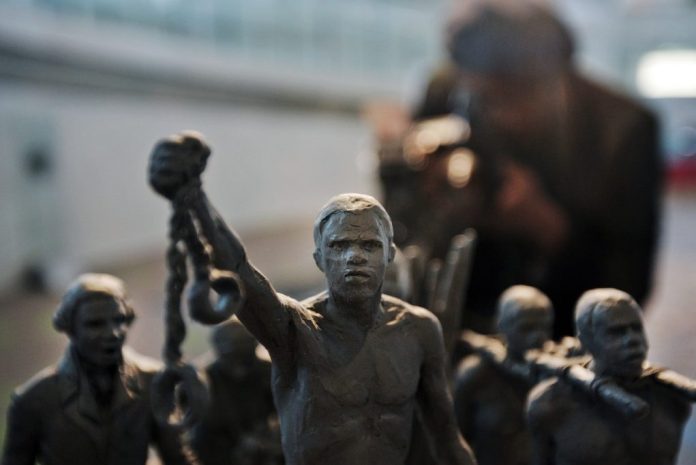
Even under slavery and segregation, black Americans built schools, businesses, churches, civic institutions, and strong families long before the nation fully recognized them as citizens.
Another Mississippian, Edward Nelson Taylor, born enslaved in 1845, traveled north after the Civil War and succeeded in business. Returning home to Mississippi, he purchased significant real estate holdings and, in 1909, at the height of Jim Crow segregation, he donated the first 40 acres of land and the first log-cabin schoolhouse to Piney Woods School, the historically black boarding academy that still educates students today.
These stories matter because they complicate easy narratives. They remind us that oppression was real, but not absolute. Most importantly, they show us that individuals possess moral agency even under imperfect conditions.
This understanding shaped Woodson’s life’s work. Through the Woodson Center, he championed neighborhood leaders, mentors, entrepreneurs, and community builders such as Mason and Taylor, who were solving problems from the ground up. He believed America’s renewal would not come primarily from political slogans or elite institutions, but from ordinary citizens taking responsibility for the communities they call home.
America’s 250th anniversary coincides with my assuming leadership of the Woodson Center. It is a privilege to continue advancing a mission rooted in a simple conviction: People closest to a problem are often closest to its solution, and examples of excellence deserve as much attention as examples of failure. That conviction feels more urgent than ever.
Children who are taught only about suffering come to believe they are powerless — those taught only about triumphs are unprepared for reality. We owe them the whole story. Education, philanthropy, and public discourse must make room for stories of resilience, responsibility, and contribution, not merely stories of grievance and conflict.
Those who portray America as irredeemably flawed for the purpose of provocation should consider the danger posed by their rhetoric. Later in his book, Glaude rightly celebrates the courage of enslaved men who freed themselves, or died trying, rather than seek freedom as a “gift” from white men. Equally determined individuals such as Mason, however, were able to liberate themselves by demanding their rights under laws that were imperfect but indispensable. Denigrating the American founding inevitably, if not intentionally, attacks our shared civic life, eroding the foundations that make past and future moral triumphs possible.
We need, instead, to hold unsung heroes of freedom such as Mason and Taylor as models of greatness, forgotten foreparents whose memory must be recovered in a spirit of American renewal. A nation cannot flourish if it teaches its young people to despise their inheritance. They deserve a history that is honest about injustice without becoming captive to it.
Some of America’s greatest citizens will never have monuments erected in their honor. They are men and women who continued building when obstacles seemed insurmountable, continued serving when sacrifice went unnoticed, and continued believing when circumstances offered every excuse to give up.
‘WE HAVE TO SMASH THE STATE’: THE LEFT PREPARES FOR WAR
Only in America could such men and women leave a legacy that still blesses us generations later.
That is our inheritance, and the responsibility now entrusted to us.
Will Crossley serves as the president-elect of the Woodson Center and holds the distinguished position of the fifth president at The Piney Woods School.
