

The Iran war, which on Friday hit the six-month mark and has gone on longer than the Trump administration anticipated, has exacerbated the need for the changes to the defense industrial base that Pentagon leaders were already starting to address.
Even prior to the war, which has resulted in the depletion of certain critical munitions, War Secretary Pete Hegseth had initiated a massive transformation to the department’s procurement strategy to meet what he characterized as “a 1939 moment.”
Stay informed.Stay ahead.
Join Washington Examiner for unlimited access to the news, analysis, and commentary that matter most.
Already a member? Log in
In a speech to industry leaders in November, the secretary told them that the department and the way it operates with defense companies “must transform” because the “Pentagon bureaucracy” is an “adversary that poses a threat, a very serious threat, to the United States of America.”
The department is seeking to reverse decisions made in the 1990s following the end of the Cold War to reduce the size and output from the defense industrial base while also accounting for the growing use of autonomous systems — such as aerial, ground, and surface vessel drones — and the widespread and increasing use of artificial intelligence, which has rapidly reduced the time it takes to gather, synthesize, and understand the intelligence involved in life-or-death decision-making.
“What I need you to know, and I know this is simple for me to say but hard to do, is to go faster. Please go faster,” Gen. Dan Caine, the chairman of the Joint Chiefs of Staff, said last month at an event in Carlisle, Pennsylvania. “The very character of war is changing.”
‘The pie is growing’
The days of a handful of prime defense contractors receiving all of the Pentagon contracts are gone. The administration is trying to ease the burden of entering defense contracting by curtailing prior hurdles and leaning into programs designed for smaller, innovative, non-traditional companies.
“The good news is the pie is growing, so it’s not like the pie is shrinking and the big guys are getting a smaller piece of a smaller pie,” Undersecretary of War for Research and Engineering Emil Michael told the Washington Examiner. “They’re still getting their piece of a bigger pie because of President Trump’s and Secretary Hegseth’s defense spending proposal.”
Earlier this month, the senior director for counterterrorism on the National Security Council, Sebastian Gorka, told drone producers during an event at the Eisenhower Executive Office Building that “big legacy companies” that can’t meet the moment “will die, like the dinosaurs.”
Hegseth restarted his “arsenal of freedom” tour this week with a visit to Oshkosh Defense in Wisconsin. After touring the plant and test-driving a Joint Light Tactical Vehicle, he addressed the plant workers.

“All four years, we’re going to cut red tape and requirements and ridiculous layers that have been added time and time again, year after year, mostly by lawyers of big companies that want to prevent competition,” he said. “We have to tear those barriers down to allow the best companies, America, defense or commercial, large or small, to run as fast as possible.”
The Pentagon has leaned into various opportunities depending on the stages of development the companies’ products are in, including providing them with access to military facilities to test their products and competing for financial infusions. The department is also looking to secure U.S. supply chains and access to critical minerals to ensure there are no vulnerabilities an adversary could exploit during a war.
“I’ve been working on acquisition for 20 years, different facets of it,” Jeb Nadaner, the senior vice president of government relations for Air, a defense acquisition software company, told the Washington Examiner. “Sometimes more on the technical programmatic side, and sometimes more on the government relations side. I would say this is the boldest initiative. It only launched during the first week of November 2025, so we’re not even a full calendar year out of it. The secretary made a really bold move against a lot of traditional entrenched voices in launching this.”
Into the ‘valley of death’
The department announced last month that it issued its latest round of awards under the Accelerate the Procurement and Fielding of Innovative Technologies program, bringing the total money disbursed to more than $2 billion since the program’s inception in 2022. The program is meant to aid companies that have already completed development and are ready to transition to operational use, reducing procurement timelines.
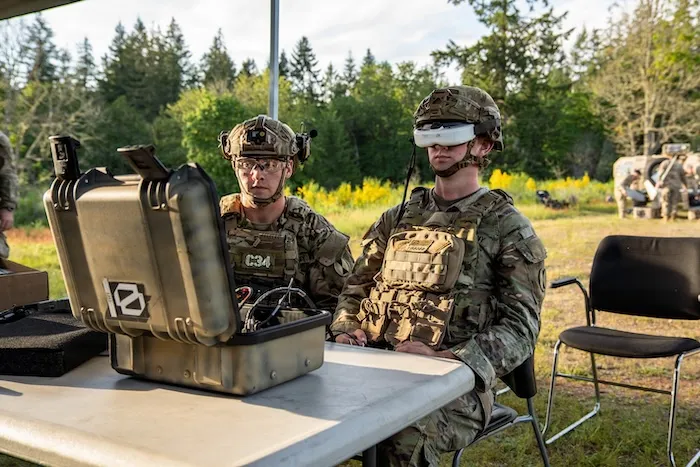
The APFIT program is about “taking the small company with a product that we know that works, helping them scale, and the military service has already said I want it,” Michael said. “So the demand signal’s set, and that’s trying to break down this notion, which I hate talking about, the ‘valley of death.'”
The “valley of death” refers to the historical timeframe between a product’s development and the time it takes for the department to decide to fund it.
Hegseth in December announced the Drone Dominance Program, which is designed to help the Pentagon meet its drone needs. Specifically, the program’s goal is to purchase more than 200,000 drones by 2027. Michael said he has “high confidence” the department will hit that goal. The Pentagon has received 6,480 drones from seven companies so far through this program.
Michael Coulter, the CEO and president of Hanwha Defense USA, told the Washington Examiner, “I’ve been in the defense industry for decades now. This is certainly the most industry-friendly administration and Pentagon that I’ve worked with. We really do have access at all levels. Not just us, but all of our peers have the ability to go in and talk.”
Much of the Pentagon’s plans will come down to whether Congress passes both the defense budget, reconciliation, and the supplemental request to pay for the Iran war. The budget and reconciliation are designed to provide the Pentagon with a record-setting $1.5 trillion budget, which the secretary has described as a “generational investment.”
“We’re asking for $1.5 trillion to include reconciliation,” Michael said. “So there’s more than enough to go around, but it does incentivize the prime contractors to be better, faster, and cheaper when you bring in the innovators, and that’s good for the ecosystem.”
If Congress does not pass reconciliation, “we’re going to have to make some trade-offs, just like any other organization or agency that has to make trade-offs if they don’t get the full budget they ask for,” he added. “That’s just a little bit beyond my pay grade, how those trade-offs get made, but there’s no doubt that Congress is listening and understands that this is an important concept.”
“It’s pretty sacred,” Hegseth told reporters Monday at Oshkosh Defense’s headquarters in response to whether the department could choose to cut munition purchases if Congress doesn’t pass the budget, reconciliation, and supplemental.
Munitions
There are several different types of critical munitions that the U.S. military relies on for its long-range and air-defense capabilities, which the U.S. has relied on during the war against Iran. The munitions alone can cost upward of millions of dollars apiece and are, by default, single-use.
The military has used many of these munitions during the war in Iran and has given some to Ukraine in years prior. Experts warned, even before the start of the Iran war, that U.S. stockpiles of these key munitions were not sufficient for a conflict with a near-peer adversary such as China, which means that the U.S. has to do more, not just to replace the used equipment but to make the long-term changes in procurement that the administration is hoping to facilitate.
Hegseth and other senior Pentagon officials maintain the department has all the munitions it needs to carry out any ordered operation.
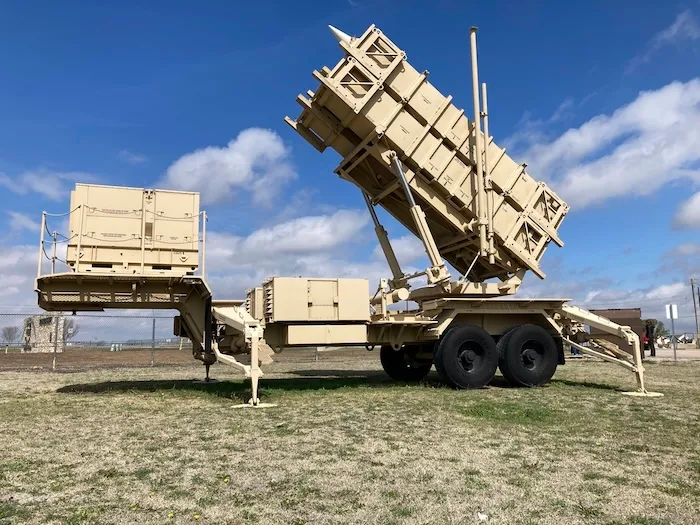
The critical munitions often refer to both offensive and defensive missiles. For offense, it’s RTX-made Tomahawk missiles, Lockheed’s Joint Air-to-Surface Standoff Missiles, and Lockheed’s Precision Strikes Missiles, and for defense: RTX’s Standard Missile 3, RTX’s Standard Missile 6, Lockheed’s Terminal High Altitude Area Defense interceptors, and Lockheed’s Patriot Advanced Capability-3 Missile Segment Enhancement.
The U.S. military had approximately 2,330 Patriot missile interceptors before the war, and that total is now between 759 and 827, according to a Center for Strategic and International Studies report from late July. The military had approximately 452 THAAD interceptors prior to the war, and it has roughly between 234 and 278 now.
The Pentagon has agreed to several framework agreements with defense companies to increase production of these munitions, though replacing them will take years. The department is utilizing longer-term agreements with these companies to give them the confidence needed to open new facilities, hire more workers, and increase their output.
DEFENSE STARTUP HAS SUCCESSFUL TEST OF ELECTROMAGNETIC CONTAINERIZED DRONE DEFENSE SYSTEM
Last week, the department and RTX announced a $22.9 billion agreement with the goal of increasing Tomahawk annual production to more than 1,000 missiles.
The War Department is also looking for cheaper alternatives that can ultimately replace the expensive munitions, though those are long-term plans.
In July, Lockheed Martin announced plans to produce a new, cheaper Patriot missile interceptor designed to reduce the cost per kill while increasing the magazine depth for U.S. and European defense. The new PAC-3 ACE interceptor will be less than half the cost of the current PAC-3 MSE per unit, the company said in its announcement, though it did not specify exactly how much it expects each missile to cost or how long it would take to get them mass-produced and into the hands of troops.
