

Last week something unusual happened: “Weird Al” Yankovic, the 54-year-old parody singer, captured Billboard’s number one slot with the release of a new album, Mandatory Fun. It’s hard to overstate how weird (sorry) this is. Yankovic’s first hits came in the 1980s with send-ups like “Eat It” (instead of Michael Jackson’s “Beat It”). It was great, and Weird Al kept at it, creating a niche for himself in the music biz over the next 30 years. Which is remarkable in its own right, much less in the genre of ephemeral comedy. Only a handful of singers have charted on Billboard’s Top 40 in four straight decades: Among them are Michael Jackson, Madonna, and . . . Weird Al.
The improbable hit single on Weird Al’s improbable hit album is “Word Crimes,” a parody of Robin Thicke’s global megahit “Blurred Lines.” Instead of being a sub rosa celebration of the hook-up culture, Weird Al’s song lampoons the grammar and spelling oddities of millennial Twitter culture, taking aim at some prevalent abuses of the English language. For instance:
Recommended Stories



Syntax you’re always mangling . . .
No x in “espresso”
Your participle’s danglin’
But I don’t want your drama
If you really wanna
Leave out that Oxford comma
Just keep in mind
That Be, See, Are, You
Are words, not letters
Get it together
For another instance:
I hope you can tell
If you’re doing good or doing well
You better figure out the difference
Irony is not coincidence
And I thought that you’d gotten it through your skull
About what’s figurative and what’s literal
Oh but, just now, you said
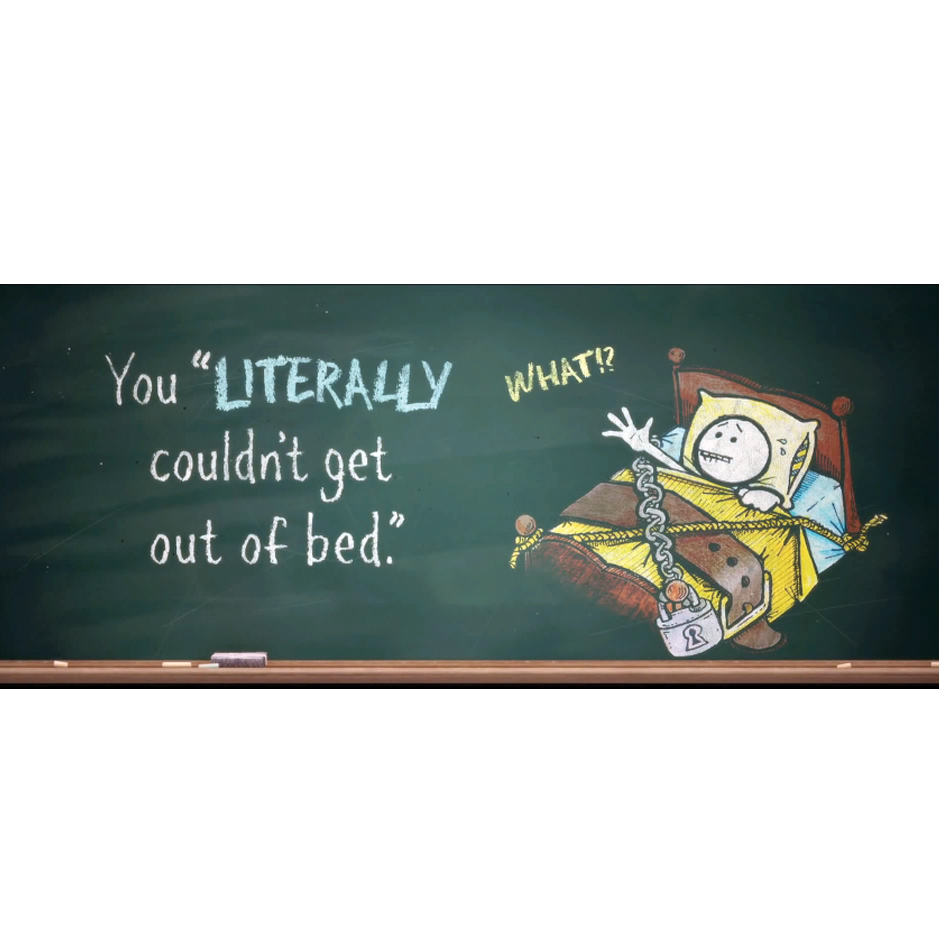
You literally couldn’t get out of bed
That really makes me want to literally
Smack a crowbar upside your stupid head
It’s not Noël Coward, but there is a genuine frisson at seeing someone in the popular culture stand up for standards so elementary that they used to be taken as given. Which is probably why some professional educators went into high dudgeon.
At the University of Pennsylvania’s language blog, Lauren Squires, an assistant professor of English at Ohio State, posted a Very Concerned response to “Word Crimes.” As a professional linguist, Squires found “Word Crimes” to be, well, she can tell you herself:
You can guess where this is heading: If you believe that there’s a meaningful distinction between “its” and “it’s,” then you had better check your privilege:
How degraded has the academy become? We now have professors of English going to war against a pop musician, not just any musician—no, against the only one defending the integrity of the English language.
