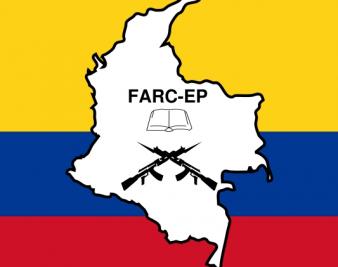
The world’s eyes may have been trained on the World Cup this weekend, but a different heated contest also took place in South America on Sunday night. In Colombia, incumbent president Juan Manuel Santos, who has made “peace” talks with leftist Revolutionary Armed Forces of Colombia (FARC) guerrillas the center of his campaign, was reelected in a runoff. He defeated his assertive challenger, Oscar Ivan Zuluaga, a staunch opponent of the negotiations, by a margin of 51 to 45 percent.
On paper, there were striking similarities between the two candidates. Both represent center-right parties, and both are economists by trade. They also served for a time in the same presidential administration, that of Alvaro Uribe, who was president from 2002 to 2010. From 2006 to 2009, Santos was defense minister; from 2007 to 2010, Zuluaga was the minister for finance and public credit. Generally speaking, the two candidates were in broad agreement over how to manage Colombia’s economy. The race, instead, was essentially a referendum on Santos’s conciliatory policies towards the FARC guerillas, or, in unfortunate popular parlance, the FARC “rebels.” (To call them mere “rebels” romanticizes them and obscures what they really are: terrorists, who have kidnapped and killed civilians by the thousands.)