

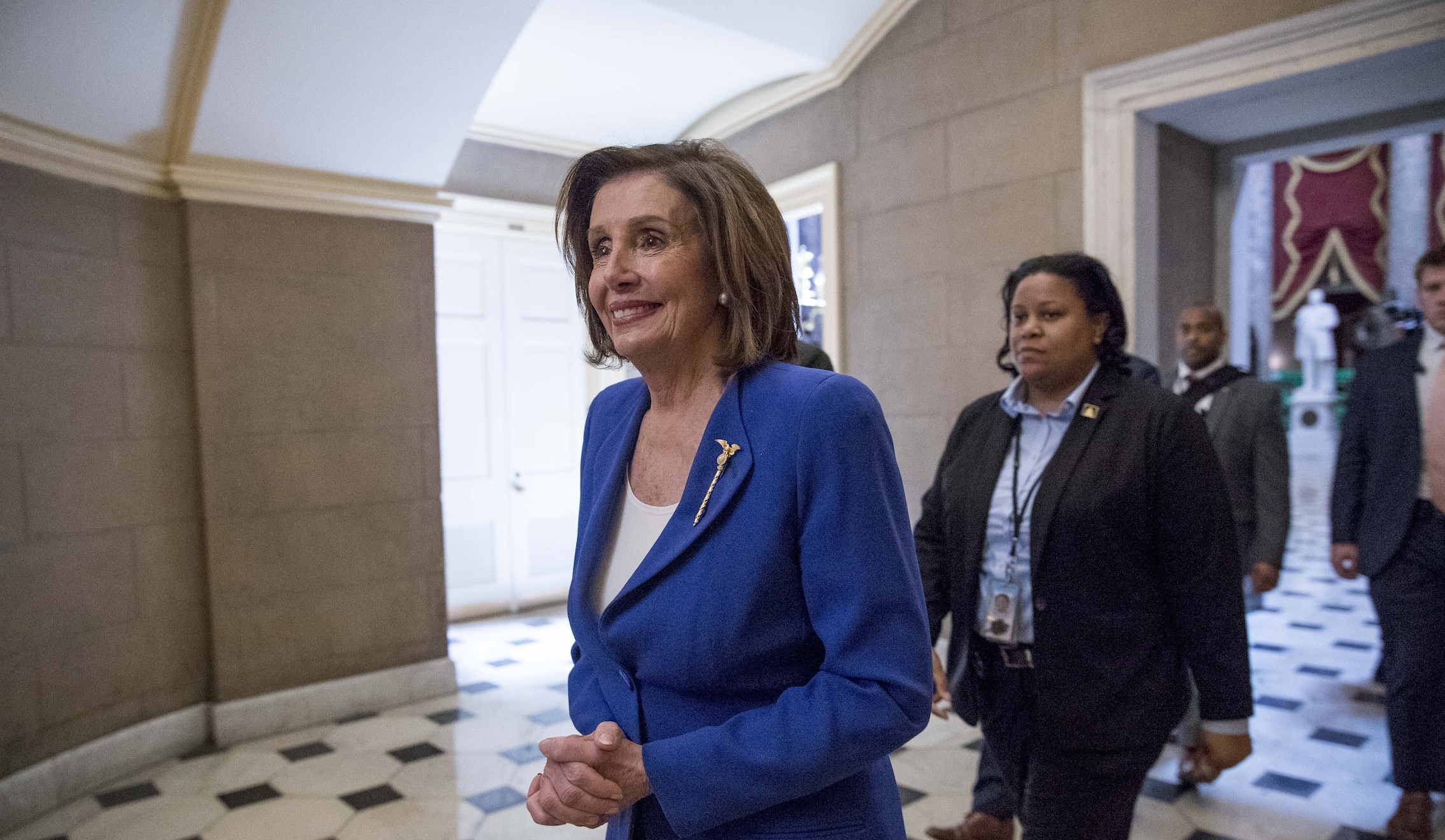
House Speaker Nancy Pelosi spent much of this week pitching a sweeping new economic relief measure that would rebuild the nation’s infrastructure, rescue ailing pensions, and expand broadband to underserved areas, among many other provisions.
Then came Friday’s unemployment report.
Recommended Stories


The staggering numbers showed more than 6.65 million people have joined the ranks of the unemployed, and far more are expected to lose their jobs in the weeks ahead while the nation endures a near total lockdown to avoid spreading the coronavirus.
By Friday afternoon, Pelosi issued a statement declaring her support for a more targeted “phase two” of the $2.2 trillion economic relief measure President Trump signed into law last week.
The other wish list items, such as water infrastructure and broadband expansion, will have to wait, she said.
“That may have to be for a bill beyond this right now,” Pelosi said.
Pelosi said she wants to draft a new bill that would “update” the measure just signed by Trump.
The latest relief package, signed into law on March 28, provides direct cash payments, enhanced unemployment insurance, aid and loans to businesses, and more money for state and local governments to deal with the effects of the coronavirus.
Pelosi said Congress should build on that measure with a few additions, including a bailout for struggling union pensions and the financially troubled U.S. Postal Service and new safety and health standards for workers.
Pelosi dropped plans to include a major infrastructure proposal she pitched earlier this week that would have also incorporated green energy initiatives.
“The numbers are devastating: 6.6 million initial unemployment claims, 700,000 jobs lost in the March jobs report, more than 245,000 confirmed coronavirus cases, and 6,000 dead,” Pelosi said Friday.
“The acceleration of the coronavirus demands that we double down on the down payment we made. … We must extend and expand this bipartisan legislation to meet the needs of the American people.”
Pelosi told CNBC she wants the legislation to provide another round of direct cash payments to many individuals and families, who in the most recent bill received $1,200 per person and $500 per child.
Democrats are also eager to extend unemployment insurance, which under the last bill expires after four months. Democrats say at least six months of unemployment insurance should be provided, Pelosi said.
Democrats say more small-business aid is needed. The last bill provided $367 billion in aid to small businesses that agree to keep most of their employees on the payroll.
“I don’t think that $350 million is enough for small business,” Pelosi said on CNBC. “And I don’t think that eight weeks is enough of a time to make a judgment about the viability of the business and how long they keep on their employers. So I would like to go right back and say, “Let’s look at that bill. Let’s update it with some other things that we need and, again, put money in the pockets of the American people.’”
Pelosi’s broader package faced an uphill fight in Congress.
Republicans rejected her expanded legislation as an effort to pass a partisan agenda, and no Senate Democratic leader has publicly backed the broader plan.
Senate Majority Leader and Kentucky Republican Mitch McConnell told Hugh Hewitt’s radio program that Congress must “wait a few weeks to see how things are working out” with the $2.2 trillion package before discussing a fourth relief package.
McConnell said he won’t bring up a bill that includes Democratic agenda items he deems unrelated to the coronavirus crisis.
“I’m not going to allow this to be an opportunity for the Democrats to achieve unrelated policy items that they would not otherwise be able to pass,” McConnell said.
Senate Democrats have not publicly expressed support for Pelosi’s broader wish list items.
In a conference call with reporters on Friday that followed the release of the March unemployment figures, Minority Leader Chuck Schumer said he believes Congress must pass a fourth economic relief package that expands on the third measure by helping individuals and small businesses crippled by the economic slowdown.
“And I hope we’ll do it relatively soon,” Schumer, a New York Democrat, said. “I think this is one of the big questions: Do we need more money? We probably will. But we’ll have to wait and see. Certainly, I would be willing, if the numbers continue to be as bad, to expand the program.”
