

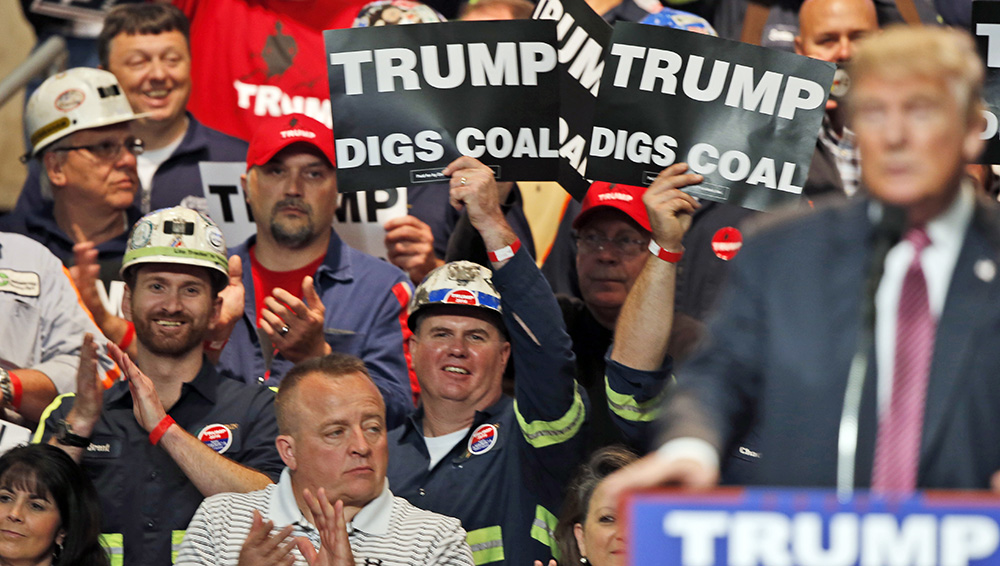
About a month ago, Donald Trump voiced amazement at the feats of the oil and gas industry in tapping a seemingly unlimited source of fossil fuels through the practice of fracking, as he dipped his toe for the first time into the energy policy pool.
It was a pivotal moment for the presidential candidate, who within the same 24-hour period of giving the speech, had been declared the GOP’s presumptive nominee.
Recommended Stories


The delivery of the major policy speech, and Trump’s near-simultaneous victory in the primaries, underscores the important place energy has occupied in the national debate in the runup to the Republican convention next month.
It’s also a sign of the role oil and gas politics are playing in an election year in which energy costs to consumers are at their lowest in a decade, but at the same time hundreds of thousands of jobs in energy-producing states have been lost due to a global supply glut.
There is quite literally too much oil on the market due to fracking. So much oil, in fact, that prices are now too low to justify production.
The job loss has been so profound that major U.S. oil and gas companies have been forced to sell off assets to compensate for their revenue being cut in half from just a year ago.
It may be a strange time for the industry, a period of cyclical extremes. But the idea that America has entered a time of abundance should not be lost on that fact, say GOP strategists.
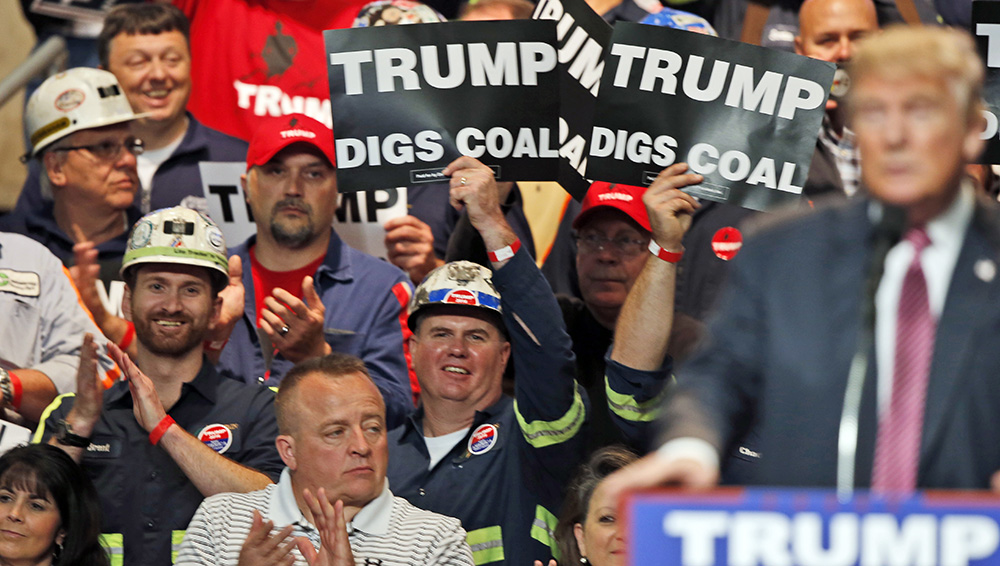
Donald Trump was amazed at the feats of the oil and gas industry in tapping an unlimited source of fossil fuels through the practice of fracking. (AP Photo)
Gasoline prices are low, for now, even as oil prices start to creep back up ever so slowly.
At the same time, coal companies are declaring bankruptcy due to a waning demand for their product. But there is greater demand for natural gas, which continues to experience historically low prices. That is shifting the way the nation gets its electricity while reducing greenhouse gas emissions to boot.
For the first time, the U.S. is seeing its electricity production shift from primarily coal-based to natural gas, the Energy Information Administration says.
That shift in the energy landscape, just like oil, has everything to do with the same fracking that amazed Trump back in May when he delivered his energy speech in the shale oil-booming state of North Dakota.
Shaking the foundation
Fracking is deeply affecting U.S. and global energy markets in a way that policymakers are only beginning to wrap their heads around. And Congress has struggled to keep up with the changes permeating the energy sector.
Republicans have pushed to lift a 40-year-old ban on oil exports to open the world market to the abundance of shale oil being produced through the fracking process, or hydraulic fracturing, as prices began to dip in 2015. Through the process, water is injected into rock deep underground to force out the crude oil or natural gas trapped inside.
Although the ban was lifted in December as part of a landmark bipartisan budget deal, it won’t start bearing fruit for U.S. oil producers until prices ratchet up significantly.
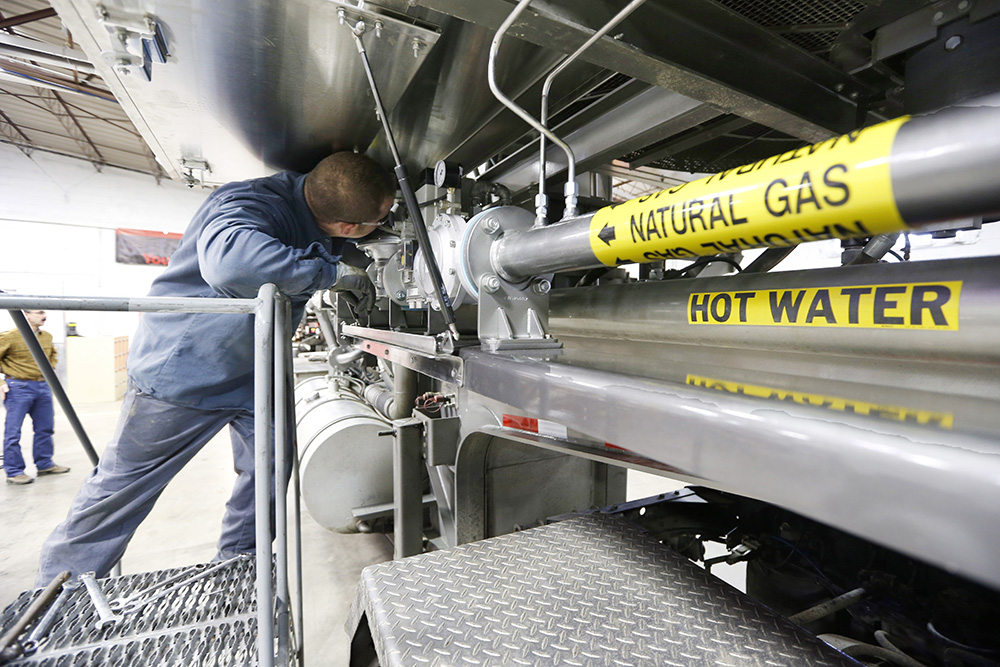
The U.S. is seeing its electricity production shift from primarily coal-based to natural gas, the Energy Information Administration says. (AP Photo)
Meanwhile, the Energy Department continues to slowly approve licenses for exporting more natural gas amid growing demand by industry to do so. The abundance of natural gas deserves a global market, say proponents of American energy exports. It also would help U.S. allies escape the yoke of countries such as Russia that have used energy as a political weapon.
Republicans say the Obama administration is slow-walking the export approvals, and there are now several bills working their way through Congress that would quicken the pace, including a comprehensive energy package and a defense spending bill.
Trump made U.S. energy exports a priority in his North Dakota speech. He said he wants to use the energy boom to increase jobs and ensure the country becomes energy independent.
Yet, at the same time as the boom in fossil fuels, renewable energy from solar and wind is experiencing one of the most profound cost reductions in the last 30 years.
Wind energy and solar power now account for the largest chunk of new power generators added to the grid, according to the Energy Information Administration.
But for the most part, conservatives still remain conflicted when it comes to support for renewable energy.
For them, solar and wind energy are part of the Democratic giveaway of tax breaks and subsidies to support a resource that cannot make it on its own.
For the Democrats, solar and wind are seen as the future, representing something more akin to the iPhone when compared to the big monopolies that ran the telecom market in the 1970s and ’80s, say political strategists. They saw the monopolies as keeping new technology at a standstill until the industry was broken up in the 1990s. The Democrats say they can do something similar in the energy sector.
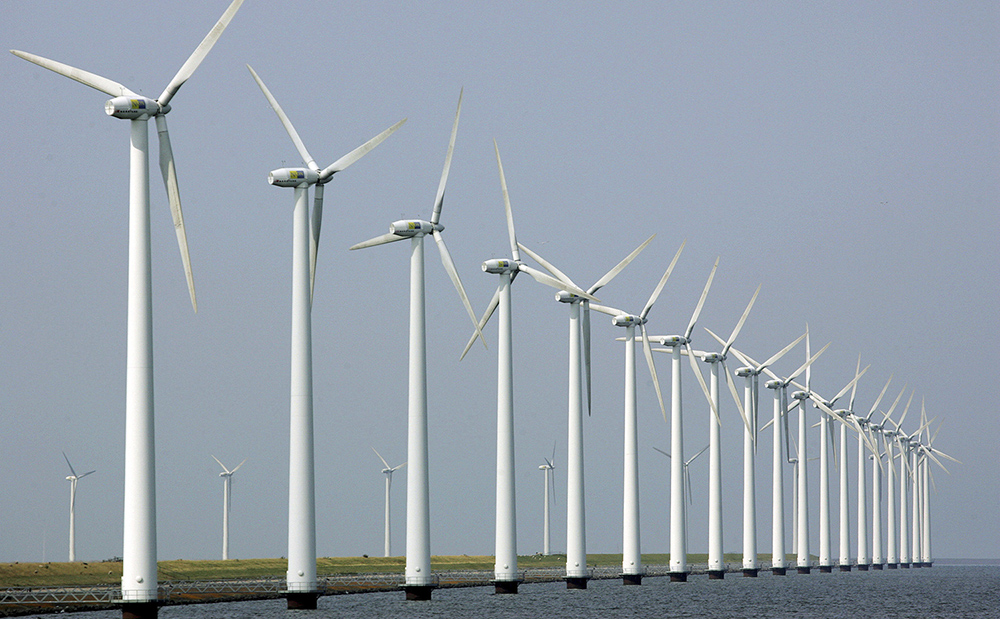
Solar and wind energy are part of the Democratic giveaway of tax breaks and subsidies to support a resource that cannot make it on its own. (AP Photo)
Conservatives counter that the market should determine the resources, not the federal government’s market-distorting policies. However, some say renewable policies are OK as long as they are not unlimited and are phased out over time.
None of these issues, however, prevented the GOP from reaching a deal last year with the Democrats on subsidies for wind and solar. The December budget bill ended the oil ban, but also extended renewable tax credits for five years. The extensions of the solar and wind credits were the largest in the history of the renewable energy tax program.
Over the five years, the credits would phase out, which was a GOP stipulation for reaching the deal. But even if the subsidies decrease, in some cases a federal tax break will remain even after five years.
Where is the Republican Party going on renewables? It’s not clear.
Trump has said that renewable energy from solar and wind is too expensive compared to their fossil fuel counterparts.
“Wind is very expensive. I mean, wind, without subsidy, wind doesn’t work,” Trump said. “You need massive subsidies for wind.”
He also raised questions about wind’s ability to co-mingle with wildlife. “There are places maybe for wind. But if you go to various places in California, wind is killing all of the eagles.
“You know if you shoot an eagle, kill an eagle, they want to put you in jail for five years. Yet the windmills are killing hundreds and hundreds of eagles,” he said. His claim is something the wind industry says is inaccurate.
In some cases, the cost argument he is making may be true, especially a decade ago. And even though the policies aren’t perfect, renewables are only growing, not fading.
Nevertheless, and despite the solar and wind extensions, Republicans on Capitol Hill continue to poke at removing the subsidies permanently, even as they search for a way to include clean energy as part of the Republican platform.
Sen. Lamar Alexander, R-Tenn., has used his post on the appropriations committee to suggest cutting the wind tax credits altogether. In exchange, President Obama would get some piece of his climate change and clean energy agenda paid for, which is a priority of his fiscal 2017 budget.
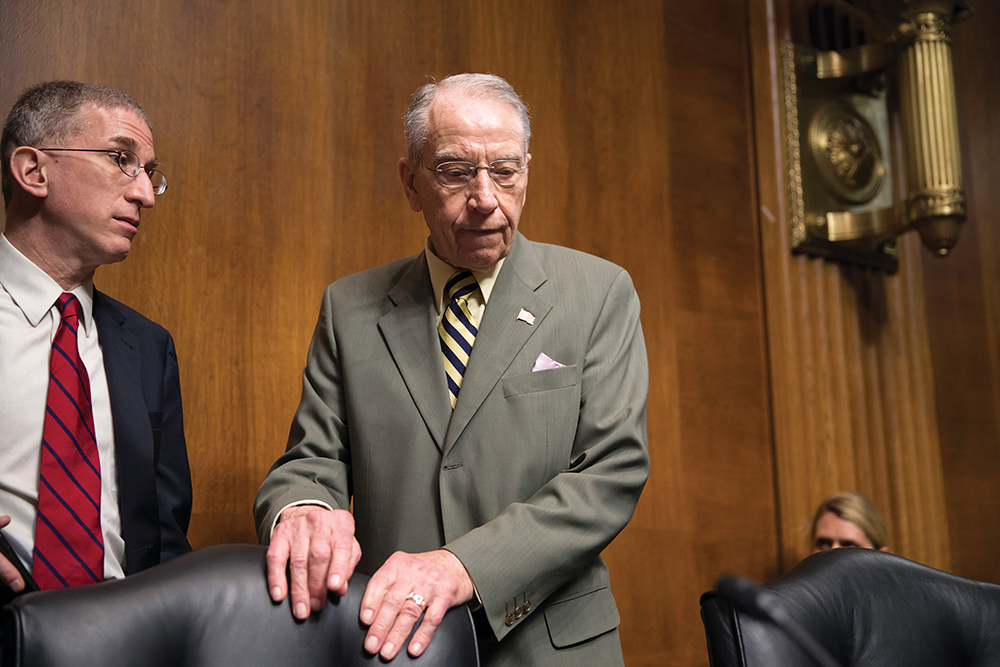
Sen. Chuck Grassley, R-Iowa, has remained a staunch supporter of the subsidy for wind. (AP Photo)
At the same time, Sen. Chuck Grassley, R-Iowa, has remained a staunch supporter of the subsidy for wind, especially since his state is a leading producer of electricity from wind. Nevertheless, he sees last year’s deal to phase out the credit as good for wind to stand on its own.
Grassley says some Republicans discount renewable and alternative energy, even though they like to tout their support for an “all-of-the-above” energy policy.
“Too often, conservatives tend to overlook the contribution of domestic renewable and alternative energy,” he told a gathering of young conservative organizations in March. “Some people in this town say they are for all-of-the-above, but the bottom line of it is they’re for all-of-the-below and none-of-the-above.”
Younger voters across the political spectrum tend to support renewable energy with policy that tackles climate change, according to groups tracking the millennial vote. But it’s not certain how much of a priority clean energy, or climate change for that matter, will be for the GOP in the election.
It’s simple: It’s not a priority, GOP strategists says.
After leaving the presidential race, Sen. Lindsey Graham, R-S.C., began looking for supporters on the Republican National Committee to include a clean energy plank in the Republican platform.
He said in March that he wants to “make it easy for an 18-35-year-old young man or young woman to be a Republican. Make it easier than it is today” by taking back ownership from the Democrats on environmental issues.
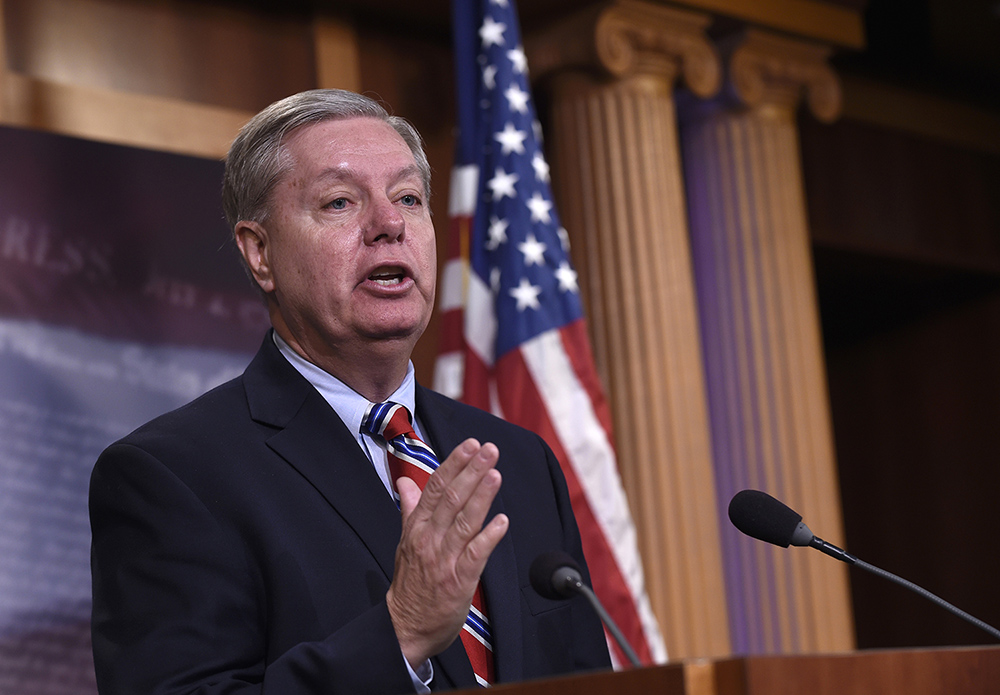
After leaving the presidential race, Sen. Lindsey Graham began looking for supporters on the RNC to include a clean energy plank in the Republican platform. (AP Photo)
“When we talk about the environment, I don’t want to have a lecture about … global climate change is just a myth. Let’s talk about clean energy, which gets us to where we all want to go,” Graham told young conservative voters at the same gathering with Grassley.
But that was before Trump became the presumptive nominee. Now Graham isn’t as hopeful, according to his office, which says they aren’t sure clean energy is a priority. His spokesman, Kevin Bishop, said “he’s not even going to the convention.”
Graham’s idea had the support of conservative entrepreneur Jay Faison, who started a $1 million ad bid to promote the idea of a GOP-based energy solution through the advocacy group ClearPath.
ClearPath is still engaged in the clean energy push, despite Graham pulling out of his effort, says an industry official on background who is privy to recent Republican National Committee meetings with energy industry representatives. The official says Faison is at the table, but the overwhelming presence of the oil industry at the meetings places the success of ClearPath in doubt.
“It is what it is,” the official said. “You are probably going to see a platform similar to what we have heard in the past,” but Faison is pressing them to include something more “modern” that goes beyond “drill baby drill.”
But long-time GOP energy and environment strategist Mike McKenna said the messaging was all wrong, especially when it didn’t include the oil industry. He said the idea of GOP clean energy policy was just too spurious a concept to get widespread acceptance.
Ending the EPA
The ClearPath idea of clean energy would not have necessarily included solar and wind, as much as it would other low-emission power producers such as nuclear, hydroelectric, natural gas and even clean coal power plants.
But in light of the Obama administration’s strict environmental regulations, it may be that opposing the Environmental Protection Agency, rather than a clean energy agenda, helps the GOP more.
That is especially true since many of the regulations make it harder for clean energy power plants to survive.
EPA’s climate rules for new power plants make it impossible to build a new coal plant, even an advanced design that emits much lower pollution. The rules are so stringent that the coal industry refers to the regulations as a “de facto ban” on new coal-fired plants.
Trump says he wants to bring back the coal industry, compared to Hillary Clinton, who has said her policies would dismantle the coal industry further and put more miners out of work.
In addition, a big chunk of existing coal plants have been closed because of other EPA pollution rules. The agency’s Clean Power Plan, the centerpiece of President Obama’s climate change agenda, would continue that trend.
The plan is expected to continue to close coal plants. More than two dozen states oppose it in federal appeals court, along with dozens of trade associations, coal companies and unions.
The EPA plan is also criticized for unnecessarily accelerating the shift of the grid toward solar energy. The original version of the Clean Power Plan had plotted a trajectory that included natural gas power plants playing a bigger role, but reversed that course in the final rule. The coal industry says the goal is clear: complete “decarbonization” of the grid, which means no fossil fuels.
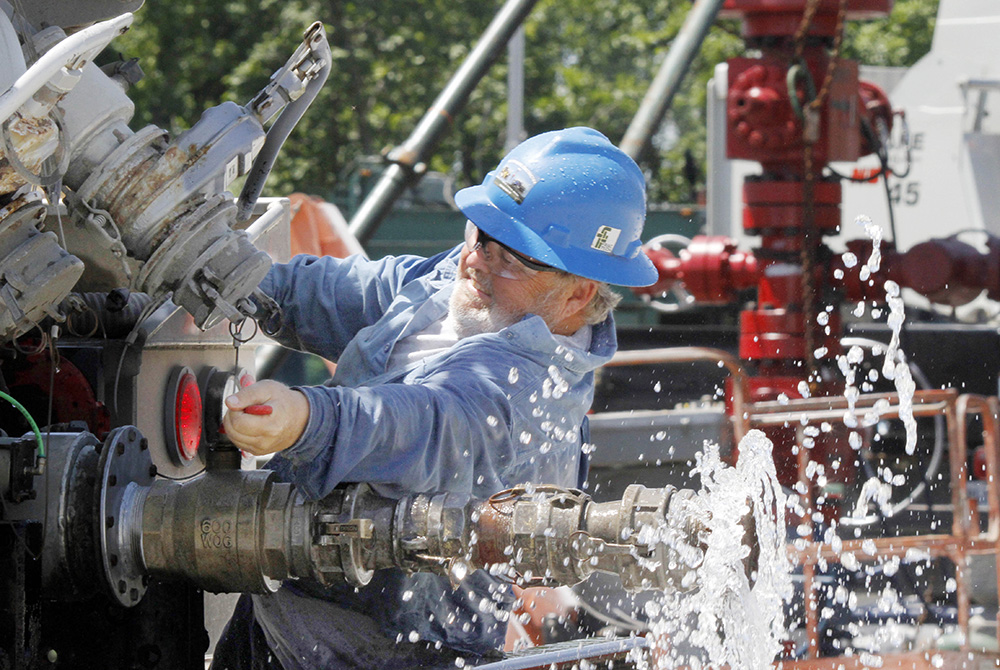
The shift in the energy landscape has everything to do with hydraulic fracking. (AP Photo)
At the same time, a slew of other regulations under the mantle of Obama’s climate agenda would place pressure on natural gas producers at a time when the country is using more of the cleaner-burning fuel as its leading source of electricity.
Coal and natural gas provide the bulk of the nation’s electricity production. After those two resources comes nuclear power and hydroelectric, followed by solar and wind.
The Obama administration also has placed a moratorium on issuing new coal-mining leases until it can properly assess the cost of coal in relation to climate change.
On top of that, the EPA continues to advance other far-reaching regulations that seek to place more private landowners under the reach of its enforcement powers.
The Waters of the United States rule, which the EPA renamed the Clean Water Rule, designates drainage ditches and gullies as navigable waterways. The Republican Party is unified against the regulation due to the cost to farmers and ranchers.
And the Government Accountability Office, Congress’ investigative arm, found that the agency broke the law in the way it used social media to demonstrate support for the regulations.
Trump was quick to latch onto these issues in his May energy speech, in which he used the regulations of the Obama administration to draw a bright line between him and Clinton.
“As bad as President Obama is, Hillary Clinton will be worse,” Trump said. “She will escalate the war against American energy, and unleash the EPA to control every aspect of our lives.”
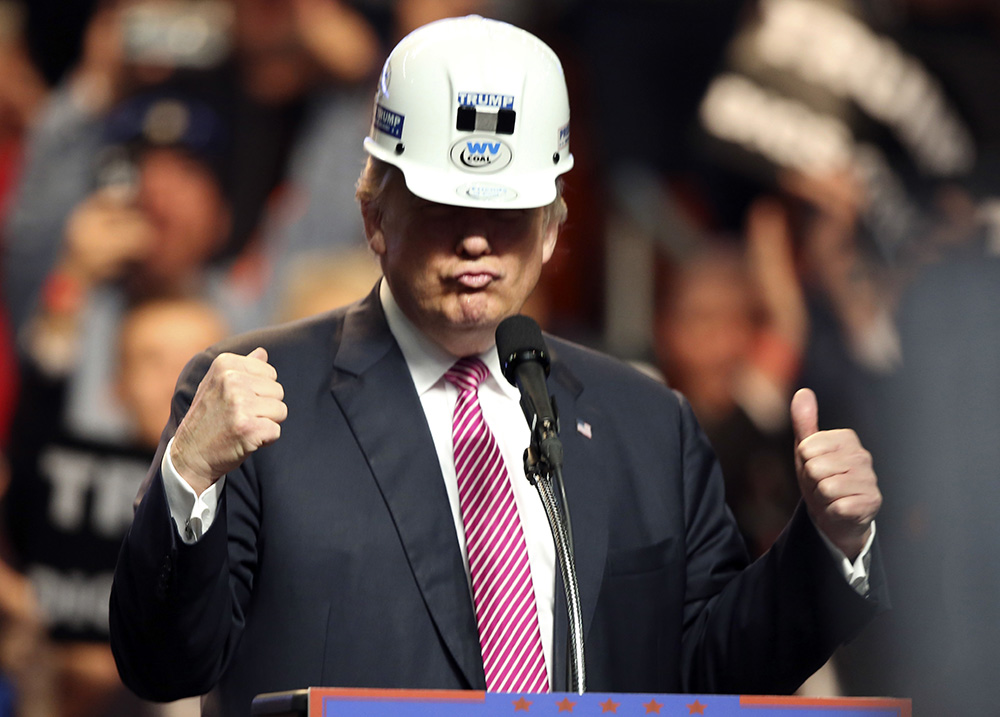
Trump made U.S. energy exports a priority in his North Dakota speech. (AP Photo)
Trump used comments Clinton made in Ohio earlier in the year, where she touted closing more coal plants and putting more miners out of work if she gets into the Oval Office. Trump says Clinton’s energy policy would force the nation to choose between wealth versus poverty. Her policy would create the latter, of course.
“She declared that, ‘We’ve got to move away from coal and all the other fossil fuels,’ locking away trillions in American wealth,” he said in North Dakota. He also touts her opposition to fracking, the reason for low energy prices and lower greenhouse gas emissions.
“In March, Hillary Clinton said: ‘By the time we get through all of my conditions, I do not think there will be many places in America where fracking will continue to take place,'” Trump said, adding that shale energy production could add 2 million jobs to the economy over seven years.
But many of these rules, regulations and moratoriums on energy production have been top priorities by the GOP leadership in the House and Senate long before Trump got wind of them.
Nearly all Republican-backed spending bills for the Energy and Interior departments and EPA have policy riders to repeal or roll back many of the regulations. Senate Majority Leader Mitch McConnell, from the coal-producing state of Kentucky, personally backed a number of the measures to roll back the EPA’s anti-coal and climate rules.
Gina McCarthy, poison pill
GOP strategists have recently become concerned that the arguments against EPA rules and agency overreach aren’t resonating with voters.
One strategist speaking on background put it bluntly: “No one cares.”
Other strategists say Republicans have done a horrible job communicating to voters why they should care about EPA overreach and massive rules such as the Waters of the United States regulations.
“Leadership doesn’t get it,” said GOP political strategist Mike McKenna. “They care about things that no one else does.”
The biggest problem is they don’t pay any attention to shaping a narrative, he said. Instead, Republicans are more concerned about complaining. And what happens to the guy who complains all the time? People tune him out, McKenna said.
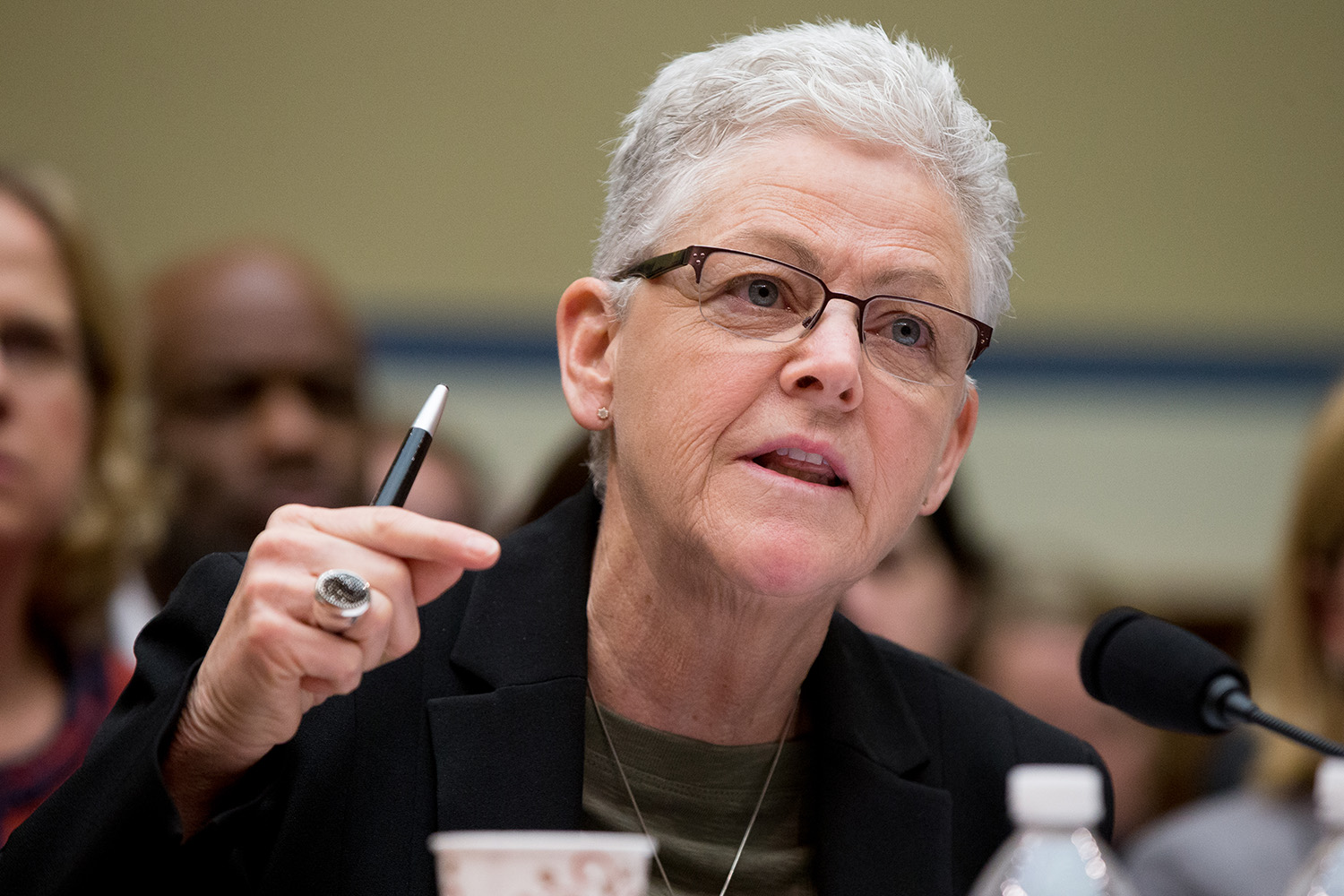
The GOP should focus away from the gloom and doom of Gina McCarthy and her EPA, a Republican political strategist said. (AP Photo)
“We should tell a better story,” he added. “That’s what we should talk about in the way into the convention … But instead [it’s] how life is unfair because of government regulations. The problem with the GOP is … in general they focus too much on the negative. It’s especially bad in energy land because we want to talk about regulations.”
He said “it’s a pretty good list” of regulations, but the party has failed to make them resonate among a broader group of voters.
McKenna recommended that the GOP focus away from the gloom and doom of Gina McCarthy and her EPA, and instead play up the unprecedented energy “abundance” the nation is experiencing that is affecting everybody.
“We are in the middle of the biggest energy boom in history,” he said. It’s important for the world, as well as domestically, that natural gas is selling for about $1 per unit, when not too long ago it was $15, he said.
“Everyone is coming together for this boom,” he said. “It helps everybody. It’s an American success story. It’s bringing industry back to the United States, it’s helping the U.S. beat rival companies in Japan and Europe. But the GOP would rather stick to griping about McCarthy and her EPA. And bitching as a steady diet gets old.”
McKenna does see a glimmer of hope from Trump in changing the narrative. In his energy speech, Trump included a regulation litmus test. The test is based on the harm a regulation poses to consumers and jobs. McKenna said this gets away from the GOP’s focus on opposing rules that harm big companies’ bottom lines.
Addressing climate change
Another thorn in the Republican side is Obama’s leadership in international accords to fight global warming. The principal one is the deal that nearly 200 countries and the U.S. agreed to last year to cut greenhouse gas emissions among developed and developing nations.
Sen. John Barrasso, R-Wyo., has led a cadre of GOP lawmakers in opposing the agreement and is trying to stop the administration from sending money to fund a $100 billion Green Climate Fund, sending money to small countries to help them fight the effects of global warming.
Trump also has jumped on the anti-Paris fervor that has made its way through the Republican Party since last year. He included it in his first “100-day action plan” as president.
“We’re going to cancel the Paris Climate Agreement and stop all payments of U.S. tax dollars to U.N. global warming programs,” Trump said. Proponents of the deal say it would be a waste of time trying to reverse the agreement, saying Trump’s characterization of what the deal does is wrong.
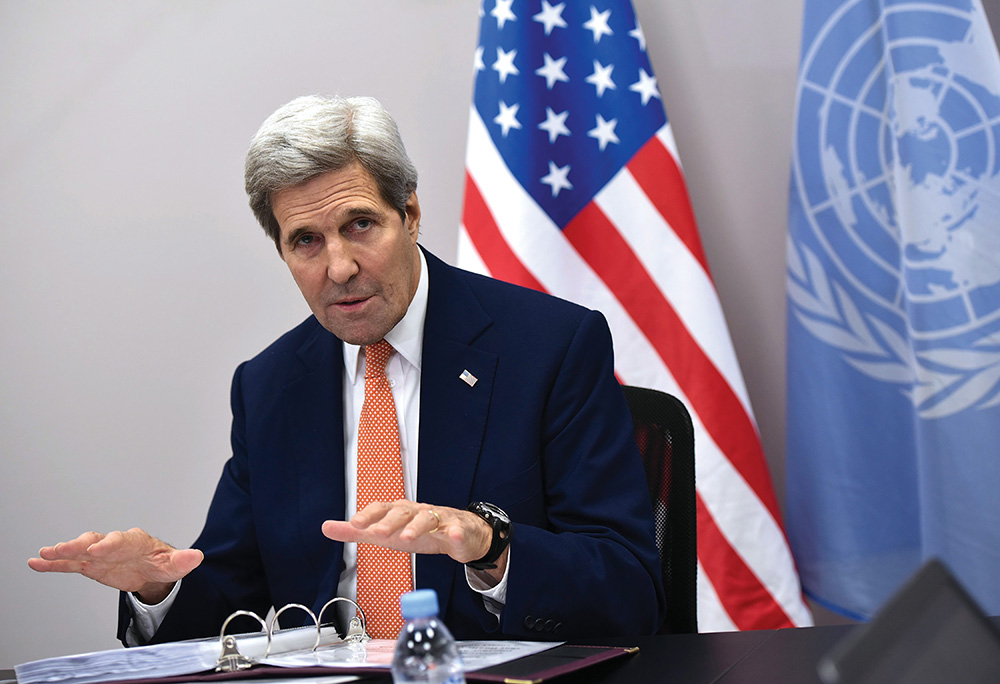
Each country abides by its own energy choices. The only part that is binding in the agreement, said Secretary of State John Kerry, is providing data showing that a country has reduced its emissions. (AP Photo)
It doesn’t give foreign bureaucrats control over America’s energy resources, as Trump has said. Each country abides by its own energy choices. The agreement, which is nonbinding, places an emission target for all countries to commit to without making it legally binding. The only part that is binding, said Secretary of State John Kerry, is providing data showing that a country has reduced its emissions.
Even conservative-leaning experts suggest they would not make backing out of the deal a top priority for the next president. Trump would be better off going after the Clean Power Plan than spending time and resources trying to pull out of a nonbinding agreement.
Trump’s 100-day plan would hit on all fronts when it comes to climate change and the EPA. “We’re going to rescind all the job-destroying Obama executive actions, including the Climate Action Plan and the Waters of the U.S. rule,” he said.
Industry experts say they like the Trump plan because it beats back the heavy burden of regulations the Obama administration has piled on the industry.
They say the speech provided a good contrast when compared to Clinton, who has gone along with the extreme Left on supporting a ban on fracking and more regulation on oil, gas and coal.
Other issues that are important to the GOP, however, Trump has not chimed in on.
The Republican Party continues to support work to open the nation’s nuclear waste dump at Yucca Mountain in Nevada.
The buildout of nuclear power plants has subsided with about a handful of new reactors coming on line, as several others looked to be closed over the next few years. One of the major problems facing nuclear power is the issue of the federal government taking ownership of the radioactive waste it produces and storing it indefinitely at Yucca.
The Obama administration chose to shut down the program as a favor to Democratic leader Sen. Harry Reid of Nevada during the president’s first term.
A federal court reversed that decision in the last two years, and the review process for opening the facility is moving ahead.
Yucca Mountain proponents, such as House energy appropriations panel Chairman Mike Simpson, R-Idaho, continue to support necessary funding for the Energy Department to keep the license on track and moving forward.
