
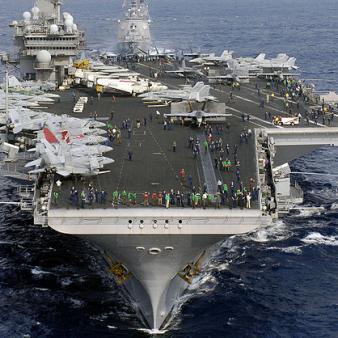
In the middle of March, the Navy, Marine Corps, and Coast Guard published a revised version of their 2007 paper, A Cooperative Strategy for the 21st Century. The 2007 edition reflected the strong influence of 9/11, U.S. operations in Afghanistan, Iraq, and the global campaign against Islamist jihadis. It suggested broadening the reach of U.S. seapower by cooperating with other navies; helping littoral states that might fail by providing them with military training; and bolstering such traditional naval missions as humanitarian assistance and disaster relief.
Strikingly, the word “China” did not appear in the 2007 document. Unmentioned also was what kind of forces American seapower would need and how much they would cost. The same paper was silent about which large roles mattered most to national security and specifically to America’s sea services. Its descriptions of the important elements of naval power outpaced both prescriptions for what to do with it and the choices—about where to invest money and time for example—that good strategy demands.
Real journalism.Trusted by millions.
Unlimited access to in-depth reporting, expert analysis, and the stories that shape our country.
Already a member? Log in