

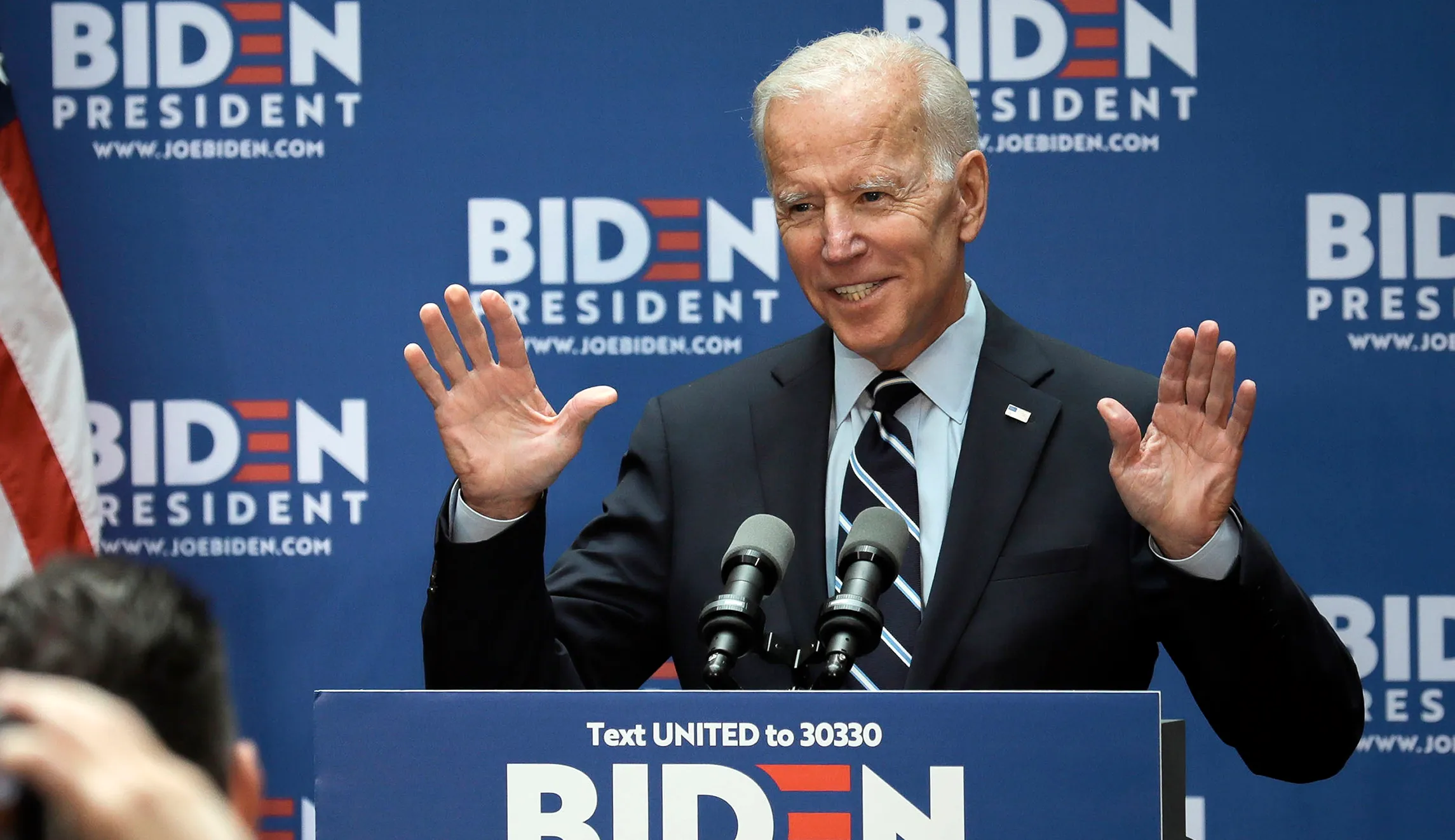
After weeks of pummeling by rivals over domestic issues like school busing and crime-fighting, Democratic presidential front-runner Joe Biden pivoted toward foreign affairs, hitting President Trump on multiple fronts.
“Trump undermines our democratic alliances while embracing democratic dictators who appeal to his vanity,” the former vice president said Thursday at the CUNY Graduate Center in New York. “Make no mistake about it, the world sees Trump as he is — insincere impulsive and sometimes corrupt, dangerously incompetent and, in my view, incapable of world leadership and leadership at home. It’s why we’ve seen such a precipitous drop of how the world sees America.”
Recommended Stories


Throughout his remarks, Biden promised to end a number of items on Trump’s foreign policy agenda, including the travel ban from certain Muslim-majority countries, the Global Gag Rule, which prevents money from going to nongovernmental organizations that provide abortions, as well as working to restore America’s relationships with traditional allies.
“Donald Trump’s brand of America First has too often led to America alone, making it much harder to mobilize others to address threats of our collective concern,” said Biden, a former Senate Foreign Relations Committee chairman.
Biden also pledged to rejoin and “strengthen” the Iran nuclear deal negotiated by the Obama administration. Trump leaving that deal, Biden argued, emboldened Iran to “become more provocative.”
Much of Biden’s speech was an elaboration of the many policies he has laid out on the campaign trail. On the topic of China, however, Biden addressed a topic where he had previously faced heavy criticism.
“To win the competition for the future against China or anyone else, we must sharpen our innovative edge and unite the economic might of democracies around the world to counter abusive economic practices,” Biden said. “China is playing the long game, extending its global reach, investing in technology of the future while Trump is designating our oldest allies like the European Union and Canada as national security flaps,” he added before knocking Trump’s trade wars as harming the average American consumer.
Early on in his campaign, during a stop in Iowa, Biden dismissed the idea that China was a growing global threat.
[Related: Biden reverses course: ‘We need to get tough with China’]
“China is going to eat our lunch? Come on man,” Biden said in May. “I mean, you know, they’re not bad folks, folks. But guess what? They’re not competition for us,” he added.
Notably missing from Biden’s speech was a summary of his past foreign policy positions, which have garnered flack from some of his 2020 rivals. During his remarks in New York, he made no reference to his congressional record.
While he had voted against the first Gulf War in 1991 — widely seen as a successful military effort — he was one of the more vocal Democratic proponents in the Senate for the invasion of Iraq in 2002.
“It would be unrealistic, if not downright foolish, to believe we can claim victory in the war on terrorism if Saddam is still in power,” Biden said that year.
As vice president, he was often the target of scorn and mockery by many within the White House. During deliberations over whether the U.S. should launch a raid to kill Osama Bin Laden, Biden lobbied against what would become one of his boss’s most successful foreign policy accomplishments.
In 2011, Biden told Turkish President Abdullah Gul that he didn’t believe the Syrian Civil War would cause regional violence or instability.
Obama Defense Secretary Robert Gates wrote in his book of Biden: “I think he has been wrong on nearly every major foreign policy and national security issue over the past four decades.” When interviewed by CBS this year, Gates could not say that he believed Biden would make an effective president.
During June’s Democratic primary debate, Biden was asked by a moderator whether the American public should trust his foreign policy instincts. In his response, Biden pivoted to his role of helping remove American forces from Iraq during his time in the Obama administration.
Biden’s speech comes at a particularly tenuous time for his third White House run. His lead among the rest of the Democratic has shrunk considerably following what many considered a lackluster performance during the first round of primary debates in June.
An Economist/YouGov poll released Wednesday showed Biden up by just five points, a 22%, over Massachusetts Sen. Elizabeth Warren.
