

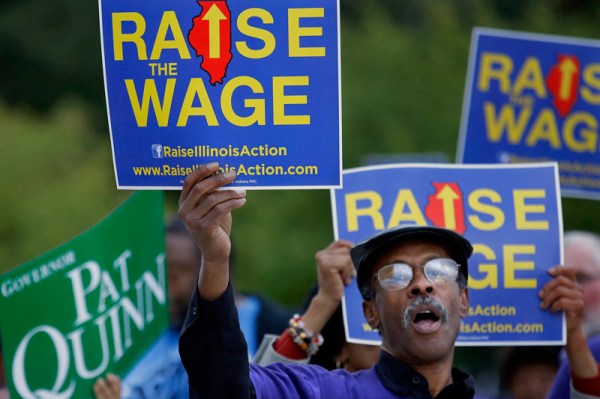
A new study from a prominent researcher finds that higher minimum wages have increased poverty in poor neighborhoods, a finding that could shake up the debate over the federal wage floor and slow the liberal push for a $15-an-hour minimum.
The study, led by the University of California, Irvine economist David Neumark and published by the business-backed Employment Policies Institute, finds that, over the course of decades, higher minimum wages don’t reduce poverty in disadvantaged neighborhoods. Rather, the analysis finds that a $1 increase in the minimum wage raises poverty rates and government dependency by about 3 percent.
Recommended Stories


Print subscriber? Click here to login/register your account
Digital subscriber? Click here to login/register your account.