

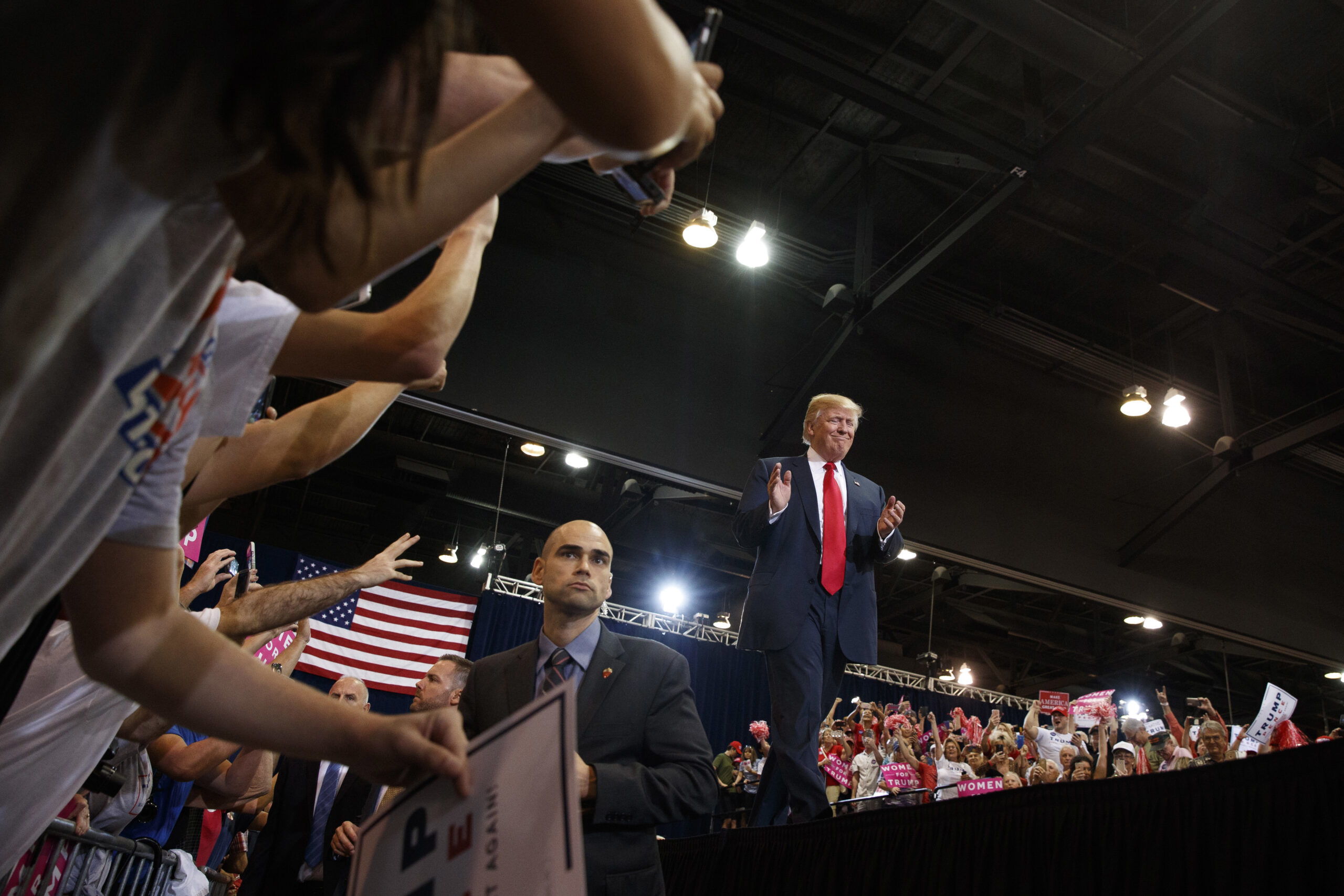
Donald Trump declared the “silent majority” is back at a rally in Phoenix, Arizona, Saturday night, using a phrase that was first coined by former Republican President Richard Nixon in rallying support from those not protesting the Vietnam War.
In this case, Trump was using the phrase to rally support from those who have not sided with Democratic rival Hillary Clinton.
Recommended Stories



“The silent majority is back. In ten days we are going to win the state of Arizona and we are going to win back the White House,” Trump said.
Buttressing his confidence was Friday’s news that the FBI had reopened its investigation into Clinton’s use of a private email server as Secretary of State.
Trump used the news to bolster supporters at rallies in both Phoenix and Golden, Colo., on Saturday, saying it is clear Clinton will be found guilty of criminal charges.
“She is so guilty,” he said. “Now the evidence is so overwhelming because they wouldn’t have done this if it wasn’t overwhelming.”
Trump also used his renewed enthusiasm to drill down on what appears now to be his central policy promise, to repeal the failed policies of President Obama’s Affordable Care Act, more commonly known as Obamacare.
“A Trump administration will immediately repeal and replace the disaster known as Obamacare,” he said, adding that the plan can now officially be called a “catastrophe” based on the projected rate hikes that are expected to begin next year.
“It’s just been announced that the citizens of Arizona are to experience, congratulations, a 116 percent increase in their Obamacare premiums,” he noted. “Don’t feel bad you won’t be the highest in the country.”
Trump said electing him will stop the premium hikes for good. “We will stop the madness of Obamacare,” he said.
Trump was referring to a new report from the Department of Health and Human Services that projected healthcare premiums rising by an average of 25 percent for most of the country in 2017 under Obamacare.
The open enrollment period for 2017 ends on Tuesday, Nov. 1, when enrollees will have to face signing up for a program with much higher premiums.
.
