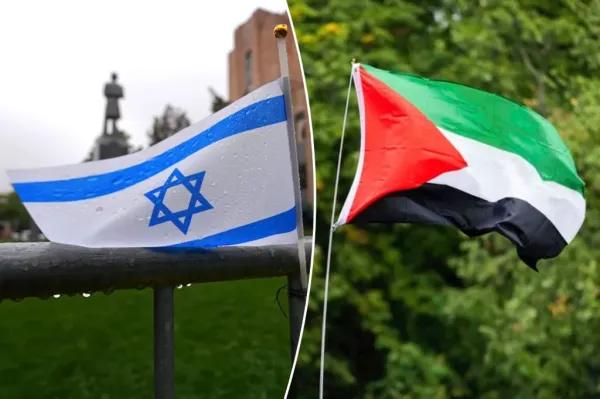
At Columbia University, political debate involving the Middle East has a predictable loopiness. I can remember visiting its Morningside Heights campus earlier in the decade and, being at that time something of an innocent in West Asian affairs, growing astonished that there were not two, but three parties involved in a spirited protest over the Zionist entity’s existence. After all, the whole thing seemed like it ought to be a simple up-or-down sort of question, if only on purely logical terms. And so it was: there was a group made up mostly (but not entirely) of Muslim students protesting the Jewish State’s existence; there was also a predictable counter-protest made up mostly (but not entirely) of Jewish students; but then there was the third party, a group drawing mainly from ultra-Orthodox Jews, standing with those who wished to see Israelis swimming Cyprus-wise into the sea. Old hat to experts on the region, but it taught me an important lesson: expect, at Columbia, the extra twist at the end of the story, the final punch line to things which really shouldn’t be jokes but always seem to end up that way. So it was no surprise to open yesterday’s Washington Post and discover that the well-meaning but somewhat hapless president of Columbia, Lee C. Bollinger, is under sustained fire for the remarks he made introducing President Ahmadinejad back at the university’s ill-considered September forum. His stern and honest little speech (“Mr. President, you exhibit all the signs of a petty and cruel dictator”) was a brief moment of dignity in the midst of the University’s otherwise headlong hurtle into self-parody, not to say self-disgrace. But criticizing the Iranian regime for, among other things, imprisoning an academic with ties to Columbia went too far for some members of that audience:
Let us pass over the delicate sectarian implications involved in the phrase “pandering to donors” and consider, instead, the rich irony of the University’s Faculty of Middle East studies accusing someone else of embarrassing the institution. This from the same members of the teaching staff accused of fostering a classroom climate of bullying and intimidation for those who didn’t toe the political line–and that was in the Arabic language classes! (It should be noted that Ms Linzer, the author of the story in the Post, points out that the undergraduates who were making the complaints in these cases were a “group of radical Jewish students.” Good to have her helping keep track of who is on the fringe.)