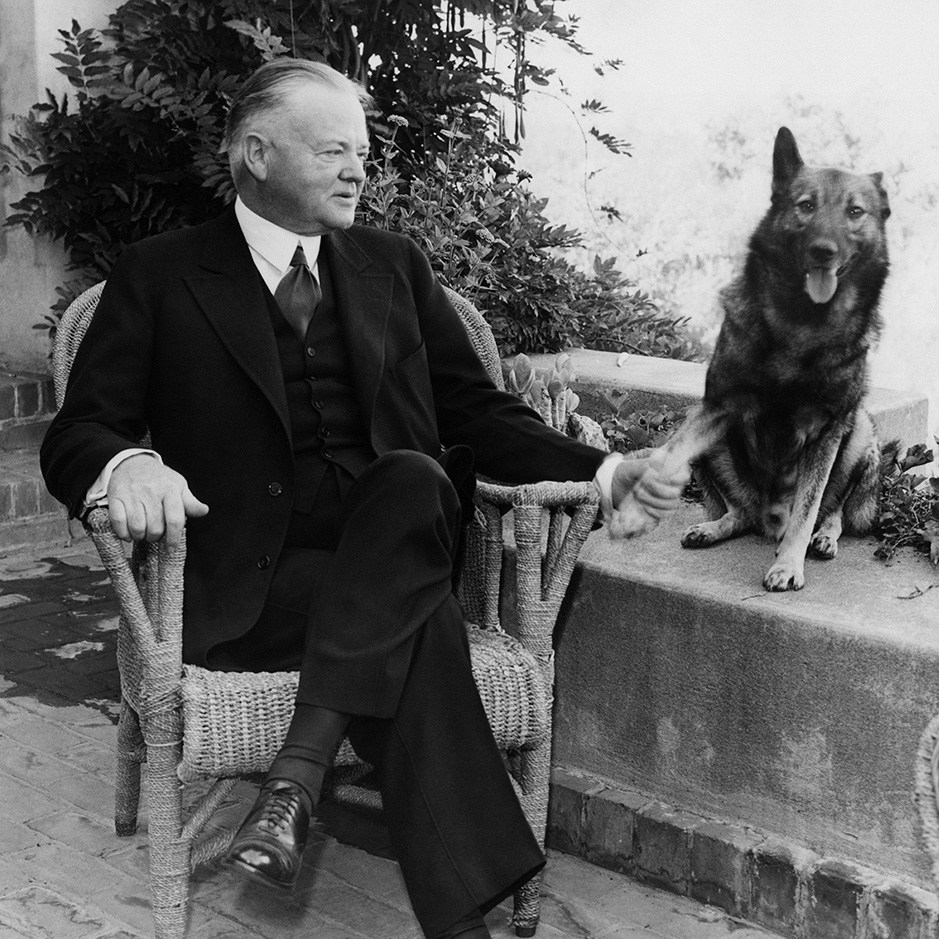
Since his departure from the White House in 1933, it has often seemed that Herbert Hoover is the Rodney Dangerfield of American politics: He gets no respect. On the left, he has long been castigated as a presidential failure: a dour and rigid reactionary who did little to combat the Great Depression. More recently, on the right, he has been denounced as a protectionist and progressive whose misguided interventionism converted the economic downturn of 1929 into a calamity, paving the way for a descent into a collectivist quagmire under Franklin Roosevelt. Routinely rated by many historians as a mediocrity in the Oval Office, Hoover has become a political orphan, unwelcome in liberal and conservative pantheons alike. Particularly in popular folklore and mythology, he survives as a symbol of hapless ineptitude and hard times.
Glen Jeansonne is determined to liberate Hoover from these perceptions. A professor emeritus of history at the University of Wisconsin-Milwaukee, he has written well-received biographies of Huey Long and Elvis Presley, as well as numerous other books, including a recent study of Hoover’s presidency. In Herbert Hoover he has found a subject far less flashy than Elvis or Huey Long, but deserving of far more scrutiny—a man he dubs “the most versatile American since Benjamin Franklin.”