

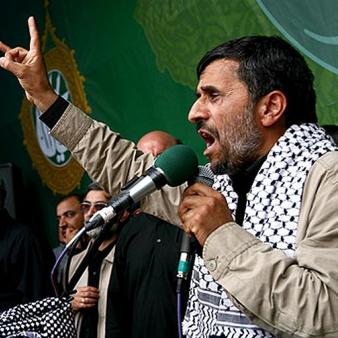
Iran has a lot riding on the survival—both literal and political—of Venezuelan strongman Hugo Chávez. If the Bolivarian revolutionary beats cancer and wins another term as president, Tehran will continue to enjoy a strategic partnership with the world’s fifth largest oil exporter. But if Chávez dies, or if Venezuela’s democratic opposition finds a way to defeat him at the ballot box, the mullahs will lose their most important ally in Latin America, an ally who has effectively turned his country into an Iranian satellite.
With Chávez’s fate hanging in the balance, Tehran is understandably eager to cultivate new hemispheric relationships. It already has close ties with populist-left governments in Bolivia, Ecuador, and Nicaragua. But those countries have much smaller economies than Venezuela, and much less regional influence. Argentina, by contrast, is the fourth most populous country in Latin America, with an economy roughly the size of Venezuela’s. It has an educated population, good infrastructure, and an expanding nuclear energy program. It also has a history of nuclear cooperation with the Islamic Republic, dating back to the 1980s and 1990s.
Stay informed.Stay ahead.
Join Washington Examiner for unlimited access to the news, analysis, and commentary that matter most.
Already a member? Log in
