

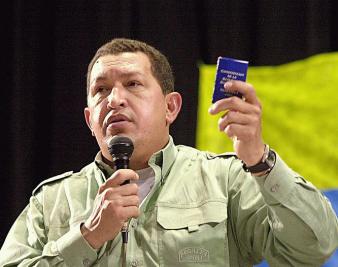
Venezuelan president Hugo Chávez is visiting Tehran today, along with his sidekick, Bolivian president Evo Morales. It’s Chávez’s ninth trip in the past 18 months but this one’s special because he’s stopping over on his way back from Moscow, where he announced a nuclear deal with the Russians. The Venezuelan strongman’s itinerary and business agenda hardly allays fears over the Venezuela-Iran-Russia partnership that some see as a growing threat in Washington’s backyard. It’s an alliance that features not only nuclear cooperation and energy resources, but also conventional arms and terrorism.
Last Friday’s announcement from Moscow that Chávez and Russian president Dmitry Medvedev had reached an agreement for Russia to build two 1200-megawatt nuclear reactors in Venezuela got worldwide play. However, the deal has been in the works for over two years, or since 2008, when many in the international community criticized Russia’s incursion into Georgia, and Russia thumbed its nose at the West by offering Venezuela access to nuclear power. Moscow’s deal with Caracas follows on the heels of its construction of a similar reactor in Iran that it completed this August.
Stay informed.Stay ahead.
Join Washington Examiner for unlimited access to the news, analysis, and commentary that matter most.
Already a member? Log in
