

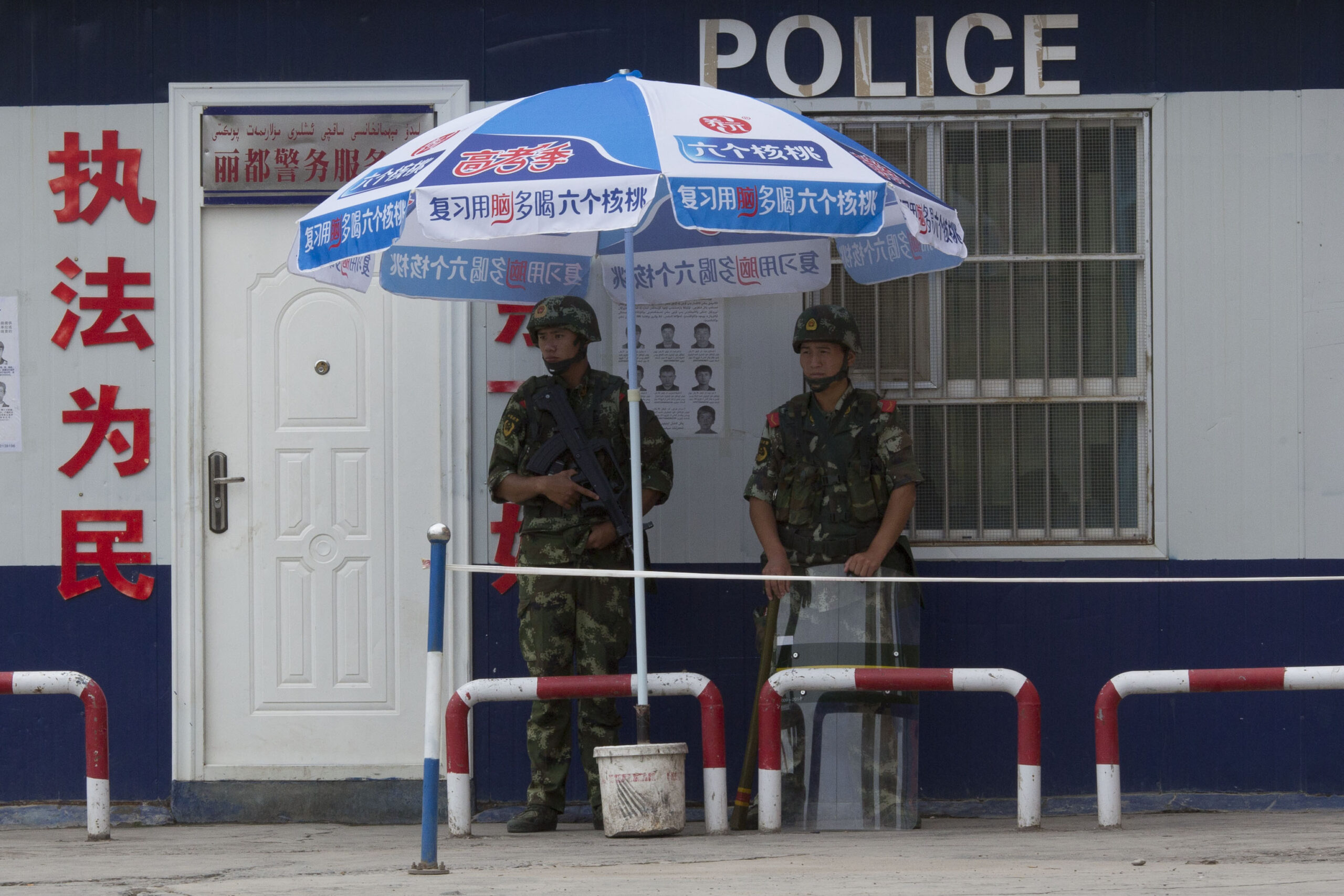
KUQA, China (AP) — In this ancient oasis town in China’s restive west, assault rifle-toting police officers patrol the cobblestone lanes of ochre-brick houses in an ethnic Uighur neighborhood. Three police surveillance cameras atop a white pole watch over a narrow dirt road frequented mostly by cows. Wanted posters for suspected Uighur assailants are stuck on walls every few hundred feet.
China has blanketed parts of Xinjiang, home to Muslim, Turkic-speaking Uighurs, with such heavy security that it resembles an occupied territory under martial law, complete with armed troops, spiked barricades, checkpoints and even drones. But the massive security effort has not brought stability to Xinjiang, and neither has Beijing’s strategy of pouring in economic investment. A few hundred people have died in ethnic violence in Xinjiang and in two attacks in Chinese cities elsewhere over the past 16 months.
Stay informed.Stay ahead.
Join Washington Examiner for unlimited access to the news, analysis, and commentary that matter most.
Already a member? Log in
