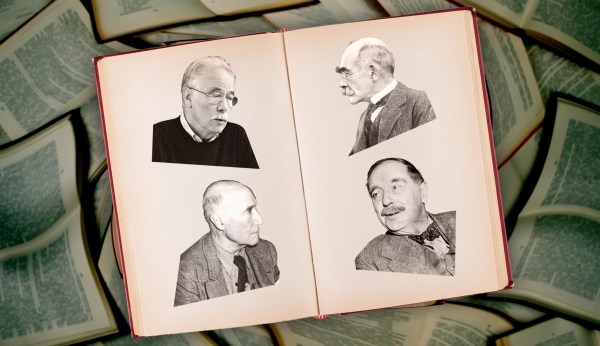
If conscious novelists are the novelists who cannot begin writing until they know what they’re going to say, then unconscious novelists are the ones who have no idea what they’re going to say until after they’ve said it. Though no writer has ever managed to achieve either perfect consciousness or unconsciousness, there is nonetheless an observable difference between a writer like Charles Dickens, who tends to figure out what it all means at the end of his novels, and one like Henry James, who tends to know from the beginning.
What makes A. S. Byatt’s new work, Babel Tower (Random House, 623 pages, $ 25.95), so fascinating is that the author — who is as severely conscious a novelist as we have writing in English today — has for the first time attempted to write an unconscious novel. Byatt, who found wide popularity with her Booker Prize-winning Possession in 1990, typically uses her books to nest narrative within narrative, like closefitting Chinese- boxes. But in Babel Tower she has sent those narratives out to clash like ignorant armies on the page — in the hope, one presumes, that some meaning will emerge victorious.