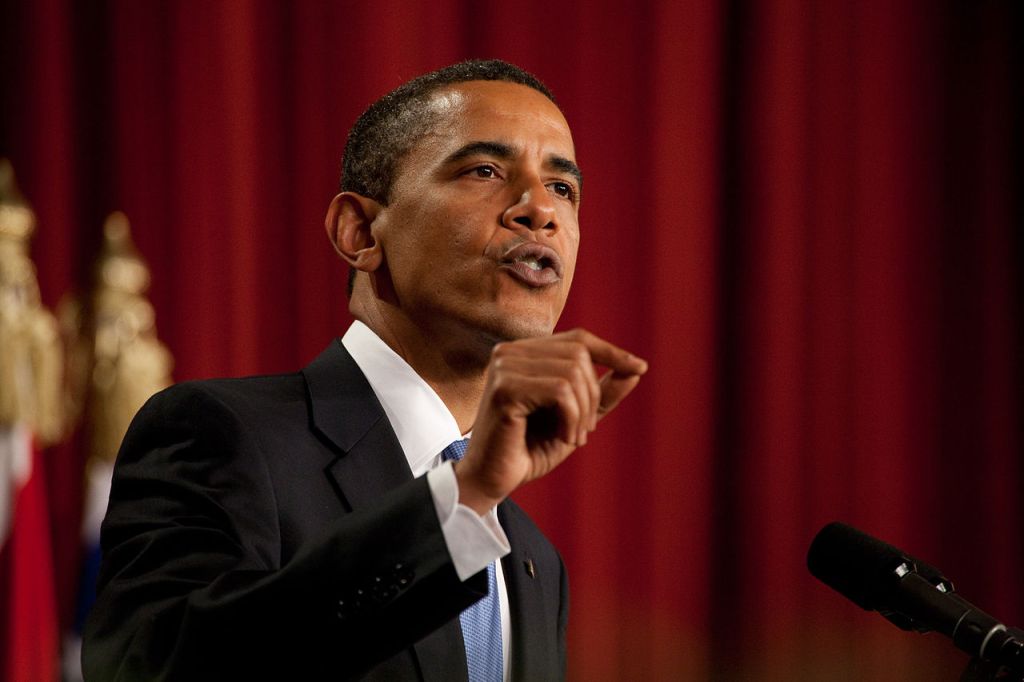
President Obama’s decision to be the first sitting U.S. President to visit the ground zero site of the atomic bombing of Hiroshima on May 27th as part of a G-7 Summit visit to Japan comes as no surprise. Advancing the cause of nuclear nonproliferation has been a hallmark of the Obama presidency and is cited as one of the main reasons that he was awarded the Nobel Peace Prize in 2009. Making remarks in Hiroshima will also provide a platform to re-emphasize his vision of a nuclear free world first enunciated in a speech in Prague in 2009.
But Hiroshima is not Prague. The Czech capital is remembered in Twentieth Century history as the site of the famous “Prague Spring,” when the aspirations of the Czech people to be free of communist domination flickered briefly before an invasion of Soviet and other Warsaw Pact troops. Hiroshima, however, is chiefly remembered for the twisted dome of the Hiroshima Prefectural Industrial Hall, burned and melted like much of the city of 350,000, when the Enola Gay dropped “Little Boy”, the first atomic bomb used in warfare, on the morning of August 6, 1945. So the historic symbolism of Prague and Hiroshima stand in stark contrast – Prague, a symbol of Cold War resistance and democratic values; Hiroshima, a symbol of atomic devastation brought about by a U.S. B-29 bomber.