

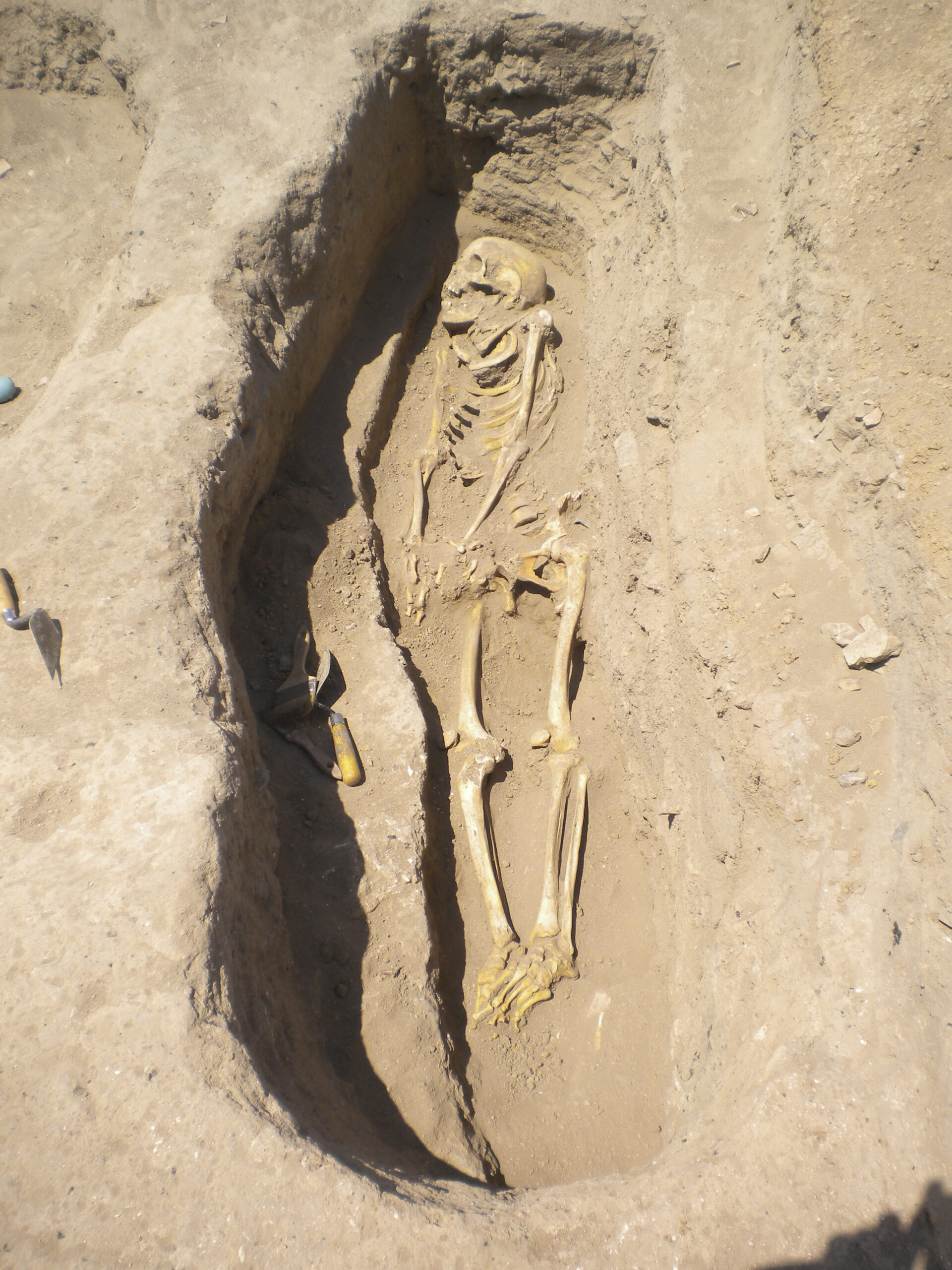
LONDON (AP) — In a skeleton more than 6,200 years old, scientists have found the earliest known evidence of infection with a parasitic worm that now afflicts more than 200 million people worldwide.
Archaeologists discovered a parasite egg near the pelvis of a child skeleton in northern Syria and say it dates back to a time when ancient societies first used irrigation systems to grow crops. Scientists suspect the new farming technique meant people were spending a lot of time wading in warm water — ideal conditions for the parasites to jump into humans. That may have triggered outbreaks of the water-borne flatworm disease known as schistosomiasis.
Stay informed.Stay ahead.
Join Washington Examiner for unlimited access to the news, analysis, and commentary that matter most.
Already a member? Log in
