
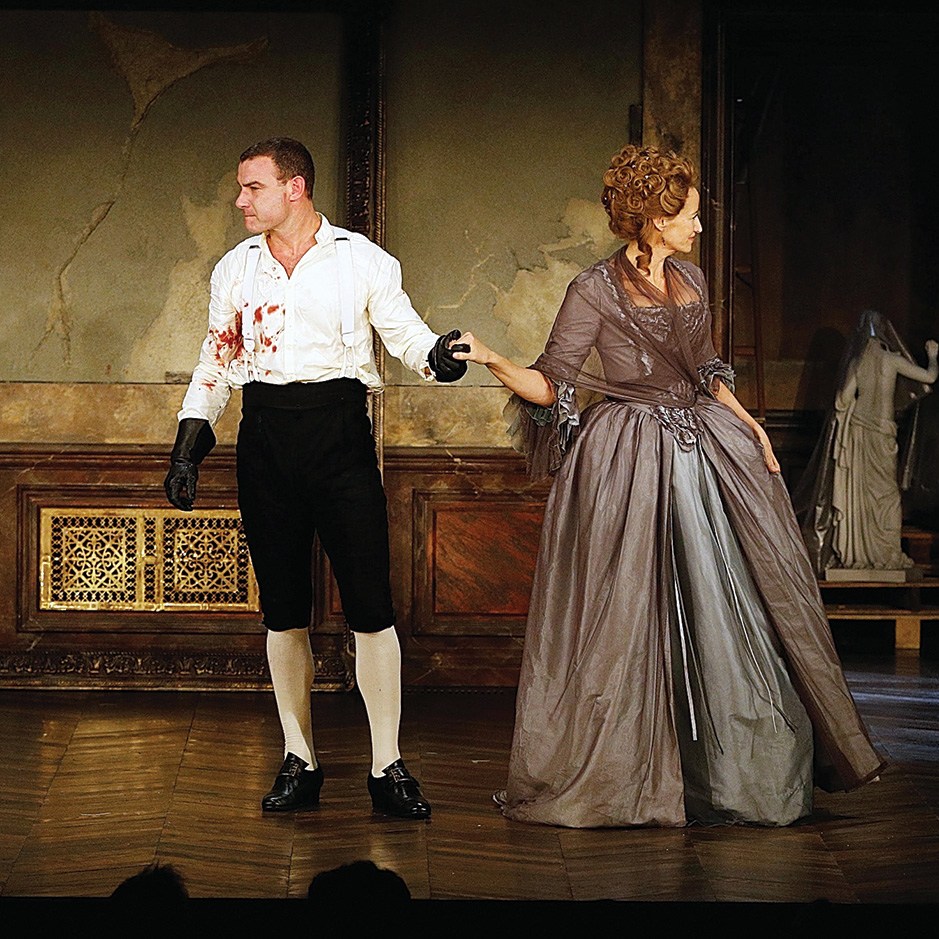
Les Liaisons dangereuses, the 1782 novel of sexual intrigue by Pierre Choderlos de Laclos, has become one of the most adapted literary classics in the two decades since it was reincarnated as a hit play by the British dramatist Christopher Hampton. The 1988 Stephen Frears film Dangerous Liaisons, a luxurious star-studded screen version of the play, was followed by Miloš Forman’s lightweight Valmont, and then by Cruel Intentions, transplanted into the world of 1990s privileged American teenagers. Add to this Chinese and Korean films, a 2003 French modern-day miniseries, two operas, and several ballets. A revival of Liaisons, imported from London, is currently playing on Broadway, and there is talk of a Christopher Hampton-scripted BBC miniseries based on the novel.
What, then, is this book that acts as such a magnet to the modern imagination? Les Liaisons dangereuses was the first, and only novel, by Laclos, an army officer from the minor nobility. It caused an international scandal, and with reason: Its two main characters, Parisian aristocrats the Vicomte de Valmont and the Marquise de Merteuil, are amoral libertines who toy with people and ruin lives for sport. Yet in this epistolary novel, their voices largely dominate. Smart, witty, charming, Laclos’s villains are almost as seductive to the reader as to their victims. Perhaps no other literary work—except for Vladimir Nabokov’s Lolita, another scandalous bestseller—does such a disconcertingly good job of taking you inside the mind of a monster (or two) and making you enjoy your stay.
Real journalism.Trusted by millions.
Unlimited access to in-depth reporting, expert analysis, and the stories that shape our country.
Already a member? Log in