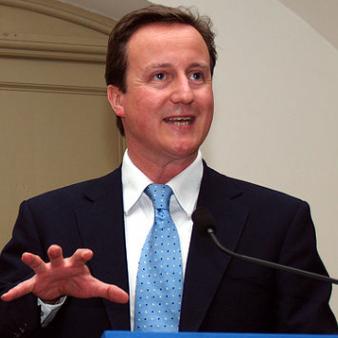
Friday morning, David Cameron returned to Downing Street as Britain’s prime minister. After a campaign of unsurpassed tedium, the General Election came alive last night with the first exit poll, and a Conservative victory out of nowhere. For weeks, the incumbent Conservatives and the Labour opposition had been neck and neck. Both polled around 35 percent, and both looked set to capture around 275 seats in the House of Commons, well short of the 323 seats needed for a working majority. And for weeks, the pundits had been constructing hypothetical coalitions.
Could David Cameron retain power by forming a coalition with Nick Clegg’s pro-EU Liberal Democrats, and the insurgents of the anti-EU UK Independence Party? Or would Ed Milliband lead a minority Labour government, supported informally by the Scottish Nationalists, a socialist party that wishes to leave the United Kingdom? Governed since 2010 by the first peacetime coalition in a century, Britain seemed to have entered a new era of European-style politics: implausible coalitions, united by ambition not principle. As election day neared, opinion polls suggested the least principled outcome, a Labour-SNP alliance that boded poorly for Britain’s economic recovery and constitutional integrity. The markets and the pound wavered accordingly.