

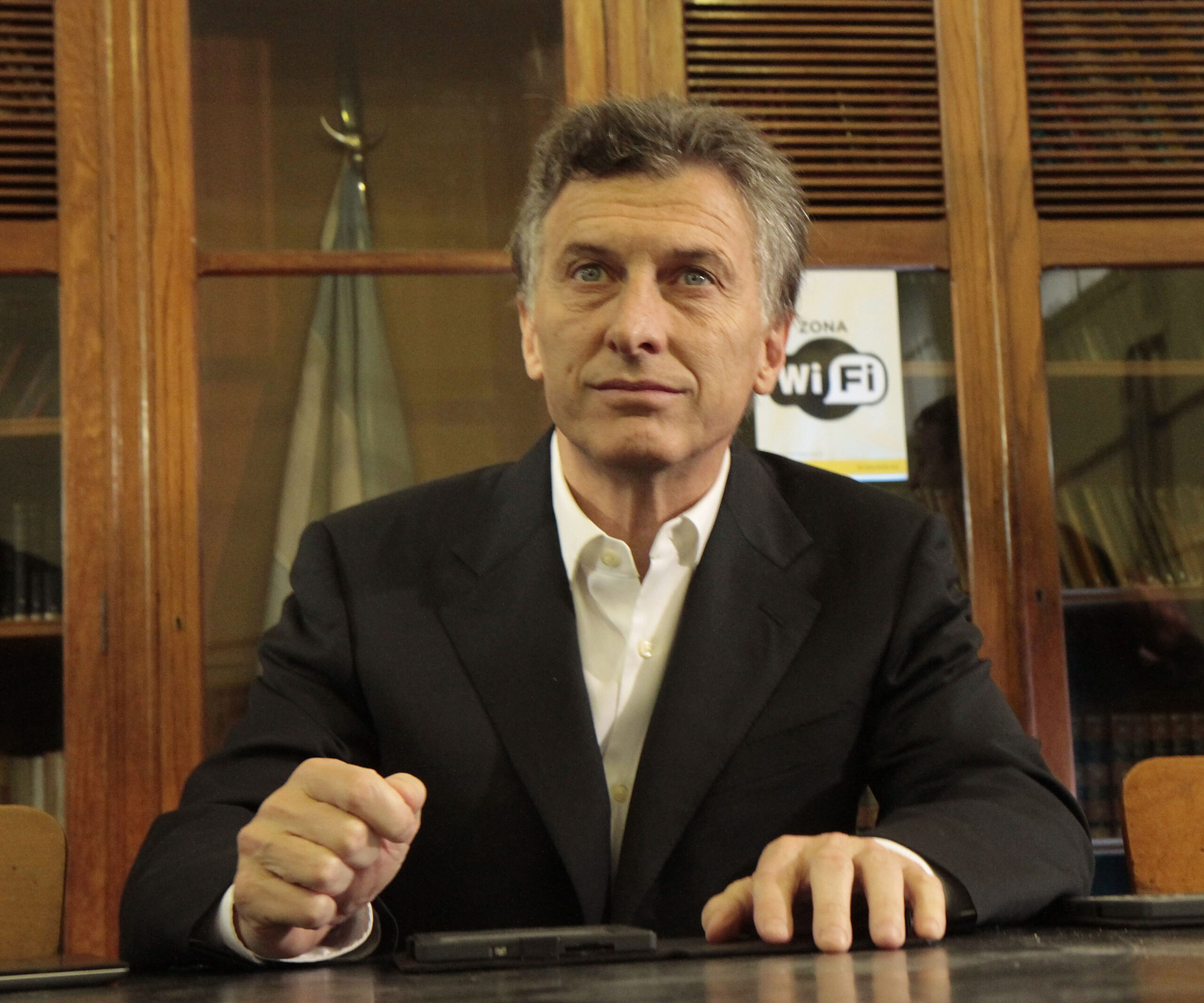
Latin American politics has a tendency to resemble the magical realism made famous by the “boom” generation of southern-hemisphere writers a few decades ago; just when you think you’ve reached solid, stable ground, everything shifts and you find yourself more disoriented than when you started. It is with this word of caution that one should treat the enocouraging news out of Argentina and Venezuela.
In Argentina, 12 years of Kirchner rule has come to an end with the ascension to the presidency of Mauricio Macri, former mayor of Buenos Aires, whose seemingly simple campaign slogan Cambiemos (“Let’s Change”) betrayed larger unrest throughout the country. Macri, a relative unknown in the United States, has the sensibilities—and background—of a Mitt Romney. Born into a wealthy family, Macri gained visibility as president of the famed Boca Juniors soccer club (his success was turned into a Harvard Business Review case study). He entered politics in 2003, won the mayoralty in 2007, and has been slowly solidifying his center-right coalition ever since. On November 22nd, Macri defeated Daniel Scioli, darling of outgoing president Cristina Fernández de Kirchner, whose administration has been plagued by a litany of scandals.
Stay informed.Stay ahead.
Join Washington Examiner for unlimited access to the news, analysis, and commentary that matter most.
Already a member? Log in
