

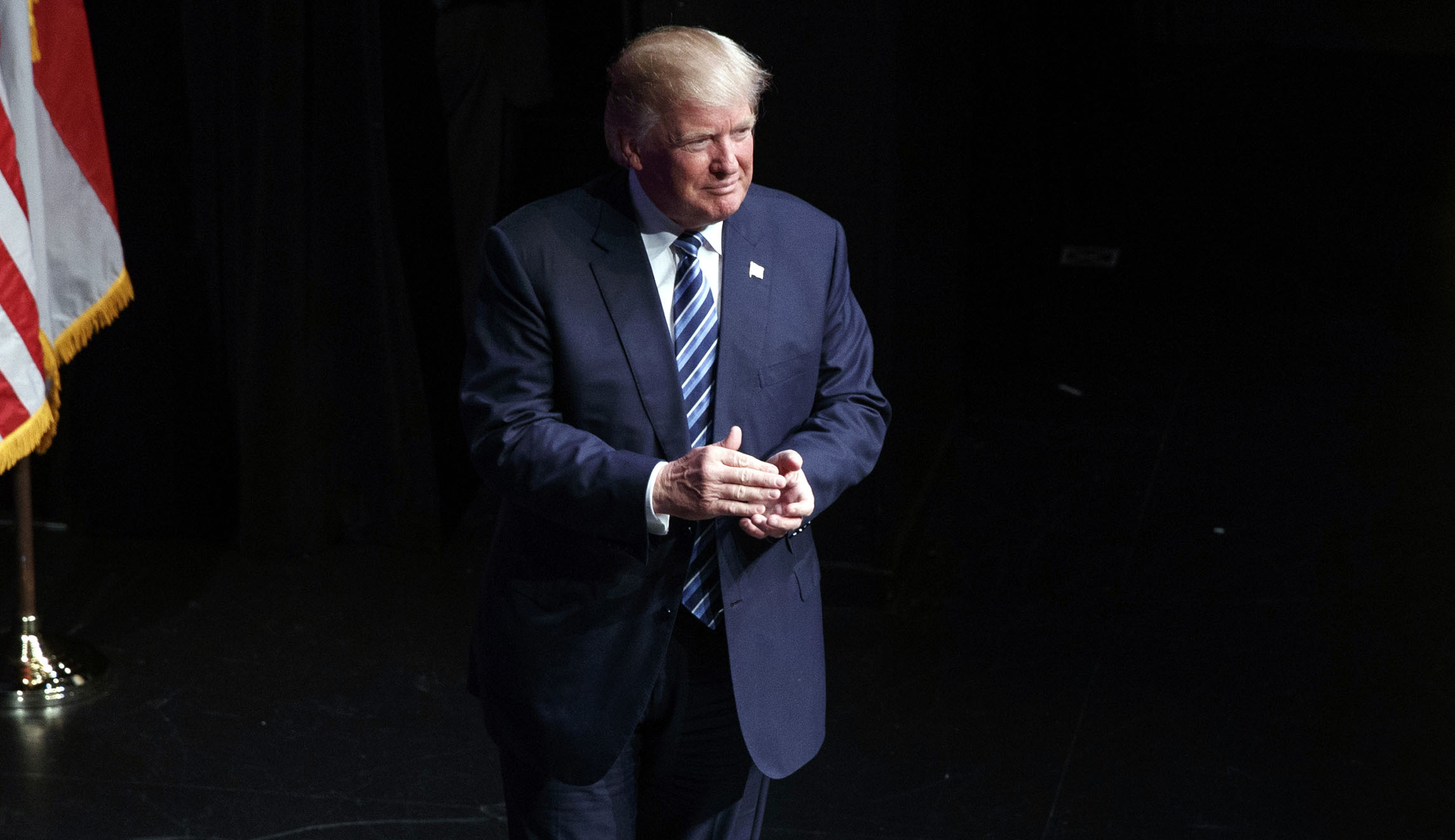
President Trump turned up the pressure on Democrats during a tax reform pitch Wednesday, demanding their help as his administration works to deliver “a giant win” by enacting massive tax cuts before the end of the year.
Still sour over Senate Republicans’ failure this week to advance a last-ditch plan to dismantle Obamacare, Trump told a crowd in Indianapolis Congress must now turn its attention toward implementing meaningful tax reform that “restore[s] America’s competitive edge.”
Recommended Stories


“This is a once-in-a-generation opportunity, and I guess it’s probably something I could say I’m very good at,” Trump said at the event, adding “tax reform has not historically been a partisan issue — and it does not have to be a partisan issue today.”
Several White House aides and lawmakers attended the event, including Democratic Indiana Sen. Joe Donnelly, who faces a tough road to re-election in 2018.
“If Senator Donnelly doesn’t approve it… we will come here, we will campaign against him like you wouldn’t believe it,” the president joked, drawing whistles from the crowd.
Trump repeatedly called for bipartisan cooperation as Congress takes up the daunting task of working to pass a tax package that benefits the middle class and omits special tax breaks for the well-off.
“I truly believe that enough Democrats want to support our plan and with enough encouragement from the American people, they will do what they know is right for our country,” he said. “But they will only do it if you, the American people, make your voices heard.”
The president encouraged voters to contact their representatives in Congress to “let them know that you’re watching [and] let them know that you’re waiting.”
“If you demand it, the politicians will listen,” Trump said. “They will answer and they will act. And someday… our children and our grandchildren will remember this moment as a time when ordinary Americans took control of their destiny and chose a future of patriotism, prosperity, and pride.”
The administration’s tax outline, a multi-page document released earlier Wednesday, includes several tax breaks for middle-income wage earners and U.S.-based companies. The blueprint, which expanded on a single-page outline released earlier this year, is expected to serve as a jumping-off point for negotiations on a bipartisan tax deal.
Among other proposals, the plan features a 15 percent cut to the corporate tax rate; a consolidation of the seven existing individual income tax brackets to three: 12 percent, 25 percent, and 35 percent; a one-time repatriation tax for overseas assets being moved back to the United States; and the elimination of several business deductions and the estate tax.
The goal is to remove “the colossal barrier standing in the way of America’s economic comeback,” Trump said.
For single and married Americans, Trump has proposed increasing the standard deduction to $12,000 and $24,000, respectively, to ensure “more income for more people will be taxed at a rate of zero.”
The president said his hope is that middle-class Americans will benefit the most, claiming they have suffered under a burdensome and bureaucratic tax system for too long. Wealthy individuals will not receive disproportionate tax cuts or special benefits, Trump said.
“They can call me all they want. It’s not going to help,” he quipped.
The president also billed his plan as one that is family-oriented, noting an increase to the child tax credit – something his daughter Ivanka has been working on with Republicans Sens. Marco Rubio and Mike Lee – would ensure parents can “spend their money on their family, on their children, on whatever they have to do.”
“We believe the most important investment our country can make is in our children,” Trump said.
Congressional Republicans are aiming to pass a tax package as soon as possible to lessen the blow from their multiple failures on healthcare reform, an issue many GOP candidates campaigned on during the 2016 election.
Though the White House has signaled its desire to include Democrats in the process, congressional GOP leaders currently plan to use the budget process known as reconciliation to shepherd a tax package through on a 51-vote simple majority.
