

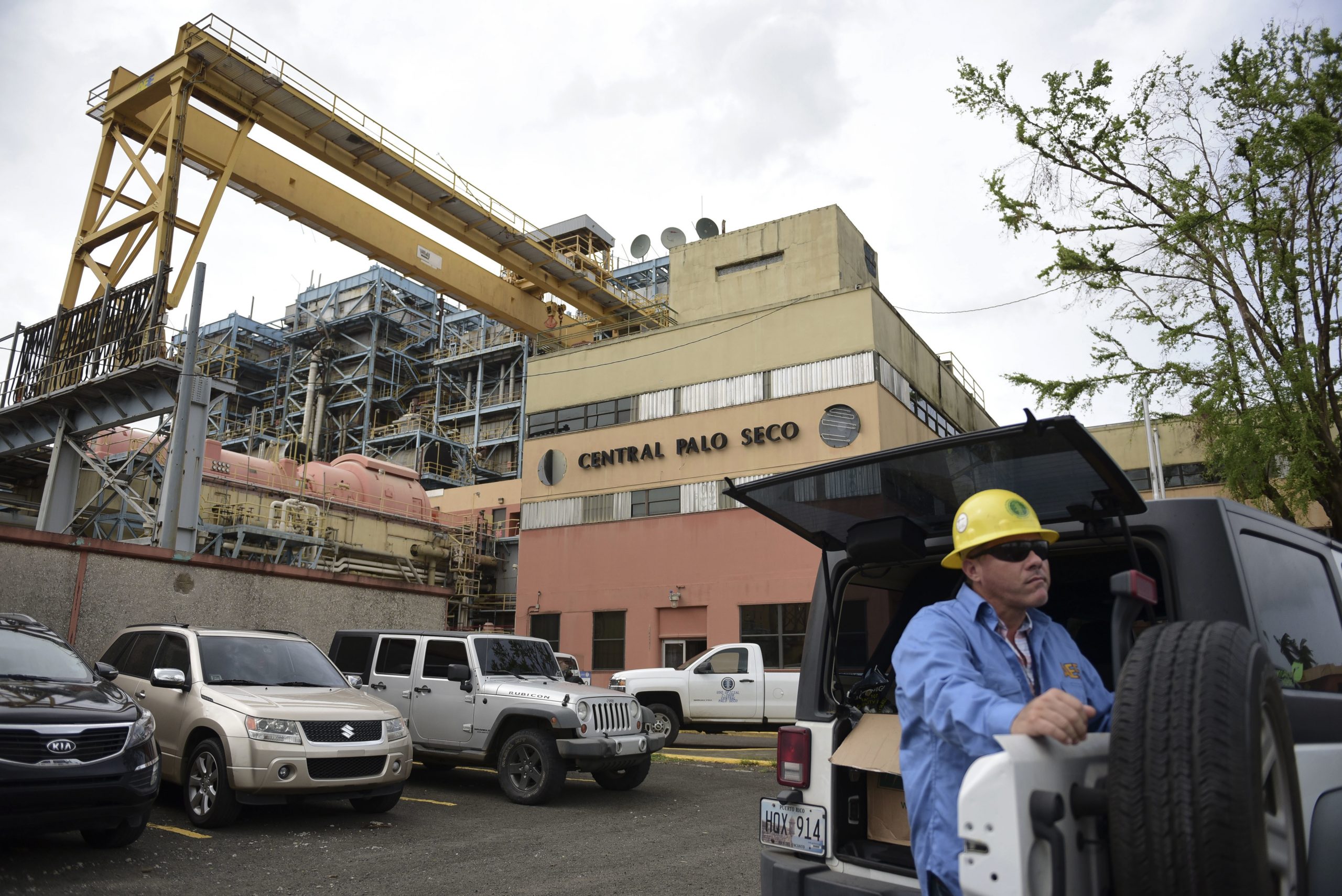
The House Natural Resources Committee fought back at Puerto Rico’s state-run, bankrupt power utility on Wednesday after the utility sought to discredit a probe being conducted by the congressional panel into allegations of corruption.
The Republican-led committee announced this month it is investigating charges of corruption against the Puerto Rico Electric Power Authority, or PREPA, which has struggled to manage the restoration of power on the island after Hurricane Maria.
Recommended Stories


“Committee members have received first-hand accounts from Puerto Ricans and from people working to restore power on the island,” Katie Schoettler, a spokeswoman for the committee, said Wednesday. “In many respects, the power restoration on the island is not being competently managed. To try to discredit detailed reporting by one of the largest newspapers in Puerto Rico is simply ridiculous and an insult to hardworking journalists dedicated to uncovering these corrupt practices. PREPA has an opportunity to prove its commitment to a transparent recovery by cooperating with the committee’s investigation and fully responding to our requests.”
Schoettler was responding to a statement released by PREPA’s board of directors Wednesday declaring it was complying with the committee’s probe but criticizing its merit.
“While PREPA is cooperating by providing the committee with the requested information, PREPA’s board of directors is deeply concerned by the continued politicization of the power restoration and recovery process in Puerto Rico,” PREPA said. “An unfortunate pattern of attempting to discredit PREPA by giving the weight of fact to unsubstantiated press reports.”
PREPA this year suspended three employees without pay as it investigates 25 cases of bribery involving employees responsible for restoring power after Hurricane Maria, PBS News reported in January. The employees are accused of requesting money in exchange for powering houses or businesses.
El Vocero, a San Juan newspaper, wrote that the employees had requested as much as $5,000 to reconnect power. The power authority is also said to have restored power in their own homes before critical locations, such as San Juan’s Rio Piedras Medical Center and Luis Munoz Marin International Airport.
House Natural Resources Committee Chairman Rob Bishop, R-Utah, in launching the probe, accused PREPA of “betraying the public’s trust.”
Bishop said his committee also will probe evidence of mismanagement in PREPA’s power restoration efforts.
The U.S. Army Corps of Engineers has identified material and equipment shortages as the biggest challenge to bringing back power for the entire island.
As of Sunday — 185 days after Maria struck the island, destroying its already fragile electricity grid — PREPA said more than 86,000 residents still don’t have power.
Bishop, in his letter to PREPA, requested all documents related to PREPA’s internal corruption probe be given to the committee by March 26. He also sought documents showing the utility’s policies and procedures related to warehousing, distributing, and tracking power restoration equipment.
Puerto Rico Gov. Ricardo Rossello recently said he wants PREPA privatized to cut costs and attract needed capital.
The utility has been criticized for signing a $300 million contract with small Montana firm Whitefish Energy to restore the island’s power.
In November, the House Natural Resources Committee revealed the Puerto Rican power utility approved higher rates of pay and costs than are normal for the Whitefish contract.
Ricardo Ramos resigned in November as executive director of the utility, under pressure for the Whitefish deal, which was later canceled and subject to multiple investigations in Congress.
PREPA was failing before Maria hit and has been susceptible to political influence and corruption. It is responsible for $9 billion of Puerto Rico’s $73 billion debt load.
The power utility, heavily dependent on Venezuelan oil, has aging power plants and has not maintained its energy infrastructure. It has lost two-thirds of its workforce in the past three years, as residents migrate to the mainland U.S. to escape the island’s financial woes and stagnant economy.
