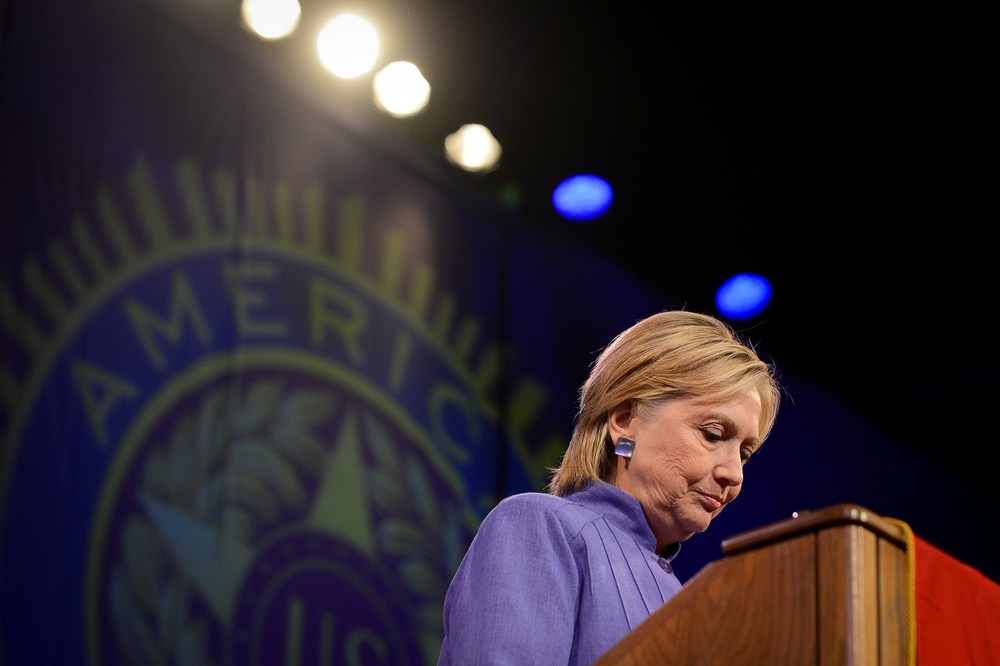
Hillary Clinton said something during the second presidential debate that demands fact-checking. Referring to her senatorial victory in 2006, she claimed: “67 percent of the people voted to re-elect me when I ran for my second term, and I was very proud and very humbled by that.” It’s not the percentage of the vote I doubt—it’s the ability of anyone to be simultaneously humbled and proud.
Clinton’s statement is one of the more glaring instances of Americans using the word humbled strangely. The Oxford English Dictionary defines the transitive verb as “to render humble or meek in spirit; to cause to think more lowly of oneself.” The American Heritage Dictionary defines it as “to cause to feel humble” or “to cause to have a lower condition or status; abase.” Earlier editions of that dictionary are even more forceful: “to curtail or destroy the pride of; humiliate.” Yet time and time again, celebrities, athletes, and politicians are using the word to describe things that should make them proud.