
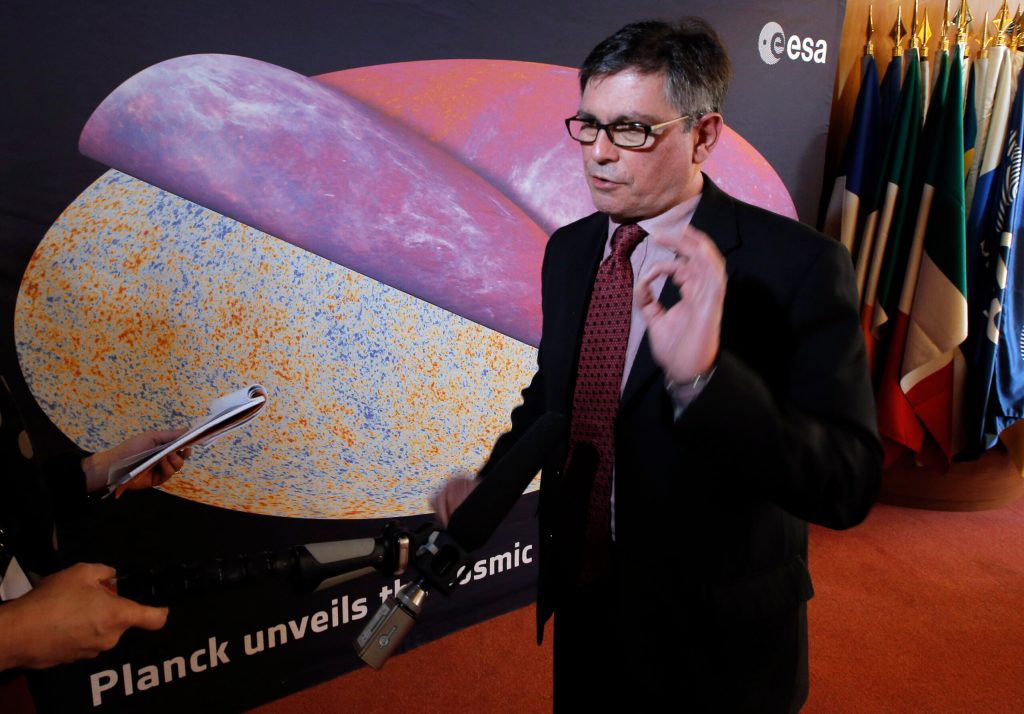
PARIS (AP) — New results from looking at the split-second after the Big Bang indicate the universe is 80 million years older than previously thought and provide ancient evidence supporting core concepts about the cosmos — how it began, what it’s made of and where it’s going.
The findings released Thursday bolster a key theory called inflation, which says the universe burst from subatomic size to its now-observable expanse in a fraction of a second. The new observations from the European Space Agency’s $900 million Planck space probe appear to reinforce some predictions made decades ago solely on the basis of mathematical concepts.
Recommended Stories



Print subscriber? Click here to login/register your account
Digital subscriber? Click here to login/register your account.