

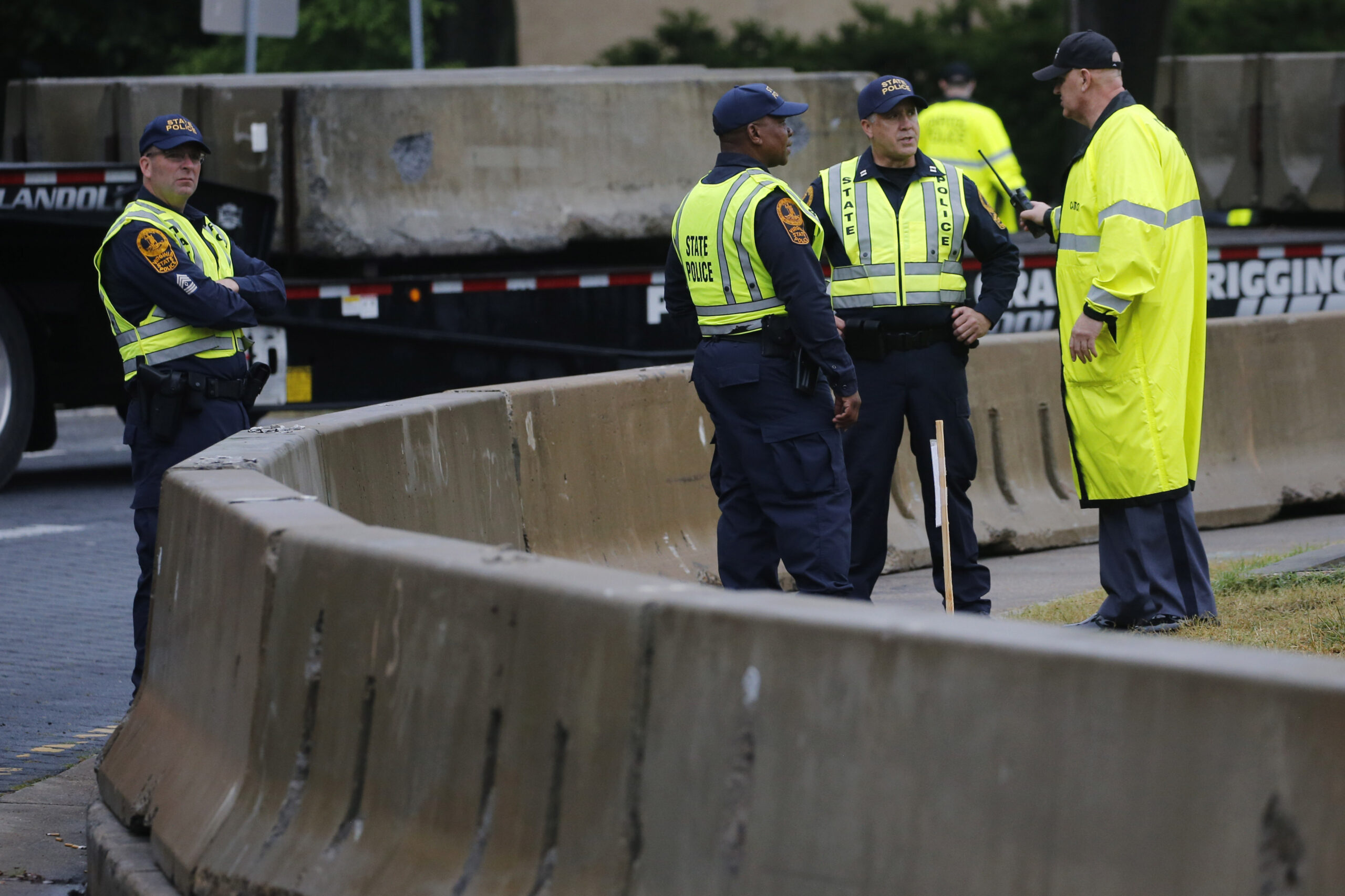
Critics are worried that legislation to end the statewide ban on public sector collective bargaining could curtail efforts to address police brutality, police accountability and other reforms.
Effective May 1, 2021, if signed, the bills would allow local governments to pass ordinances that permit public sector unions to enter into collective bargaining agreements and institute binding arbitration.
Recommended Stories


These agreements would grant the union authority to negotiate contracts for all employees in a working group, even those who do not want the representation and are not members of the union. Disputes between the government and the union would be settled by an arbiter, and a police department may be subject to certain provisions in a contract that could curtail efforts designed to hold police accountable.
“Virginia has never allowed collective bargaining between localities and police unions, but starting next May that will happen,” Chris Braunlich, the president of the Virginia-based, free-market Thomas Jefferson Institute told The Center Square.
“Disciplinary and accountability procedures established under collective bargaining is what has allowed bad cops to survive at the expense of good police officers,” Braunlich said. “The General Assembly needs to act to make certain that the problems of Minneapolis don’t show up in Virginia, by limiting the scope of collective bargaining to salary and benefits only.
“There also needs to be a detailed look at improving police training in the state, and specifically to look at the ‘guardian, not warrior’ with a refocus in de-escalation techniques and implicit bias training,” Braunlich said. “And law enforcement officers should have an affirmative responsibility to intercede if he or she sees other officers engaging in misconduct.”
Braunlich said all of the potential policing reforms are at risk with this legislation and the state has no experience with collective bargaining, which is a danger underestimated by lawmakers. He said local reforms can help police accountability if collective bargaining rights are not adopted.
Ken Girardin, a policy analyst for the New-York-based Empire Center for Public Policy, told The Center Square he has similar concerns.
“The Legislature should explicitly prohibit unions from bargaining over discipline processes and determinations,” Girardin said. “Those are decisions that should be reserved for our elected officials, especially when people are authorized to use deadly force. Collective bargaining can hinder the deployment of body cameras and even conceal police discipline records from the public.”
New York has collective bargaining rights for police unions on the books, which have led to some policies that hinder police accountability. This includes cooling off periods, which prohibits officers from being questioned about a shooting after some time has passed, and statutes of limitations for breaking procedure.
The bills, House Bill 582 and Senate Bill 939, passed the Democratic-led Senate and House of Delegates earlier this year. The governor has not yet signed the legislation, but he is expected to do so.
