
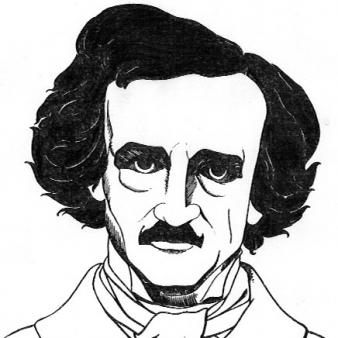
As with most things American literature, it all begins with Edgar Allan Poe. In 1841, Poe unleashed on an unsuspecting world “The Murders in the Rue Morgue,” arguably the world’s first modern detective tale. The end result was a sensational story that coupled outrageous acts of violence (never forget that the murder victims are one nearly decapitated mother and a daughter whose corpse is stuffed up a chimney) with an even more shocking conclusion. Most importantly, “The Murders in the Rue Morgue” bequeathed to mystery lovers C. Auguste Dupin, Poe’s mysterious Parisian detective and an expert on what Poe called “ratiocination,” or the scientific application of logic and reason to criminal investigations. The story’s opening, which is told to us from the perspective of an unnamed narrator who acts as Dupin’s chronicler, or rather his Boswell years before Dr. Watson would provide the same service to Sherlock Holmes, points us towards the very same detective-as-eccentric-genius prototype that is still with us today.



Print subscriber? Click here to login/register your account
Digital subscriber? Click here to login/register your account.