

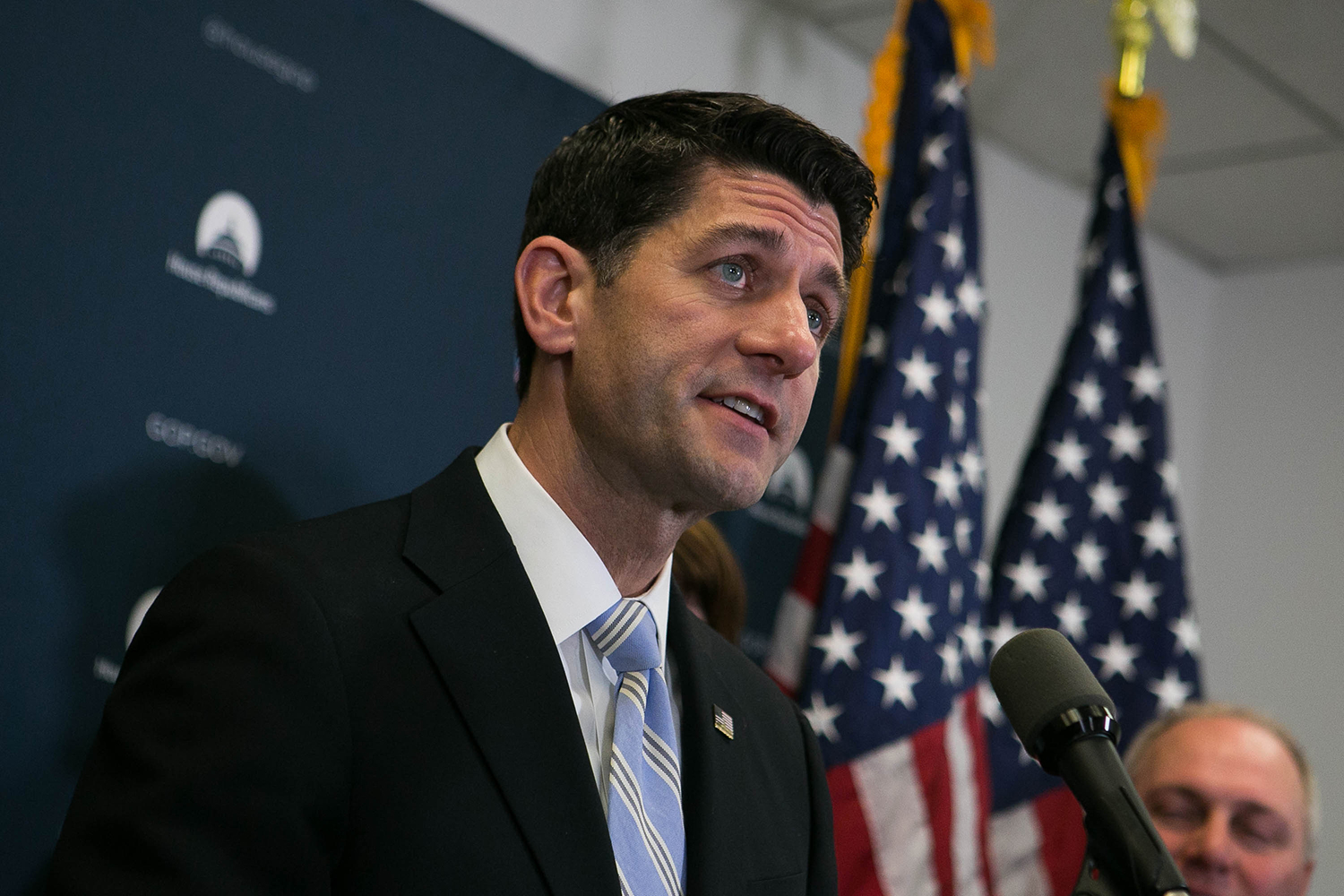
House Republicans on Tuesday unanimously nominated Paul Ryan to serve his first full term as speaker in the next Congress, casting aside the fears of some conservatives that he would not carry out President-elect Trump’s populist agenda.
The GOP conference, bolstered by their Nov. 8 sweep of Congress and the White House, voted to keep much of the entire 2016 leadership team in place for the next two years.
Recommended Stories



Majority Leader Kevin McCarthy, R-Calif., Whip Steve Scalise, R-La., and Conference Chair Cathy McMorris Rodgers were easily nominated to new terms.
Ryan’s position, however, will not be secured until January, when the entire House, including Democrats, must vote to elect the speaker with 218 votes.
Republicans, who will have 238 seats in the new Congress, can afford to lose 20 GOP votes and still ensure Ryan keeps his job. Ryan has served in the top House leadership post for a little more than a year, after replacing Rep. John Boehner, R-Ohio.
Ryan ran unopposed, a sign that the GOP is unified behind his leadership. Reps. Mick Mulvaney, of South Carolina, Chris Collins, of New York, and Martha McSally, of Arizona, nominated Ryan for Speaker in the closed-door session, which took place in a Capitol Hill committee room.
Ryan won the backing for a new term after a year of reuniting a bitterly divided GOP.
The most conservative faction, the House Freedom Caucus, remains skeptical of Ryan’s politics, but for the most part has embraced his more inclusive leadership style and adept messaging. Ryan often makes the rounds on radio and television, promoting the GOP’s new six-part agenda to reform taxes, healthcare, national security, the economy and poverty programs.
And while Ryan took the job with the understanding he would not be spending all his time raising money for Republicans, he’s also been a successful fundraiser.
