2020 Democratic presidential primary candidate Bernie Sanders refused to say whether he still backs capping the wages of the top earners in the United States.
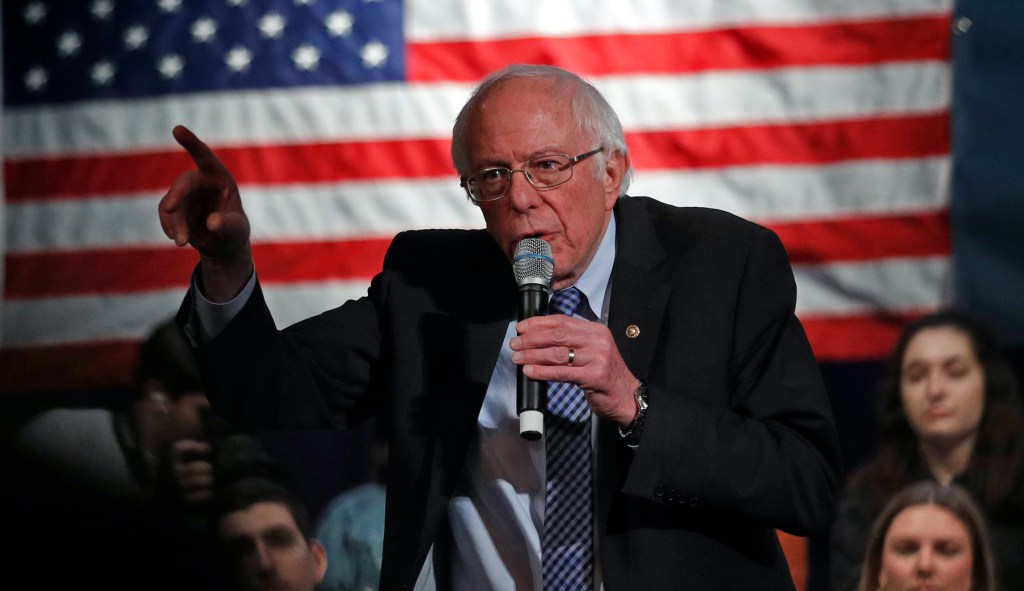
The senator from Vermont appeared on CNN on Sunday to discuss his campaign for president with State of the Union host Jake Tapper, who questioned the self-identified democratic socialist about a wage cap policy he championed in the 1970s and remained interested in until at least the early 1990s.
Recommended Stories
“Early in your political career, way back in 1974, you said that it should be illegal to earn more money than someone could spend in his or her lifetime,” Tapper said. “You proposed a maximum wage cap on the highest earners.”
Sanders dismissed Tapper, asking if the host had also gone “back to my third-grade essay when I was in PS197 about what I said?”
“We can go back to things that I said in the ’70s. I don’t think it’s productive,” Sanders said, later continuing, “This is what I do believe. When you have three people that own more wealth than the bottom half of America, when half of our people are living paycheck-to-paycheck, when 500,000 Americans are sleeping out in the streets, yes, the rich have got to pay.”
He added, “We will raise taxes very substantially on billionaires. No apologies for that.”
In 1974, Sanders was 32 years old and several years into trying to launch his political career. He ran for governor of Vermont in 1972 and 1976 and ran to represent Vermont in the U.S. Senate in 1972 and 1974. During his second Senate campaign, Sanders told the Burlington Free Press that “nobody should earn more than $1 million.”
As a U.S. House representative in 1972, Sanders introduced a Los Angeles Times opinion piece titled, “How About a Maximum Wage?” into the congressional record. Decades later, he remained interested in a national wage cap, which would, in effect, hike the marginal tax rate to 100% for earners past a certain income threshold.
Sam Pizzigati, the opinion article’s author and an Institute for Policy Studies associate fellow, said he spoke with Sanders about the possibility of a maximum wage in the early 1990s.
“He thought that this was something that needed to be explored and considered,” Pizzigati said. “He thought it needed to be part of the public discourse, and that’s why he put the information in the congressional record.”