

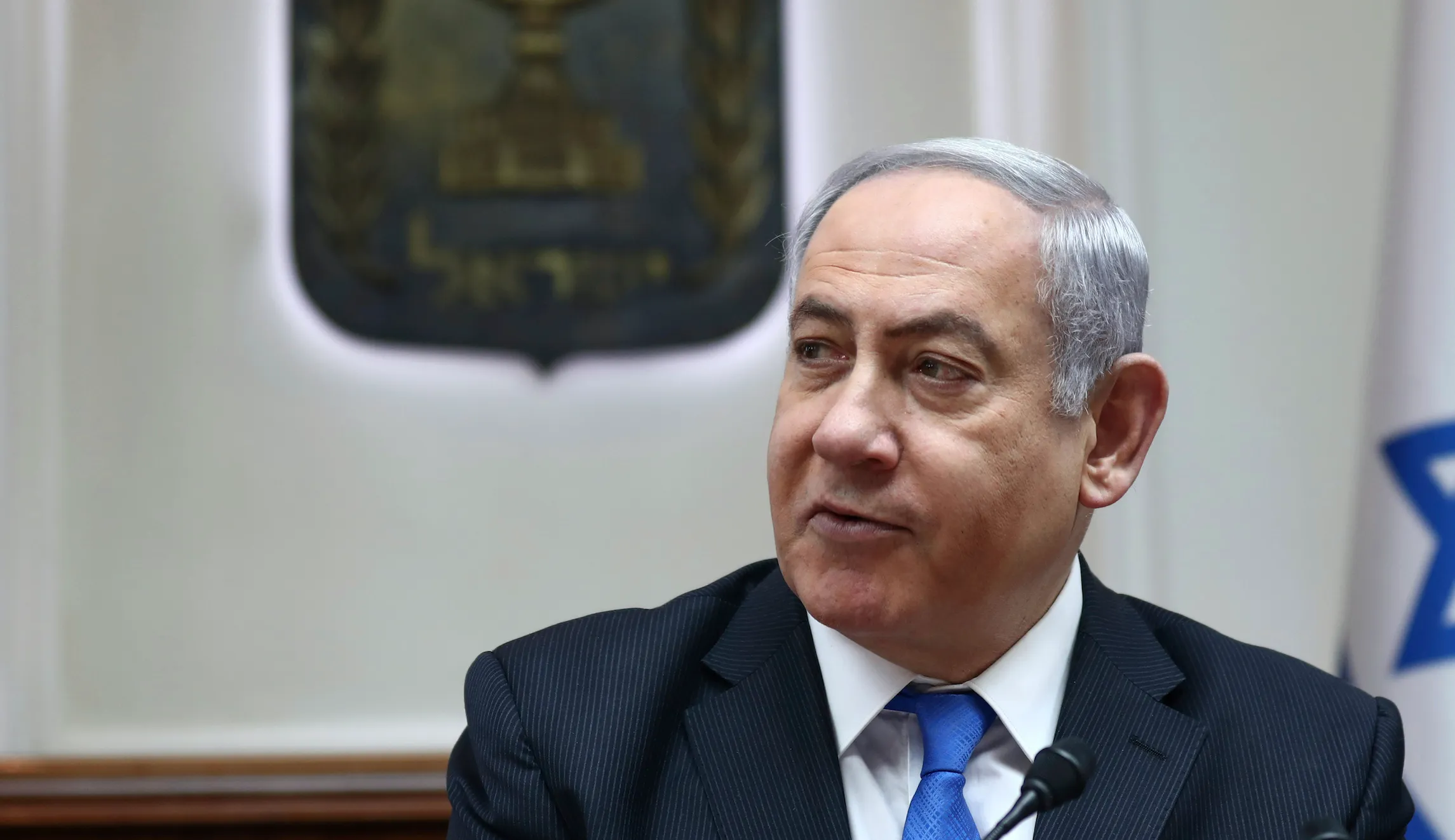
A group of Israeli Arab lawmakers delivered a blow to Prime Minister Benjamin Netanyahu in the negotiations over who emerges victorious from inconclusive parliamentary elections, but the jockeying for power isn’t over.
“What comes next is anyone’s guess,” Emanuele Ottolenghi, a senior fellow at the Foundation for Defense of Democracies, told the Washington Examiner.
Recommended Stories


Joint List leader Ayman Odeh announced Sunday his 13-member bloc of Arab legislators will recommend President Reuven Rivlin use his authority to give Netanyahu’s rival, Benny Gantz, the first chance to form a coalition government. But the complex rivalries within the legislature mean nothing is certain, while Odeh’s ploy plays into Netanyahu’s argument that only he can form a government acceptable to the center-right Jewish lawmakers who dominate Israeli politics.
“We are looking for the way to prevent Netanyahu from being prime minister, and that is what most of the public wants,” Odeh said.
Netanyahu is fighting an uphill battle. The elections last Tuesday left Gantz’s Blue and White party with 33 of the 120 seats in the Israeli Knesset, although some results are still being tabulated. Netanyahu’s Likud party finished with 31 seats, a decline from the April 9 elections that saw him secure 36 seats. Both parties are well short of the parliamentary majority needed to form a government, with no obvious path to victory, but Netanyahu — who has dominated Israeli politics as prime minister since 2009 — has failed once this year already to cut a deal that would keep him in power. And Avigdor Lieberman, the third major figure in the power struggle, has refused so far to back either one.
“The current electoral math has [Netanyahu’s coalition of] Likud, Shas, United Torah, and Yemina with enough votes to block a coalition without some help from Lieberman,” Towson University’s Robert Rook, a Middle East historian and close observer of Israeli politics, told the Washington Examiner.
Odeh’s urging that Rivlin give Blue and White party leader Gantz the first crack at brokering a power-sharing agreement to become prime minister marks the first time since 1992 that Arab lawmakers have played a role in coalition talks. But his move against Netanyahu was undermined by a three-member party within the Joint List that stood by the traditional refusal to recommend any major contender for prime minister, leaving Netanyahu with a one-vote edge over Gantz in the effort to accumulate the most recommendations.
“Citizens of Israel, this happened just as we warned,” Netanyahu said Sunday night after Odeh moved against him. “There are two possibilities now: Either a minority government will be formed that relies on the those who reject Israel as a Jewish and Democratic state and glorify terrorists that murder our soldiers and citizens, or a broad national government will be formed. I know what the answer is and so do you, and therefore I’ll do whatever I can to form a broad national unity government. There is no other solution.”
There are limits to Odeh’s support for Gantz. Even as he recommended Gantz for prime minister, he declared that the Joint List will not join a government led by the former Israel Defense Forces chief of staff, because Gantz agrees with the Netanyahu policies that Odeh’s bloc most dislikes.
But Gantz doesn’t want to form a government with the Joint List anyway. “Gantz’s inclusion of the Arab bloc could constitute a form of ‘poison pill,’ in terms of weakening Gantz’s hand in coalition building,” said Rook.
That danger was made clear by the reaction from Lieberman, the head of the right-wing Yisrael Beytenu party and potential kingmaker who snatched victory from Netanyahu after the April 9 election. Lieberman, who refused to join a Netanyahu government unless the prime minister agreed to strip seminary students of their exemption from military service, stressed that he also won’t join a Gantz-led government that involves the Arab politicians.
“When Benjamin Netanyahu and Likud decided to create a bloc with the ultra-Orthodox parties and then with the group of messianics, we can’t recommend Benjamin Netanyahu,” Lieberman said Sunday. “The Joint List is, however, certainly an enemy and not political opponents, and wherever they are we will be on the other side of the aisle.”
In short, Lieberman is taking the same position that Arab lawmakers traditionally adopt — he won’t recommend anyone. “So Gantz will have to negotiate with Bibi first,” Ottolenghi said.
That’s a tough prospect for Gantz, who built his campaign around the idea that Netanyahu is too corrupt to lead the country. With that in mind, there are signs that Blue and White leaders might want Rivlin to give Netanyahu the chance to form a government even as Israeli Attorney General Avichai Mandelblit proceeds with an effort to indict the prime minister. If Netanyahu fails, Gantz might have a better chance of peeling off some of the religious parties that support Netanyahu, according to Ottolenghi.
“Their voters won’t like it, but their leaders dislike being in opposition more, because they lose access to welfare resources their communities are dependent on,” the FDD analyst said.
It’s still not clear what Rivlin will do, precisely because it’s not clear whether either of the Israeli heavyweights is strong enough to win a power-sharing contest.
“In short, the election was too close to call and the exact composition of Gantz’s possible ruling coalition is similarly too close to call at this point,” Rook said.
