

It’s class warfare week in the Senate.
Republicans and Democrats are preparing for a smackdown over a Democratic proposal that would raise taxes on millionaires and use that extra revenue to pay for a payroll tax cut for the middle class and employers.
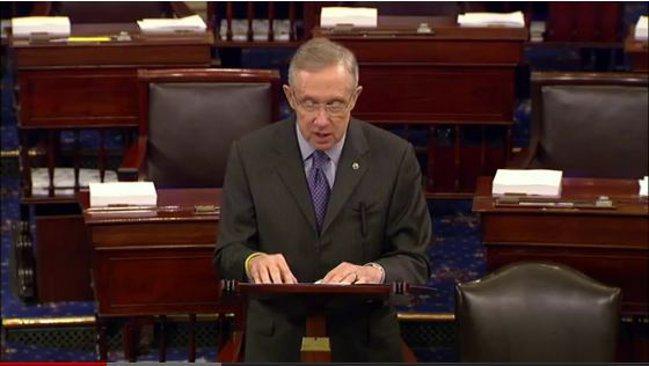
“Republicans say we cannot afford to raise taxes,” Senate Majority Harry Reid, D-Nev., said Monday in announcing the proposal. “If they choose to oppose this payroll tax cut, we’ll know what they meant to say was, ‘We cannot afford to raise taxes on the rich, but we are happy to raise taxes on the middle class.'”
Reid announced that as early as this week the Senate would take up a bill that would not only extend the payroll tax cut through next year, but would increase the size of the cut so that the average tax break for a family would expand from $1,000 in 2011 to about $1,500 next year.
Employers would also get a break under this plan. Their payroll taxes would be cut in half on the first $5 million in paid wages, from 6.2 percent to 3.1 percent.
Since Senate Republicans are traditionally enthusiastic about tax cuts, particularly those aimed at employers, this bill could be expected to sail through the Senate with bipartisan backing. But many Republicans are deeply opposed to the Democratic plan to pay the $265 billion cost of extending the payroll tax break with a 3.25 percent on those earning $1 million or more a year.
Reid justified the tax by telling reporters that millionaires “should pay their fair share” to help preserve middle-class tax cuts.
Reid said the proposal would result in a tax hike of $3,250 for someone earning $1.1 million.
Republican leaders have already registered their opposition to the bill.
Senate Minority Leader Mitch McConnell, R-Ky., predicted that even some Democrats would oppose Reid’s proposal because it amounts to a tax on small businesses.
“I think it’s safe to say that any attempt to pass another temporary stimulus funded by a permanent tax hike on the very people we’re counting on to create the private-sector jobs we need is purely political, and not intended to do a thing to help the economy, since we all know it’s likely to fail with bipartisan opposition,” McConnell said.
Democrats control 53 Senate votes and would need at least seven Republican votes to reach the 60 votes needed to clear the measure. They would need even more Republicans if moderate Democrats up for election next year balk at supporting anything that smacks of a tax increase.
But even if the GOP blocks this version, Reid said he’ll try a variation, which would extend the millionaires vs. middle class sniping through December.
“There will be a chance for Republicans to vote on this not once, but two, maybe three times,” Reid said.
Republican strategist Ron Bonjean, a former top House and Senate leadership aide, said Republicans will have to hone their message carefully to diffuse the Democratic attacks.
“If Senate Republicans can turn the tables on the Democrats and make it about attacking job creators, then they will look reasonable facing a class warfare argument,” Bonjean said. “They must emphasize that the Democratic proposal does nothing to incentivize small businesses to hire more workers.”
