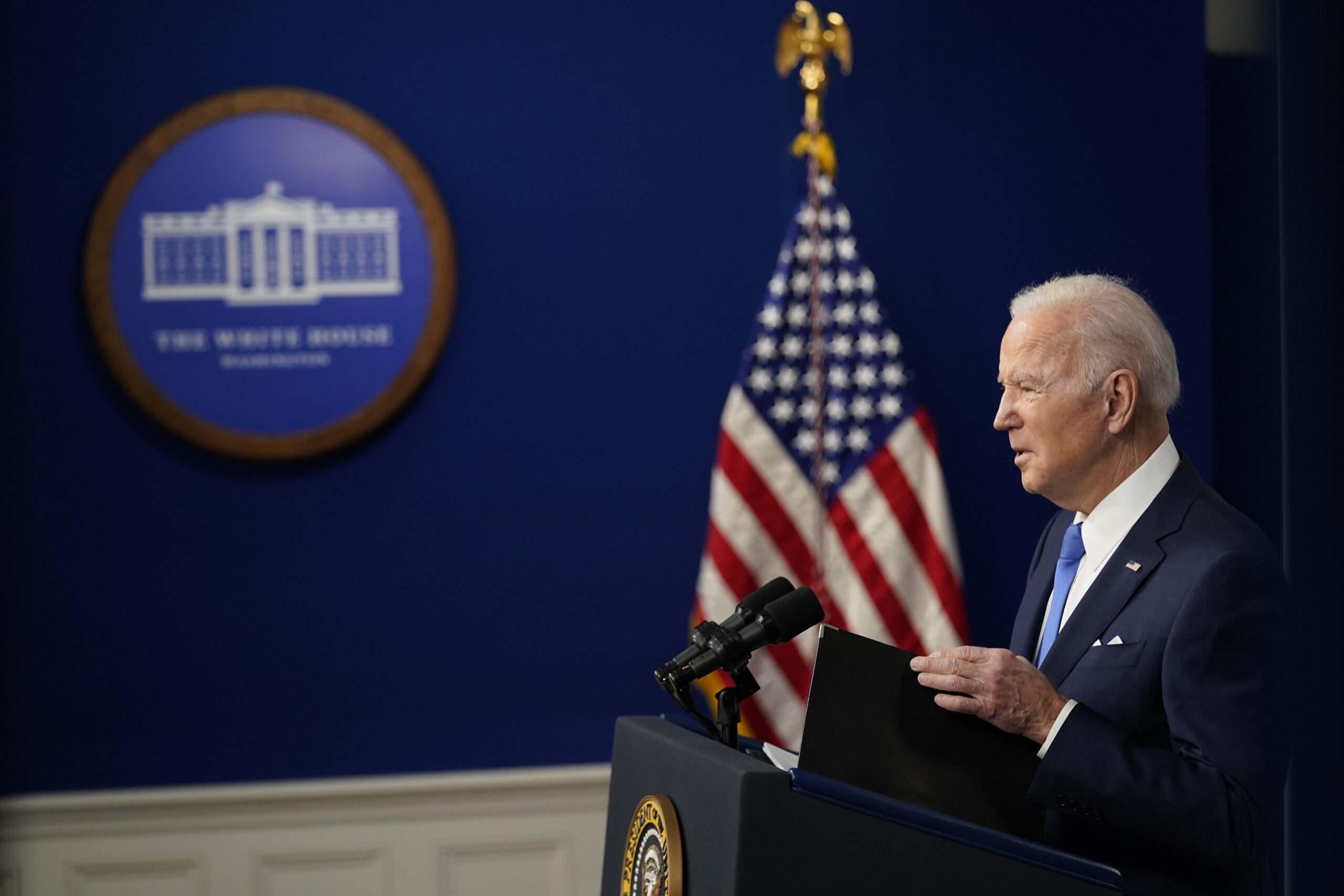
Pent-up frustration over press access has raised the stakes for President Joe Biden’s second-ever stand-alone White House news conference.
Convened on the eve of his first anniversary in office, Biden will take questions from reporters as his own party jeopardizes his domestic legislative agenda and he is tested by foreign adversaries abroad.
Recommended Stories
BIDEN AGENDA TURNS TO ANTI-REPUBLICAN MESSAGING AS LEGISLATION STALLS
Biden is anticipated to promote pandemic and economic progress while touting his $2 trillion bipartisan infrastructure deal during Wednesday’s press conference, according to political communications expert Aaron Kall. But there are also inherent risks after Democratic Sens. Joe Manchin of West Virginia and Kyrsten Sinema of Arizona tanked his social welfare and climate proposal and undermined his voting and elections reform push and Russian President Vladimir Putin continues to escalate tensions with Ukraine.
“There are always traps that presidents can fall into during these types of live press conferences,” the University of Michigan director of debate and co-author of Debating The Donald told the Washington Examiner. “This is partly the reason Biden has not participated in very many to date. He could be unprepared for a question, stumble over his words, lose his temper, repeat himself, etc.”
“Given the proximity of the press conference to Senate action on voting rights legislation, the only real ‘win’ would occur if something unexpected happened on the legislative front that would positively overshadow some of the recent grim headlines about inflation, the stock market, and Democratic disarray,” he added. “Anything that shifts the focus from the last few days and weeks could be helpful to provide a minor reset/respite.”
While the likelihood of a presidential reset is slim, Kall described the press conference as “a good warmup” before Biden’s first official State of the Union address on March 1.
“The midterm elections are right around the political corner and President Biden must change course quickly — or Democratic majorities in the House and Senate will be in major peril,” he said.
Even press corps veterans have become increasingly frustrated with the White House’s communications strategy after Biden campaigned on a promise to lead a transparent administration.
White House aides have relied on Biden’s tendency to answer shouted reporter questions after public appearances or on his way to and from events to defend him from criticism that he has been hiding from the news media. The complaints stem from his reluctance to sit down for one-on-one interviews compared to his predecessors, dovetailing with concerns about his 79 years of age, his physical fitness, and his mental acuity.
Instead, town halls with trusted television networks have become the White House’s preferred setting for Biden to respond to questions. The format is favored because it creates opportunities for him to appear empathetic when he speaks directly to a handful of his constituents.
For Kall, Biden has fallen short of his transparency pledge by spending “an inordinate amount of time in Delaware away from the press and everyone.”
“He’s likely being overly micromanaged by his staff, who have his best interests in mind but are producing no political favors,” he said.
When asked last week about a Committee to Protect Journalists report by former Washington Post executive editor Leonard Downie Jr., White House press secretary Jen Psaki bristled at its scrutiny of Biden’s limited media availability, his administration’s delays in disclosing requested information, and restricted access to U.S. border facilities, among other items. She cited data suggesting that Biden had taken about 750 questions on roughly 250 occasions during the past year.
“That does not include the formal press conference he did in March, other press conferences he’s done,” Psaki told reporters.
“Our objective has been to re-instill normalcy and engagement with reporters, whether we agree or disagree, whether there is a partisan tilt to an outlet or not. And I think we have conducted ourselves accordingly,” she said.
CLICK HERE TO READ MORE FROM THE WASHINGTON EXAMINER
Only 42 reporters have been invited to attend Wednesday’s press conference due to social distancing requirements amid the pandemic, according to the White House Correspondents’ Association. Briefings have been held with a reduced 14-seat capacity since the start of the year because of the omicron COVID-19 variant’s transmissibility, with reporters from the traditional 49-seat configuration representing 65 different news organizations rostered into the room on a rotating basis.
