

The White House announced a $1.75 trillion framework for President Joe Biden’s social welfare spending plan that includes a number of top Democratic priorities for reducing the use of fossil fuels and bringing down carbon emissions — but without many of the provisions penalizing the use of fossil fuels.
The framework, which could provide the basis for an agreement among Democrats, in its clean energy and climate change section provides $555 billion in credits and incentives to boost clean energy. But it lacks earlier proposed policies aimed at aggressively targeting greenhouse gas emissions. For instance, it doesn’t mention a methane fee on oil and gas producers, and it also omits the clean electricity payment program, accompanied by penalties, that key legislators had already rejected.
Recommended Stories


The framework provides for $320 billion for clean energy tax credits in support of “utility-scale and residential clean energy, transmission and storage, clean passenger and commercial vehicles, and clean energy manufacturing” over 10 years.
It earmarks $110 billion in incentives supporting new domestic supply chains and technologies, including solar, batteries, and advanced materials, and another $105 billion is put toward “investments and incentives to address extreme weather,” pollution, and the creation of a Civilian Climate Corps.
The final $20 billion would provide incentives for government to be a purchaser of new energy technologies, including long-duration storage, small modular reactors, and clean construction materials.
Notably missing from the framework is a version of the Clean Electricity Performance Program proposal, which passed in the House Energy and Commerce Committee’s portion of the budget reconciliation package. That program would have paid grants to utilities to move away from fossil fuel-generated power and toward clean electricity while penalizing those failing to do so, but key vote Sen. Joe Manchin opposed it.
A proposed fee on methane emissions produced by the oil and gas industry is also absent from the plan after some Democrats opposed it, arguing it would make production costs more expensive and hurt customers.
CLICK HERE TO READ MORE FROM THE WASHINGTON EXAMINER
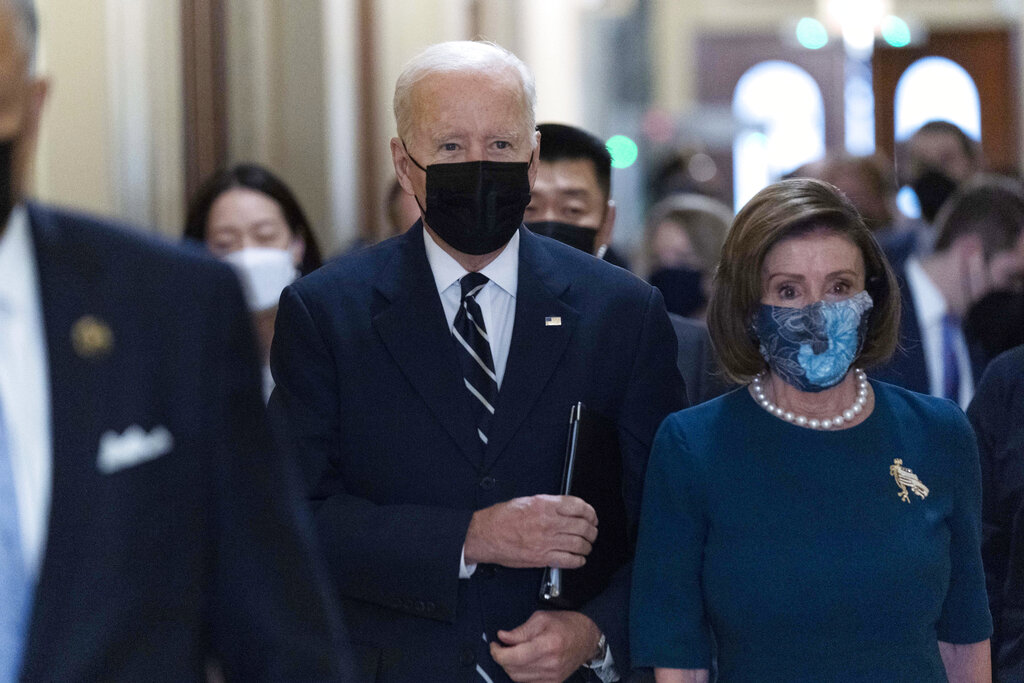
Biden spent the morning on Capitol Hill pitching House Democrats on the framework before departing for a meeting with G-20 leaders in Rome. It’s unclear yet whether the House caucus or its Senate counterpart will accept the plan, as many Democrats are demanding a more aggressive approach to cutting carbon emissions.
“No methane pollution fee, no carbon pollution fee, and emissions numbers hit ‘fail,'” Democratic Sen. Sheldon Whitehouse tweeted Wednesday. “Don’t expect other Senators to accept that.”
