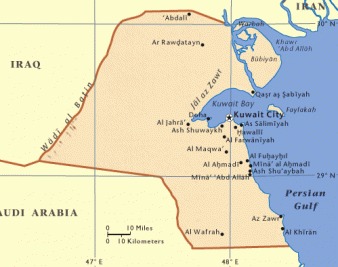
Twenty-nine years ago yesterday, December 12, 1983, Hezbollah and operatives of the Iranian-backed Iraqi Shiite group Da’wa carried out a series of seven coordinated bombings in Kuwait, killing six people and wounding nearly ninety more. The targets included the American and French embassies, the Kuwait airport, the grounds of the Raytheon Corporation, a Kuwait National Petroleum Company oil rig, and a government-owned power station. An attack outside a post office was thwarted.
The bombings shocked Kuwaiti officials, but the damage could have been much worse had the bombs been properly wired. As it happened, faulty engineering prevented three quarters of the explosives planted at the American embassy compound from detonating, saving many lives. Shoddy planning also reduced the destructiveness of the attacks: a truck carrying two hundred gas cylinders primed to explode at the National Petroleum Company site went off 150 yards from a refinery and just a few yards shy of a pile of flammable chemicals. More adept operational planning might also have resulted in the destruction of Kuwait’s primary water-desalination plant, located within the premises, leaving the desert nation nearly devoid of fresh water.