

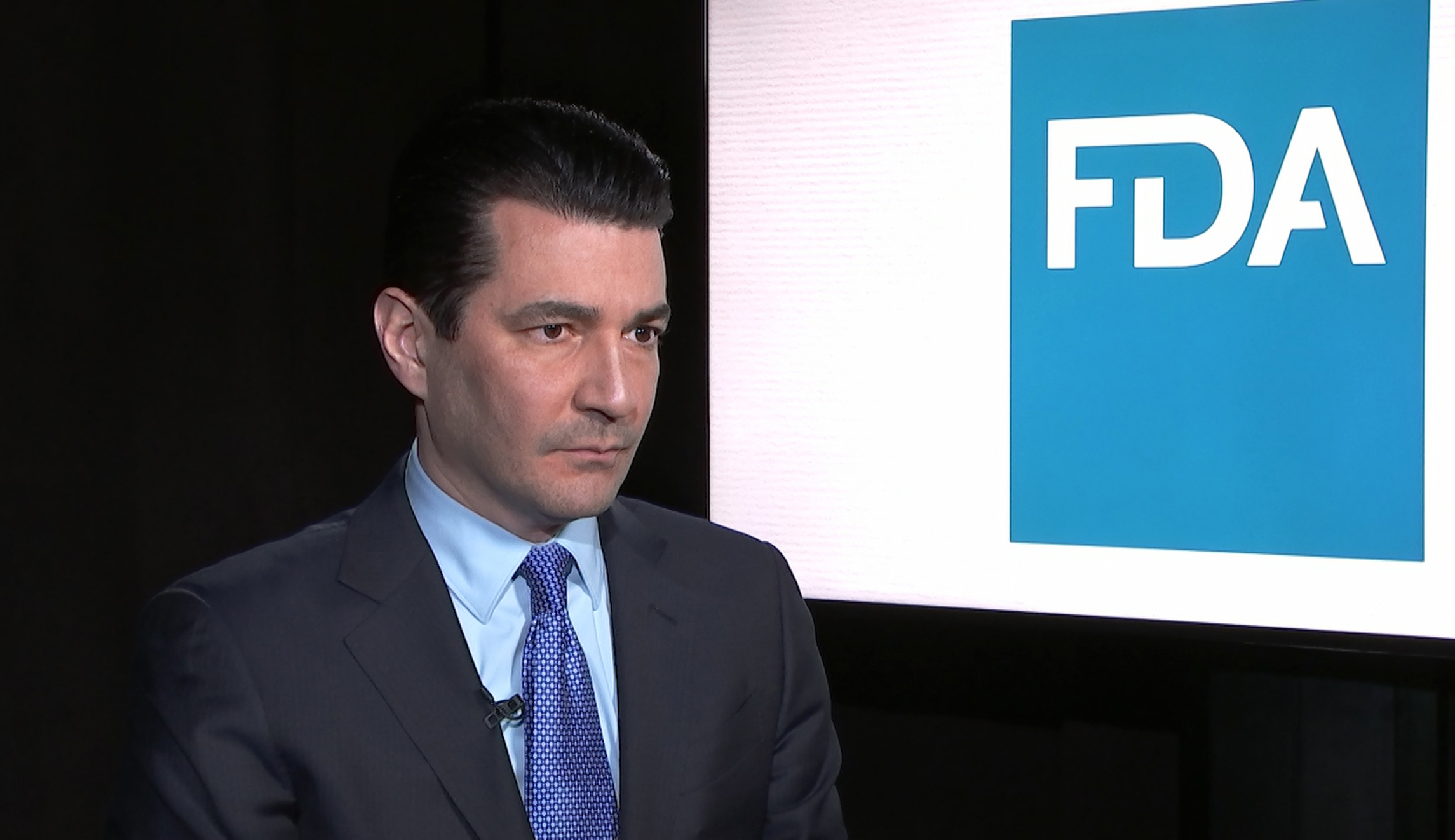
Drug middlemen are lashing out at Food and Drug Administration Commissioner Scott Gottlieb for saying they have a role in a practice that brand-name drug companies use to stifle competition and keep prices high.
Gottlieb spoke at CNBC’s Healthy Returns event Wednesday about a practice in which brand-name drug companies use the FDA’s safety rules to deny generic companies access to copies of their products. The comments were the latest attack from the Trump administration on the way insurers and pharmacy benefit managers, which oversee drug plans for employer-sponsored health plans, negotiate with drugmakers for rebates.
Recommended Stories



“We see the branded companies doing a lot of things — sometimes in cahoots with the supply chain and the distributors and [pharmacy benefit managers] — to block the ability of to generic companies to get access to the physical doses they need,” Gottlieb said.
A generic drugmaker needs a copy of the brand-name product to run tests needed for FDA approval. However, a brand name drugmaker can deny the application by claiming it goes against the FDA’s Risk Evaluation and Mitigation Strategy, which sometimes restricts how a drug should be distributed for safety reasons.
Pharmacy benefit managers took umbrage with the comment that they have a role in the practice.
“Contrary to today’s remarks, pharmacy benefit managers have long been strong supporters of bipartisan legislation that would prevent brand drug manufacturer abuses of risk evaluation and mitigation strategies that block generic competition,” according to a statement from the PBM group Pharmaceutical Care Management Association.
The Campaign for Sustainable Rx Pricing, an advocacy group that has PBMs and insurers among its members, also cried foul.
“REMS abuses are all too real and cost Americans billions of dollars each year,” spokesman Will Holley said. “But the blame lies with the minority of branded companies that abuse the system to thwart generic competition, not with PBMs.”
Congress is eyeing bipartisan legislation called the CREATES Act that would clamp down on REMS abuses.
Gottlieb’s comments are the latest to target PBMs and insurers for their role in keeping drug prices high.
He said a few weeks ago that insurers and drug plans were playing “shell games” with drug pricing.
On Wednesday, Gottlieb praised a decision by Aetna this week to provide drug rebates directly to the consumer instead of putting them toward lowering the costs of premiums overall. UnitedHealth, America’s largest insurer, also said this month that it will pass rebates on to some customers.
“That is a healthy development from the standpoint of public policy,” he said.
Gottlieb was then asked by the event moderator if that would raise premiums overall.
He responded that you could argue that premiums were already “artificially low.”
“The challenge is that the plans compete based on their premiums,” Gottlieb said. “Their incentive is to get premiums as low as possible.”
Health plans use the rebates to lower premiums, but sick people must pay a lot of money for drugs, he added. That is the “exact opposite” of what insurance was intended to do, which is to have healthy people subsidize costs for the sick.
But critics say that providing rebates to consumers isn’t enough to lower prices since the list price of drugs set by the manufacturer remains high and that negotiations between drugmakers and insurers remain behind closed doors.
“Patients and consumers will not know the prices United and Aetna negotiate and the billions they pocket from prescription drugs,” said Ben Wakana, executive director of the advocacy group Patients for Affordable Drugs. “Drug corporations should lower the list prices of drugs. And we should have transparent, negotiated prices that patients can see, which would eliminate the need for rebates altogether.”
